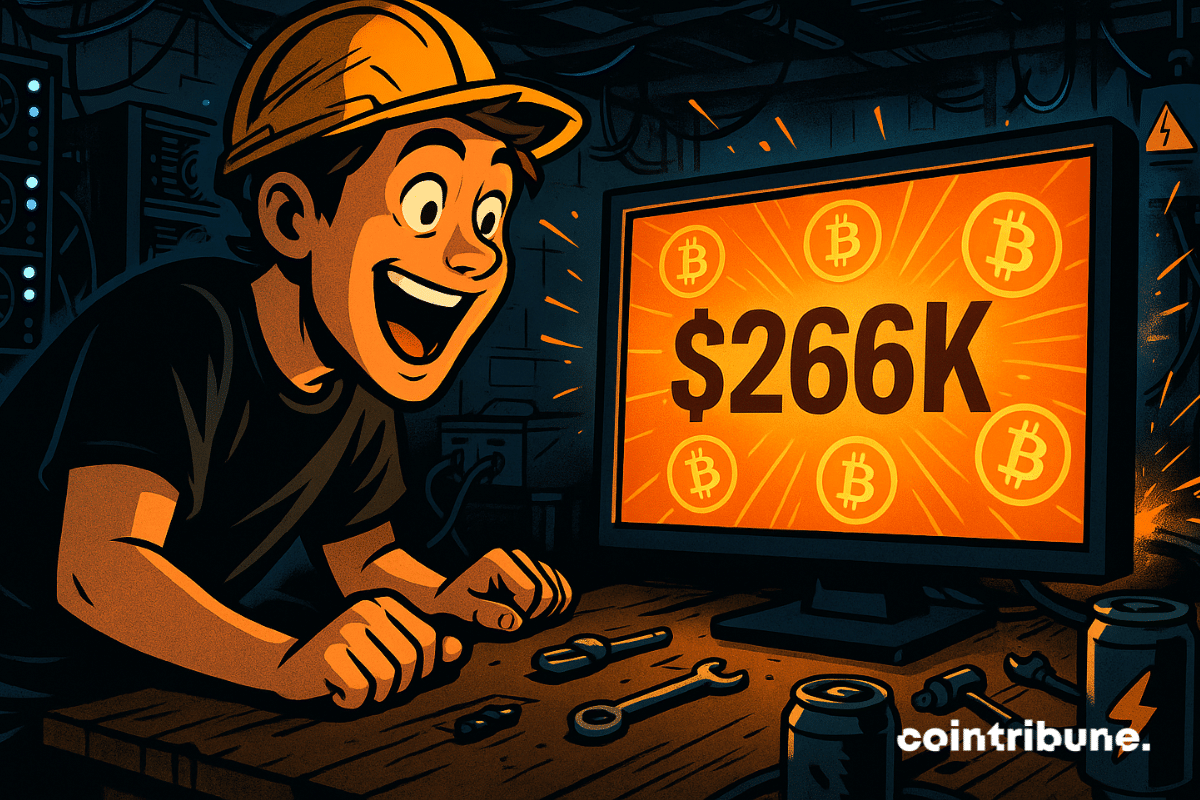
A rare victory attracted attention in Bitcoin mining on Friday when a solo miner managed to solve block 924,569 using only a small fraction of the computing power usually required. In a field dominated by massive operations, this feat stands out as an interesting achievement.
In Brief
- A solo miner earned 3,146 BTC, worth approximately $266,000, by successfully mining a Bitcoin block, a rare feat for an individual miner.
- The payment included 3.125 BTC from the block reward and 0.021 BTC from the transaction fees collected in the block.
Solo miner defies the odds
Blockchain data provider Mempool Space reports that the miner received a total of 3,146 BTC, worth approximately $266,000. The payment included 3.125 BTC from the block grant and 0.021 BTC in transaction fees.
What makes this victory particularly interesting is the individual's equipment. Solosatoshi reported that the facility is a hobby-level Bitaxe Gamma, operating at approximately 1.2 terahashes per second. While this is a large number in itself, it is tiny compared to large-scale mining operations that operate in the exahash range, capable of performing a quintillion hashes per second.
CKpool creator Con Kolivas notes that, based on this hash rate, the chances of such a victory are approximately one in 1.2 million on any given day, thus emphasizing the rarity of the event.
Independent miners leave their mark
Despite the dominance of large mining companies, solo miners have recorded several significant victories this year. Data from blockchain tracker Mempool Space shows that CKpool users have successfully mine 13 solo blocks in 2025with an average of just over one per month.
- A miner with 2.3 petahashes of computing power claimed a full block reward in July, adding to similar solo victories earlier in the year;
- Later in October, another solo trader secured block 920,440, pocketing $347,455, including the standard reward of 3,125 BTC plus transaction fees.
These occasional successes highlight that individual operators continue to play an important role in the Bitcoin network. By contributing independent computing power, they strengthen decentralization and broaden participation, reducing the concentration of control by large mining operations and supporting a more balanced and secure blockchain system.
Major mining companies are diversifying
While smaller miners continue to achieve occasional wins, larger companies are looking for ways to maintain profitability in the changing environment. The recent halving of block rewards has reduced revenues from traditional mining, pushing firms to explore alternative revenue sources.
Riot, a large mining company, is evaluating the use of 600 megawatts of power at its Corsicana, Texas, facility for artificial intelligence applications and other high-performance computing.
Similarly, CleanSpark is gearing its operations toward AI-driven data centers. The transition has already been well-received by investors, sending CleanSpark stock up 13% following the announcement last month. These initiatives illustrate a growing trend of mining companies exploiting their computing capacity for purposes other than Bitcoin mining.
Maximize your Tremplin.io experience with our 'Read to Earn' program! For every article you read, earn points and access exclusive rewards. Sign up now and start earning benefits.