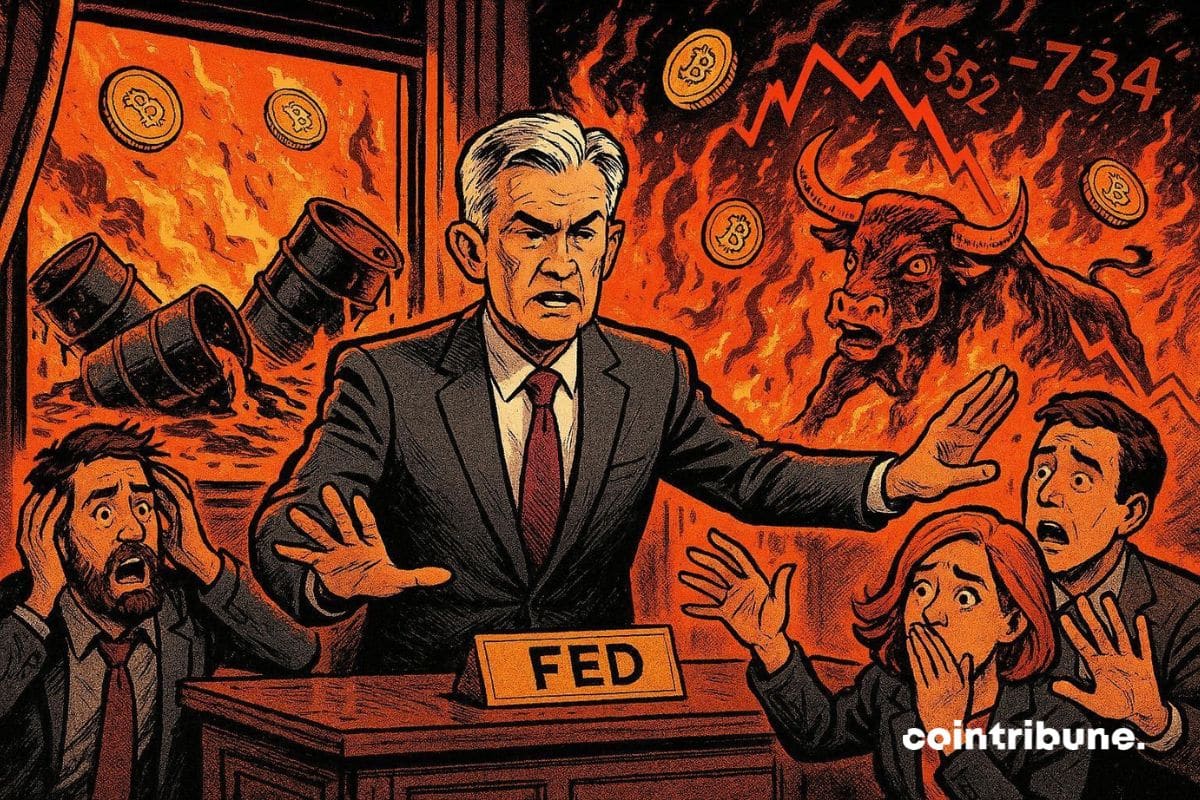
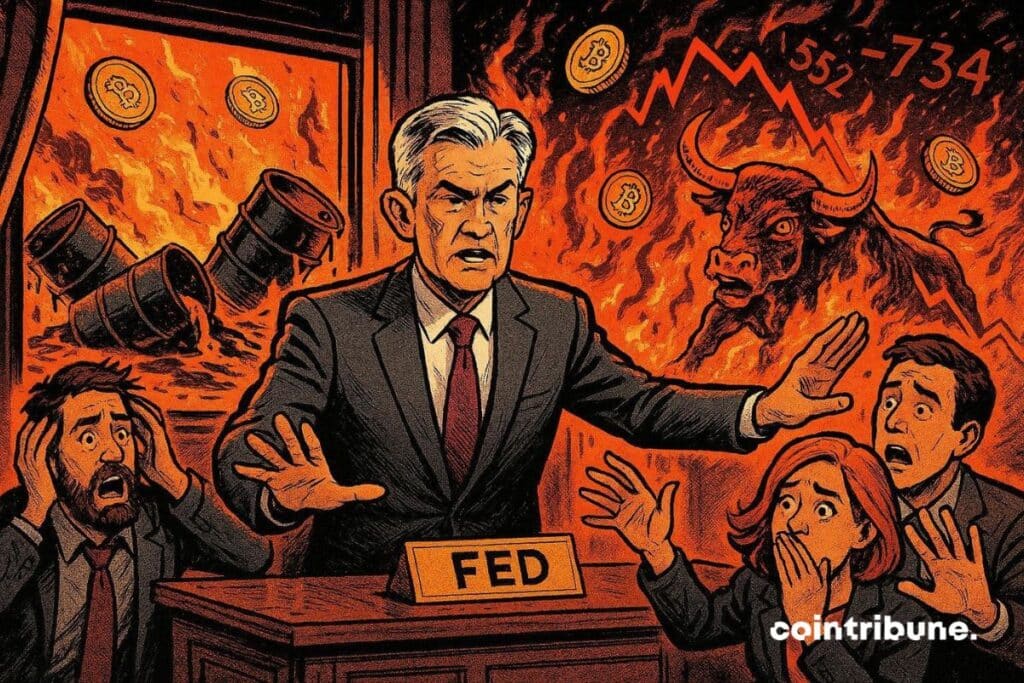
On March 30, 2026, the financial markets experienced a day of striking contrasts. As Fed Chairman Jerome Powell allayed interest rate fears, rising oil caused stocks and cryptos to fall sharply. Nearly $1.3 trillion in capitalization is wiped out in just a few hours.
In brief
- Jerome Powell confirms the status quo on Fed rates, calming bond markets.
- $105 Oil and Geopolitical Statements Cause $1.3 Trillion Drop in S&P 500 and Nasdaq.
- Bitcoin and cryptos follow the downward trend, illustrating their increased correlation with equity markets during times of crisis.
Fed: Jerome Powell’s statements calm bond markets
Jerome Powell clarified the Fed's position during a speech at Harvard, saying the central bank does not anticipate an immediate rise in interest rates. This announcement, which comes a few days after Trump demanded an urgent rate cut, had a direct effect on the bond markets:
- Yields on 10-year Treasuries fell to 4.35%;
- While those at 2 years fell to 3.83%.
Additionally, the odds of a rate hike in 2026, estimated at 25% before his statements, have collapsed to 5%. Bond investors, reassured by this monetary stability, saw their assets regain attractiveness. Furthermore, the Fed seems determined to maintain an accommodative policy, despite the inflationary pressures exerted by the rise in oil prices. However, this lull contrasts with the storm that shook other markets.
Oil and geopolitics send stocks and cryptos plunging
While the Fed was trying to calm the marketsthe price of oil crossed the $105 per barrel mark, a level not seen since 2022. This increase immediately weighed on the stock markets:
- The S&P 500, after a short-lived rebound, finally plunged, erasing a lot of points in a few hours;
- Nasdaq Futures followed the same trajectory, reaching their lowest level since August 2025.
Unfortunately, cryptos have not been spared. Bitcoin, after briefly surpassing $67,000, fell to $66,500, erasing its initial gains. This correlation between stocks and cryptos is explained by the flight of investors towards less risky assets in times of uncertainty.
In addition, geopolitical tensions, notably Iranian declarations and Trump's announcements, have amplified this volatility, creating a climate of unprecedented instability. In less than 24 hours, more than $1.3 trillion in capitalization was wiped out, reminding us of the vulnerability of markets to external shocks.
This day of March 30, 2026 revealed the limits of the Fed's influence in the face of geopolitical and economic shocks. While bond markets find respite, stocks and cryptos are bearing the brunt of the consequences of rising oil prices. In your opinion, is this volatility a simple episode or the sign of a deeper trend?
Maximize your Tremplin.io experience with our 'Read to Earn' program! For every article you read, earn points and access exclusive rewards. Sign up now and start earning benefits.