
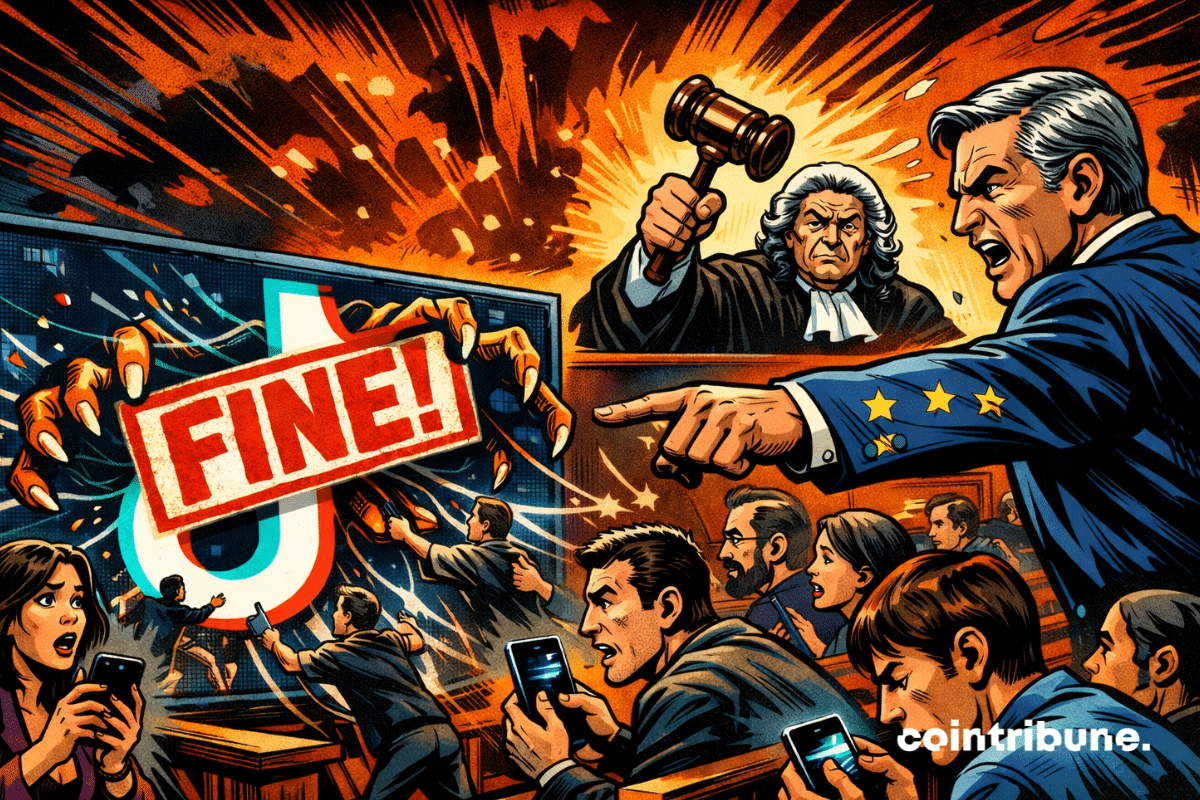
Social media platforms are designed to capture users' attention, but when this design encourages prolonged, unconscious use, it raises serious concerns. The European Commission has provisionally determined that TikTok violates the Digital Services Act due to features that may encourage addictive behavior. This includes continuous loading of video streams, automatic video playback, frequent alerts, and highly personalized content suggestions, which could lead to regulatory action and potential financial penalties.
In brief
- The European Commission has identified TikTok's features as potentially addictive and in violation of EU digital rules.
- The EU has asked TikTok to reform these features by reducing ongoing engagement, introducing meaningful pauses and adjusting content recommendations.
- Depending on the outcome, TikTok could face regulatory actions and fines of up to 6% of its global annual revenue.
Concerns about TikTok design
The European Commission noted that TikTok did not sufficiently identify or mitigate risks related to the design of its platform. Officials stressed that continuous streaming of videos can lead to prolonged use without conscious control, affecting users' overall health and daily functioning. All age groups can be affected, although younger users, particularly adolescents and children, are particularly at risk.
Existing protections, such as screen time limits and parental control options, were found to be insufficient. Time management tools are easily circumvented, while parental controls rely heavily on parents' availability, technical knowledge, and active supervision, reducing their effectiveness.
EU calls on TikTok to reform platform and protect users
The European Commission has asked TikTok to modify key elements of your platformfocusing on measures that can reduce excessive use and improve user control:
- Remove features that cause users to stay on the app for a long time, such as continuous loading of video streams
- Introduce meaningful breaks into usage, including overnight, to help users manage their screen time
- Adjust the content recommendation system to prevent continued engagement and reduce prolonged viewing
TikTok has been given the opportunity to respond to the EU's findings and, depending on how the review progresses, the company could face fines of up to 6% of its global annual revenue, potentially billions. These observations are part of an ongoing investigation into TikTok's compliance with the Digital Services Act, launched on February 19, 2024.
Henna Virkkunen, Executive Vice President for Technological Sovereignty, Security and Democracy, highlighted the risks of excessive use of social media, noting that it can have a significant impact on the development of children and adolescents. She insisted that European laws are designed to protect young users and ensure the safety of all citizens in the online environment.
Social media addiction can have harmful effects on the development of young children and adolescents. The Digital Services Act makes platforms responsible for the effects they may have on their users. In Europe, we enforce our laws to protect our children and our citizens online.
Henna Virkkunen
Global and regional regulatory pressure
TikTok has also faced regulatory pressure in other regions. In the EU, Ireland fined the platform 530 million euros last year for transfer of user data to China. Outside Europe, in the United States, TikTok's parent company ByteDance agreed under the Trump administration to establish a joint venture that would result in the American version of the app being majority owned by American investors.
In response to these ongoing concerns about user safety and platform surveillance, countries around the world are introducing age-based restrictions to protect younger users. Spain plans to block access to social media for under-16s, while the UK is considering similar measures. Australia implemented a comparable rule in December 2025, and other nations including France, Denmark and Greece are reviewing minimum age requirements for social media use.
Maximize your Tremplin.io experience with our 'Read to Earn' program! For every article you read, earn points and access exclusive rewards. Sign up now and start earning benefits.


