A major transformation is shaking Ethereum: validators are jumping ship, slowing down the issuance of new tokens. Coupled with an increase in network activity, this makes the global supply of the ETH crypto deflationary. Decryption!
“Exodus” of validators on Ethereum
As the Ethereum crypto price stalls around $2,000, a significant change is taking place on the network. Indeed, the supply of ETH is undergoing a major change, becoming deflationary again.
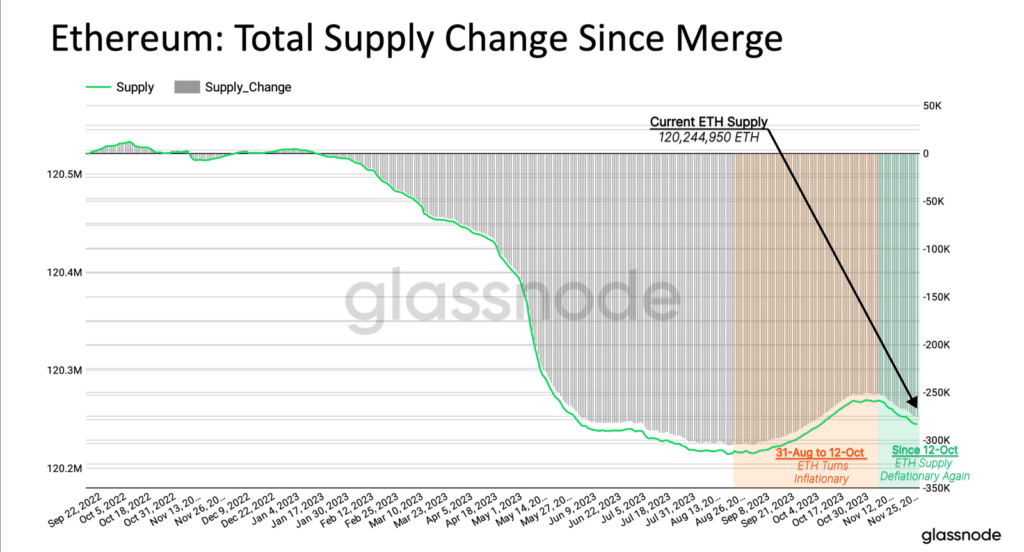
This deflation arises from two key factors. First, there is the slowdown in the number of validators in staking pools. Then, there is the increase in daily fees for Ethereum cryptos burned via EIP1559, fueled by increased network activity
The increasing number of validators leaving the pool since October is indeed slowing down the growth of the network. Which leads to a decrease in the issuance of new ETH crypto tokens. According to’Glassnode analysis, the number of participant exits saw a notable increase. This has gone from an average of 309 per day in October to an impressive average of 1018 validators per day since the start of November. This trend aligns with the recent rise in crypto prices.
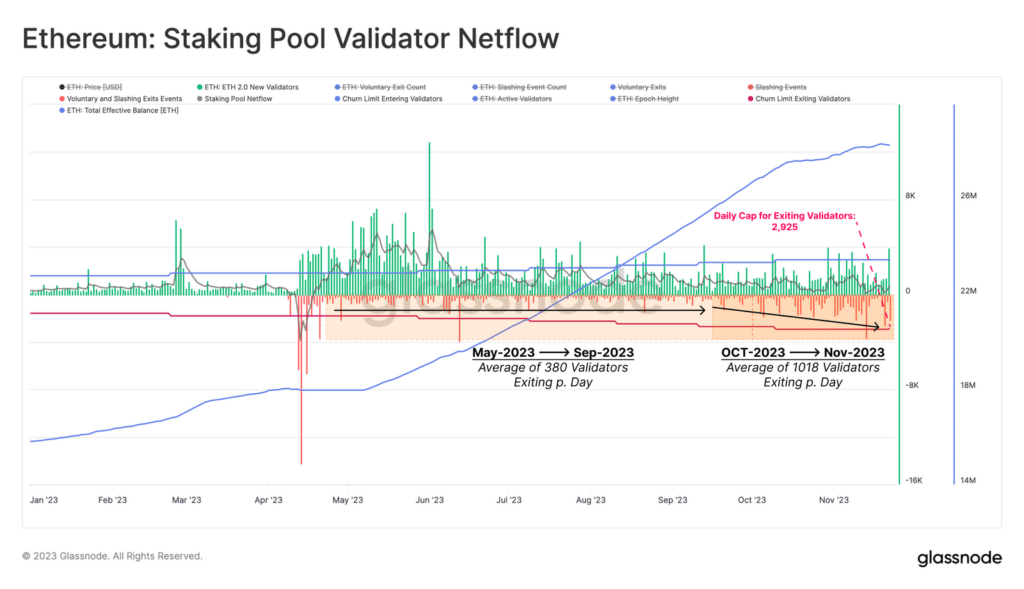
Mass outflows of participants, mostly voluntary, are particularly concentrated among CEXs such as Kraken and Coinbase. We also highlight a modest increase in outflows from liquid staking provider Lido.
Increased activities and pressure on ETH
According to Glassnode’s analysis, the network is also seeing a significant increase in transaction demand, particularly for token transfers and stablecoins. This increased pressure on the network results in increased gas fees, generating notable growth in Ethereum fees burned via EIP 1559.
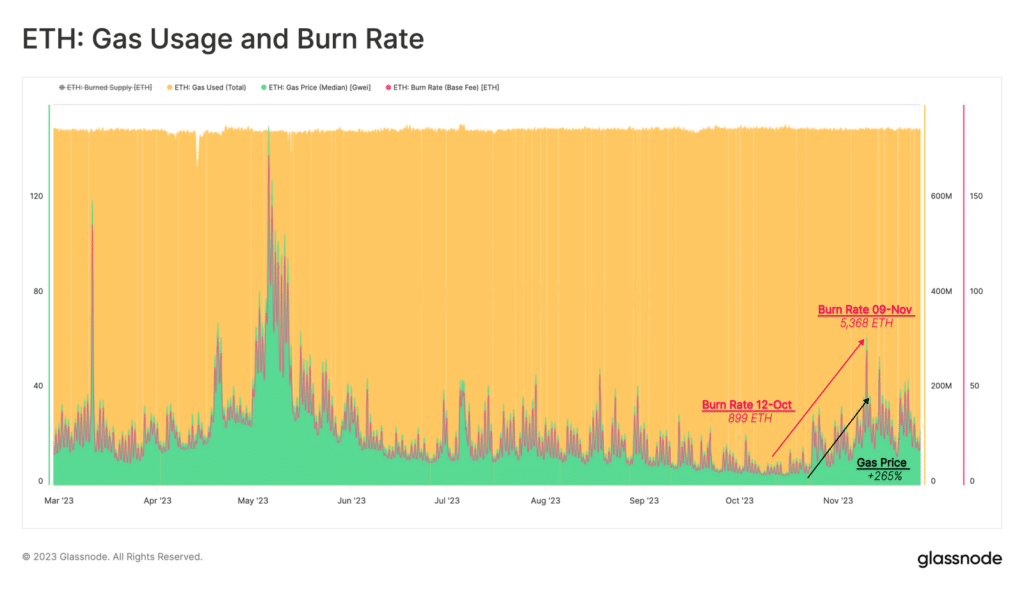
In October, the daily amount of Ethereum burned reached 899 ETH, a value that soared to 5,368 ETH in less than a month. These numbers demonstrate an uptick in activity, lifting Ethereum to new highs in demand and transactions.
This double pressure results in a crucial situation: ETH once again becomes a deflationary resource. Reducing the number of validators results in a slowdown in ETH issuance. While the explosion of network activities puts upward pressure on gas costs.
The combined effect of these two factors shows that Ethereum reacts to market changes. This creates a situation with which the supply of ETH decreases again, moving towards deflation.
How will this new dynamic influence investor choices in the weeks to come?
Maximize your Tremplin.io experience with our ‘Read to Earn’ program! For every article you read, earn points and access exclusive rewards. Sign up now and start earning benefits.