
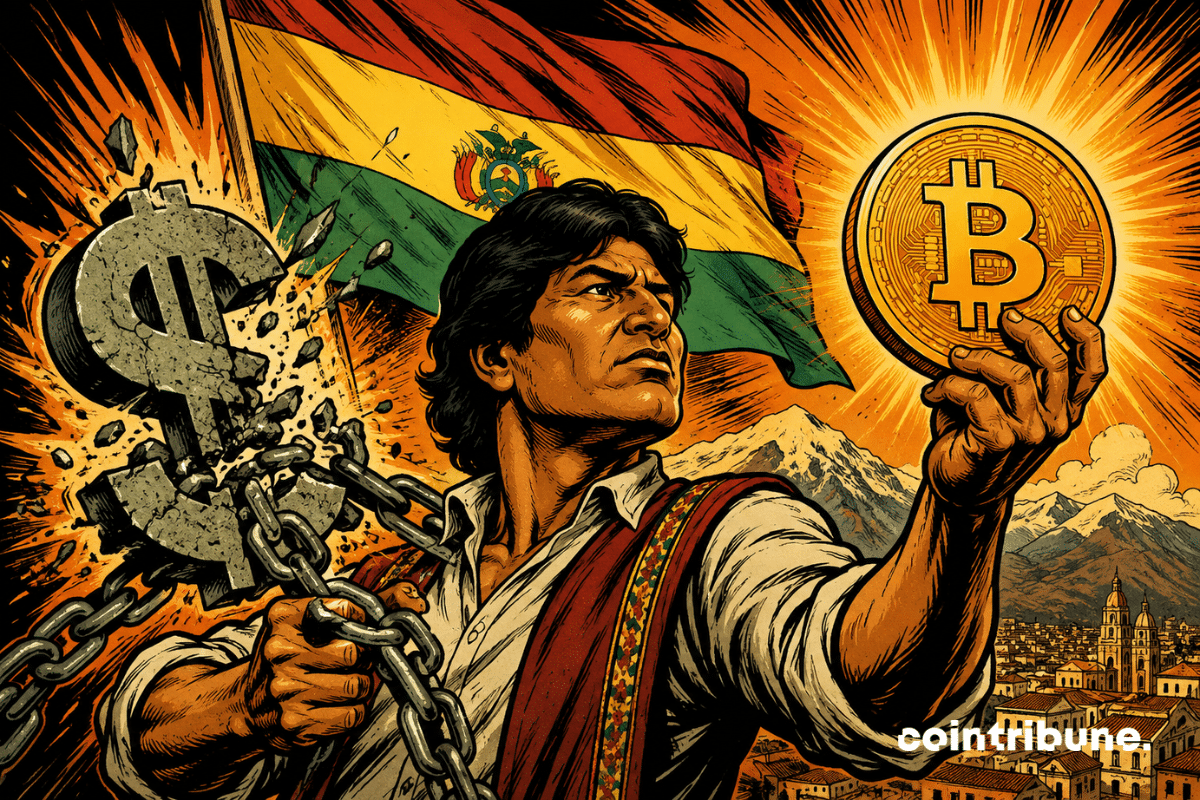
Bolivia is changing its monetary strategy after fifteen years of artificial stability. The country is abandoning its fixed peg to the dollar in the face of falling reserves and economic pressure. This decision also revives the debate around financial alternatives such as Bitcoin, while cryptocurrencies are making progress in economies facing currency tensions. The new exchange rate regime marks a new stage for the Boliviano and transforms the country's monetary environment.
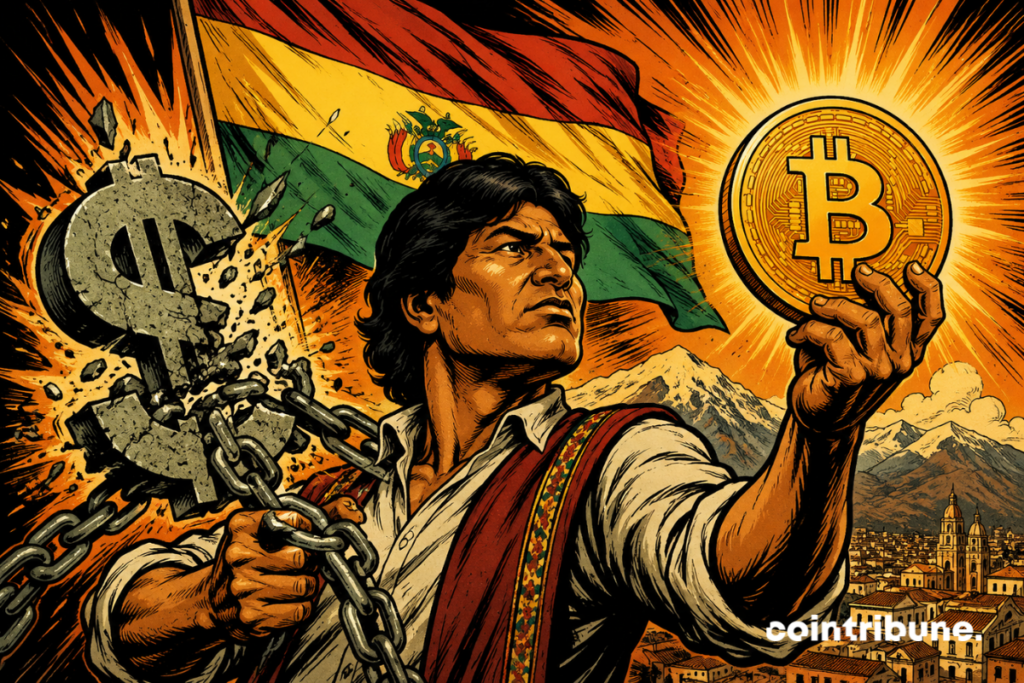
In brief
- Bolivia abandons its fixed anchor to the Dollar after fifteen years to adopt a flexible exchange rate regime in the face of the depletion of its reserves.
- The end of monetary control comes at a time when the gap between the official rate and the parallel dollar market has widened significantly.
- The lifting of restrictions on cryptocurrencies in 2024 caused a sharp increase in traded volumes and accelerated the adoption of stablecoins in the country.
- Bolivian banks are beginning to integrate services related to digital assets, including USDT, amid financial transformation.
- Faced with tensions over currencies, Bitcoin appears to be a strategic reserve considered by several States and could represent an avenue of diversification for Bolivia.
Bolivia abandons its dollar peg after fifteen years of control
The American dollar has just suffered another hard blow in Bolivia, where it played a central role in the fixed exchange rate system established since 2011. The country has just put an end to this system. The Minister of Economy José Gabriel Espinoza announced in a press release the abandonment of the official rate of approximately 6.96 bolivianos per US dollar. The country now adopts a flexible floating exchange rate regime, with a rate determined by market forces. This decision comes at a time when the old mechanism no longer reflected economic reality.
Before this announcement, the Central Bank's reference rate had already exceeded 10 bolivianos per dollar. The gap between the official rate and the parallel market had increased significantly, reaching approximately 12.9 to 13.1 bolivianos per dollar at the end of 2025. The old monetary system therefore no longer made it possible to maintain lasting stability. The government has chosen a new approach to respond to the accumulated imbalances.
The fixed exchange rate regime worked when Bolivia had sufficient reserves to support its currency. In 2014, foreign exchange reserves exceeded $15 billion, giving the central bank the means to defend the official rate. Since this period, reserves have fallen sharply, reducing its capacity for intervention. Rising budget deficits have also made maintaining this model increasingly difficult.
The move towards a flexible system is part of a broader economic stabilization strategy. This development could also accompany new exchanges with international financial institutions. For the Bolivian authorities, the objective is to restore a balance between the official market and economic reality. This transformation also opens a new chapter for alternative monetary solutions.
The rise of cryptocurrencies is accelerating in the country
For ten years, Bolivia had banned virtual assets on its territory. The situation changed in June 2024, when the central bank lifted restrictions with resolution No. 082/2024 of its board of directors. This opening quickly changed the local financial landscape. Users have begun to further explore cryptocurrencies as a protection tool against monetary tensions.
Transaction volumes via official channels increased from $46.5 million in the first half of 2024 to $294 million in the first half of 2025. This increase represents an increase of more than 530% in one year. The Bolivian crypto market has therefore developed new dynamics after the end of restrictions. Local players have gradually adopted new digital uses.
As of April 2026, three Bolivian banks already offered USDT-related services. This development shows that stablecoins now occupy an important place in the national financial ecosystem. The central bank of Bolivia also signed a memorandum of understanding with the National Digital Assets Commission of El Salvador in 2025. The country is thus seeking to better understand the opportunities related to digital assets.
The disappearance of the fixed rate could, however, change the demand for cryptocurrencies. If citizens can access foreign currencies at market prices through official channels, the use of certain stablecoins as protection against dollar shortages could evolve. However, the infrastructure created in recent years remains in place. Users now own digital wallets and master virtual asset transactions.
This situation shows that currency crises can accelerate the adoption of stablecoins. Bolivia thus becomes a case observed by crypto market players. Investors are now following the evolution of volumes after the reform of the exchange rate regime. Maintaining institutional demand around USDT could confirm the lasting establishment of cryptocurrencies in the local financial system.
And why not Bitcoin as a new strategic reserve?
Beyond stablecoins, bitcoin appears as a monetary alternative used by several states seeking to diversify their reserves. Unlike traditional currencies, its supply remains limited to 21 million units. This characteristic makes it a digital asset considered by some governments as a long-term store of value. Its decentralized operation represents a major difference compared to currencies controlled by central banks.
The United States has integrated bitcoin into its strategic thinking around national reserves of digital assets. This approach is based on the idea that an asset independent of the traditional monetary system can strengthen the financial diversification of a country. El Salvador has also placed bitcoin at the center of its monetary policy since its official adoption. The country continues to accumulate bitcoin reserves with a total of 7,696.37 BTC in a logic of financial sovereignty despite pressure from the IMF.
Bhutan is also one of the countries that have developed significant exposure to bitcoin. Thanks to its energy resources, the country participated in the development of bitcoin mining and holds this digital asset in its reserves. This strategy shows that certain States now consider Bitcoin as a new financial instrument in the same way as certain traditional reserves. The objective is to have an alternative asset in the face of global economic uncertainties.
In this context, Bolivia could also consider bitcoin as a complementary tool to strengthen the diversification of its reserves. After abandoning its dollar peg and facing the difficulties encountered in maintaining a sufficient level of foreign currencies, the country has an opportunity to explore new financial mechanisms. A bitcoin reserve would not replace traditional currencies, but could offer additional protection against tensions in international markets.
For Bolivia, gradually integrating bitcoin into a national strategy could represent a new step in the modernization of its financial system. The experience of other countries shows that a digital asset can become an instrument of diversification when framed by a clear policy. As the country seeks to restore stability to its economy, BTC could become an additional component of its strategic reserves alongside traditional assets.
Maximize your Tremplin.io experience with our 'Read to Earn' program! For every article you read, earn points and access exclusive rewards. Sign up now and start earning benefits.


