
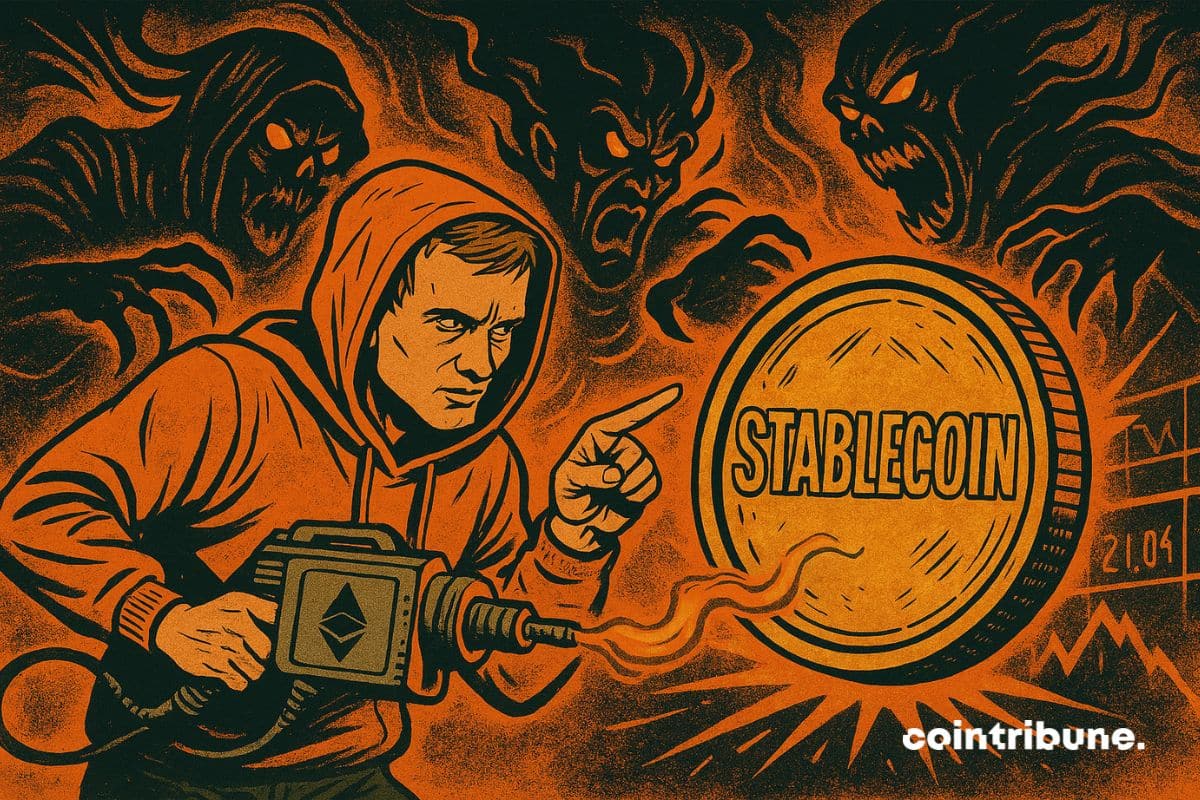
Vitalik Buterin, co-founder of Ethereum, recently reignited the debate on the quality of stablecoins. With a market exceeding $300 billion, these assets have become a pillar of the crypto ecosystem, but their structural flaws could threaten their long-term stability. His statements invite us to rethink their conception to avoid systemic crises.
In brief
- Decentralized stablecoins suffer from 3 major flaws: dependence on the dollar, vulnerability of oracles and competition from staking returns.
- These limits threaten the crypto ecosystem by exposing markets to macroeconomic risks, manipulation, and liquidity instability.
- Vitalik Buterin offers Ethereum-centric solutions: alternative indices, secure oracles and integration of staking yields without compromising stability.
Crypto: the 3 major flaws of stablecoins, according to Vitalik Buterin
Stablecoins, often presented as a secure crypto alternative to traditional currencies, suffer from three critical problems according to Vitalik Buterin:
- Their dependence on the American dollar;
- The vulnerability of oracles to players with significant capital;
- Competition in staking yields, particularly with Ethereum.
These flaws raise questions about the long-term viability of current stablecoins, as they play a key role in the crypto ecosystem. Even more troubling, they are reminders of the systemic risks posed by non-resilient models, as the collapse of Terra showed.
Why do these limits threaten the crypto ecosystem?
The flaws of decentralized stablecoins do not only concern their direct users, but threaten the entire crypto ecosystem. Indeed, their dependence on the US dollar creates collective exposure to macroeconomic risks, such as inflation or geopolitical sanctions, over a 20-year horizon. A loss of confidence in these assets could lead to capital flight! Thus affecting lending platforms, decentralized exchanges and even DeFi.
The vulnerability of oracles, for its part, introduces systemic risk. Successful manipulation could distort crypto prices, triggering cascading liquidations and massive losses for investors. Finally, competition in staking returns disrupts the economic balance. If users prefer to stake their ETH rather than commit them to stablecoin protocols, this could reduce the available liquidity, making the latter less attractive and less stable.
Avenues for innovation for more resilient stablecoins
Faced with these challenges, Vitalik Buterin suggests first exploring alternative indices to reduce dependence on the dollar. Indeed, baskets of goods or purchasing power indicators could offer more lasting stability, less subject to monetary hazards. Additionally, it emphasizes the need to design systems that are resistant to attacks, avoiding financialized governance mechanisms that increase the risks of capture.
According to Buterin, more robust and transparent oracles could restore trust in the data used by stablecoins. Finally, integrating staking returns into a framework compatible with the stability of stablecoins is essential. Vitalik Buterin discusses mechanisms to reconcile these incentives, so that crypto users are not forced to choose between staking and participating in stablecoin protocols.
Vitalik Buterin's alerts on stablecoins are a reminder of the crypto ecosystem's ongoing challenges. The proposed avenues open up perspectives, but it remains to be seen whether players in the sector will be able to adopt them in time. And you, do you think that these innovations will be enough to secure the future of stablecoins?
Maximize your Tremplin.io experience with our 'Read to Earn' program! For every article you read, earn points and access exclusive rewards. Sign up now and start earning benefits.


