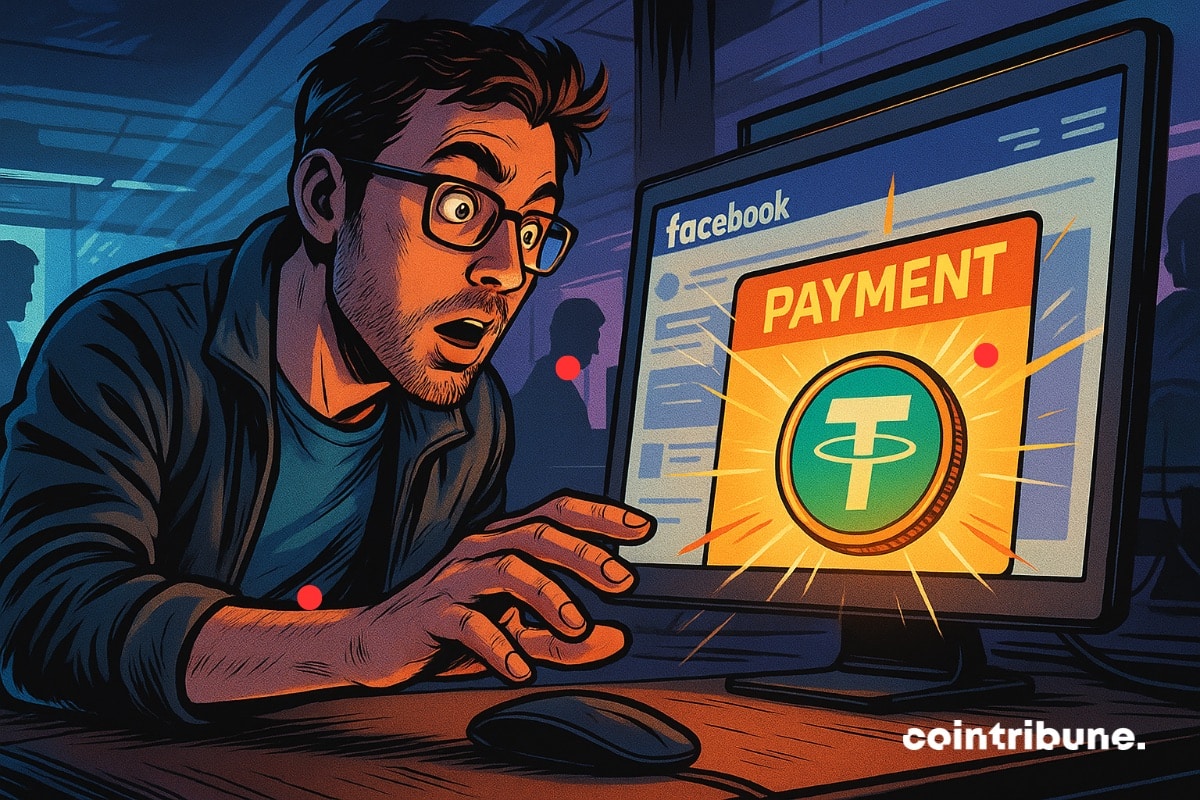
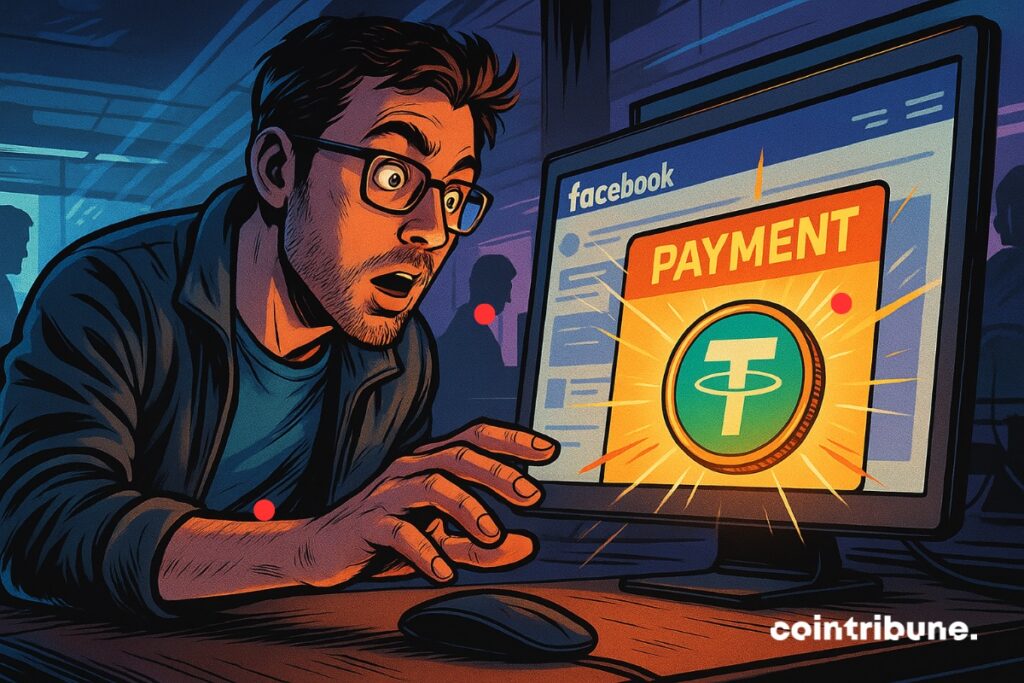
Three years after Diem's failure, Meta returns to the crypto universe. This time, the firm explores the use of stablecoins to remunerate the creators on its platforms. By betting on the USDC or the USDT, it is anchored in a more flexible logic, oriented towards adoption, stability and overall financial inclusion.
In short
- Meta returns to the crypto by integrating the USDC and USDT stable to pay content creators.
- This strategy aims to facilitate cross -border payments and bypass traditional banking infrastructure.
- By focusing on adoption rather than the program, Meta strengthens its anchoring in the world digital economy.
A discreet but ambitious return of Meta in the crypto
After failing to impose Diem as a global digital currency, Meta opts for a more pragmatic approach. The objective: to integrate existing stablecoins, such as the USDC of Circle or the USDT of Tether, to make payments on a global scale. This decision marks a clear break with the initial ambition to create a owner crypto.
The arrival of Ginger Baker at the head of the initiative underlines the seriousness of the project. Former de Plaid and member of the Stellar Foundation council, she embodies a desire to anchor the project in the standards of decentralized finance. Meta is now betting on crypto infrastructure to strengthen its social platforms, without arouse the same resistance as during its offensive with Libra.
Why do Stablecoins seduce Meta again?
The use of stablecoins by meta meets several strategic objectives. It optimizes cross -border transfers, bypassing costly and slow traditional banking networks. For a company like Meta, which connects billions of users, the advantages are multiple:
- Reduction in transaction costs;
- Acceleration of payments between creators and platforms;
- Funds for funds in unstable monetary environments.
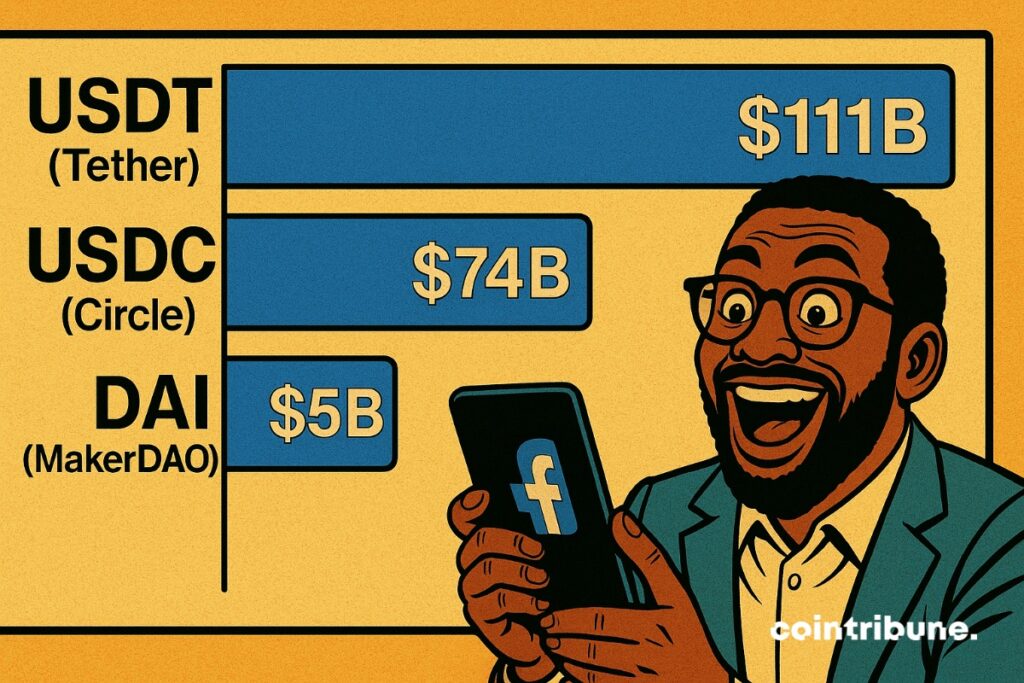
By targeting the USDC and the USDT, Meta relies on already largely adopted assets, facilitating their integration without requiring complex learning. The company thus has a stable, digital and global means of payment, without engaging the political risks of a private currency. The model evolves: from the monetary emission, we go to the facilitation of crypto liquidity.
A crypto strategy at the crossroads of regulation
Meta's return to the world of digital assets comes up against a moving regulatory environment. In the United States, the Genius law, which aimed to supervise stablecoins and to make it a lever for international influence of the dollar, was recently blocked in the Senate. This legislative impasse reflects political tensions around these new financial instruments. Meta, who had already seen her project Libra strangled by the authorities, seems to have learned lessons.
By opting for crypto tokens already in line, it limits its direct exposure. However, legal uncertainties remain: any regulatory development could slow down or condition the deployment of these payment systems. Meta's strategy will have to deal with these constraints to perpetuate itself.
What challenges for content creators?
The integration of Stablecoins opens up new perspectives for content creators, especially in emerging countries. Where banking systems are failing or absent, receiving stable crypto payments could transform access to monetization. This would allow Meta to:
- Stimulate local content production;
- Diversify the income from creators;
- Retain a base of producer users.
In this logic, Instagram, Facebook or Threads could become cross -border payments. The crypto stands out as a lever for financial inclusion, by allowing creators to monetize without a classic bank account. Meta could thus extend its grip, not only social, but also economic, by becoming the distribution interface of digital income worldwide.

A few months after a shareholder proposed to Meta to invest her Bitcoin cash, she is based today on stablecoins as an integration strategy. This repositioning marks an evolution in tech: inserting into the crypto ecosystem rather than competing it. A dynamic that could transform social networks into key players in digital finance and the web3.
Maximize your Cointribne experience with our 'Read to Earn' program! For each article you read, earn points and access exclusive rewards. Sign up now and start accumulating advantages.