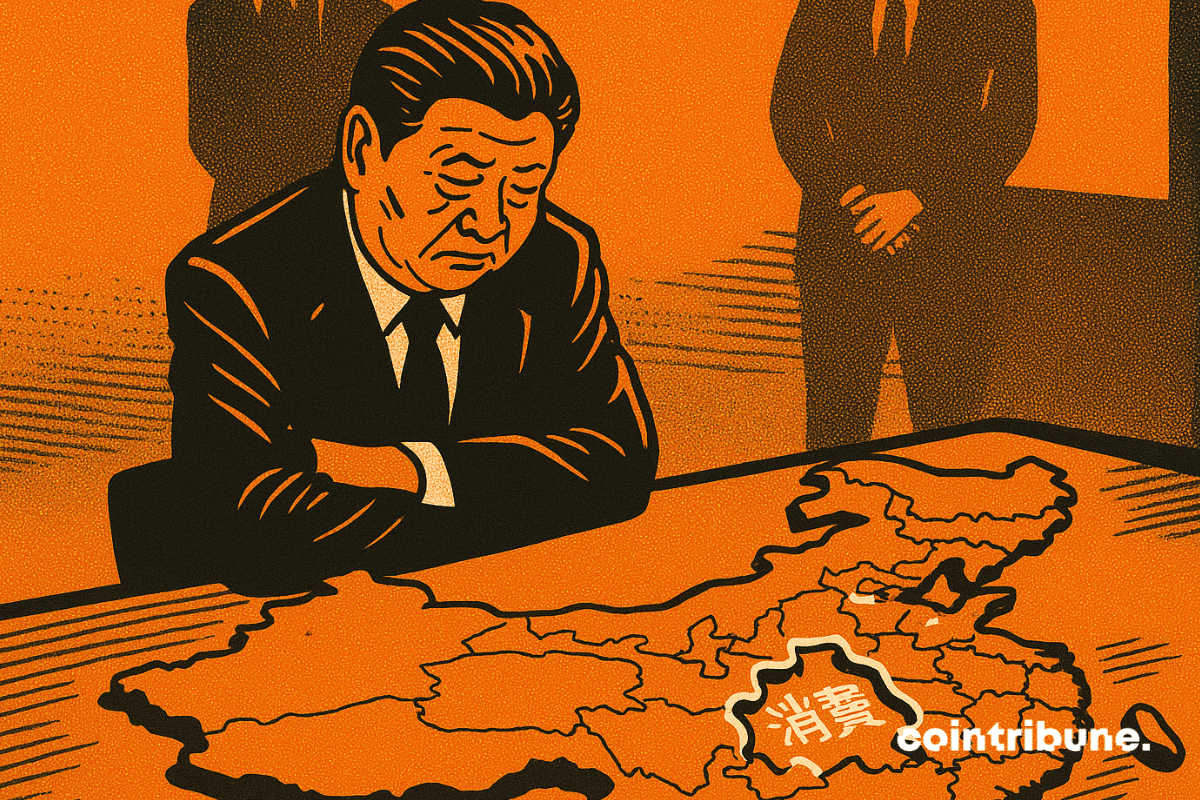
Despite massive budgetary injections, the world's second largest economy is raising warning signals. Beijing wanted to revive growth by focusing on investment and domestic demand. Result: sluggish consumption, real estate in crisis and a weakened export model.
In brief
- China is experiencing a triple slowdown: consumption, investments and production are declining despite recovery plans.
- Beijing is beginning a transition to a domestic economy, but execution remains unclear and uncertain.
The latest figures published confirm a Chinese economy under pressure
In China, all indicators suggest a cautious, almost frozen economy. L'injection of 1 trillion yuan decided by Beijing is not enough to restore confidence.
Investment in fixed assets fell by 1.7% over ten months. This is the worst score since the COVID crisis according to data. Considered to be the heavyweight of China's economic growththe real estate sector is dragging everything down. With construction sites frozen and developers in debt, construction no longer plays its role as a shock absorber.
Industrial production is also slowing: +4.9% in October, compared to +6.5% a month earlier. Retail sales, a barometer of consumption, are stagnating at +2.9%. They even continue their slip for the fifth consecutive month. Despite fall festivals and an additional public holiday, even the automotive sector is in decline.
Beijing between two models, households at the center of the game
Since the return of Donald Trump to the White House, the trade war resurfaced. For Beijing, this sounds like a warning: the export model is reaching its limits. Result: the Communist Party is preparing a strategic shift. Objective: significantly increase the share of household consumption in GDP.
But between political will and concrete application, the gap persists. The state apparatus continues to favor large public groups and infrastructure, to the detriment of private producers and households. The transition therefore remains theoretical, hampered by high local debt and declining industrial profitability.
The Chinese economy is now looking for a second wind. Beijing targets 5% growth in 2025. Without major adjustments, however, this course will remain difficult to maintain.
The change in model desired by Xi Jinping therefore requires more than a five-year plan. It requires a complete overhaul of economic, social and fiscal balances. China will soon have to decide in order to save its economy: invest in its households or suffer a lasting slowdown.
Maximize your Tremplin.io experience with our 'Read to Earn' program! For every article you read, earn points and access exclusive rewards. Sign up now and start earning benefits.