The Russian economy vacillates under the weight of its own structural flaws and an increasingly hostile international environment. While the Kremlin tries to display resilience in the face of Western sanctions and geopolitical tensions, the latest reports from the Russian Bank and the Ministry of the Economy paint a much more worrying reality. Between collapse of oil revenues, an explosion of budget deficit and a private sector on the verge of asphyxiation, Russia must face major economic challenges that could deeply affect its medium -term stability.
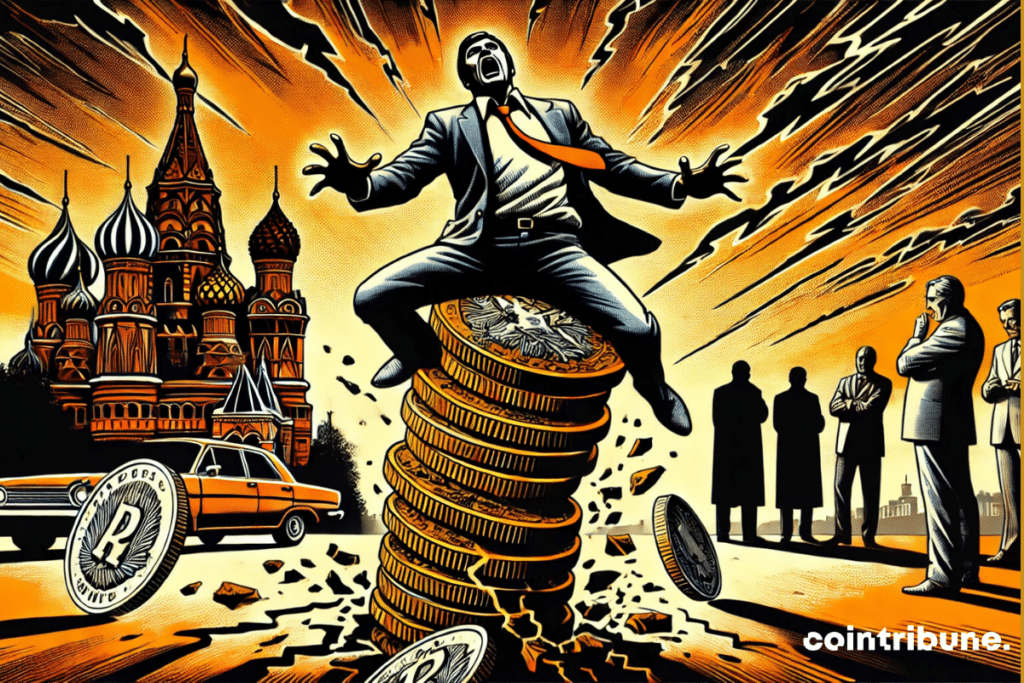
A budget deficit that worsens and public finances under pressure
The Russian economic model, strongly dependent on energy exports, comes up against an implacable reality: the drop in oil prices undermines state revenues. According to the Central Bank of Russia, a continuation of the decrease in prices could seriously compromise the budgetary balance of the country. “Energy income, directly dependent on the level of crude price, represent approximately a third of tax revenue from the Russian State,” said analysts from the Ministry of the Economy. This pressure on public finances results in an explosion of the budget deficit, which reached 1,700 billion rubles (18 billion euros) in January.
To finance this chasm, Moscow draws critically from its sovereign fund, supposed to be a strategic lever to ensure the stability of the country in times of crisis. The latter went from $ 112.7 billion in 2022 to only 37.5 billion today. The central bank alert on the fact that “this fund is not intended to cover prolonged periods of budget deficit”. This thus underlines the unbearable nature of this strategy. While the Kremlin praises the solidity of the national economy, the figures show a much more fragile reality, where the country's financial resources are dangerously.
A strangled private sector and sealed growth prospects
If the State struggles to maintain its budgetary balance, Russian companies are also faced with increasing difficulties. 21 % interest rates weigh heavily on private sector investment capacities, which makes credit access almost impossible for many structures. “An investment deficit today is a growth deficit in two to three years,” warns the Ministry of the Economy, which provides information on the disastrous impact of this situation on the future of the country.
In addition to this obstacle to financing, costs explode for companies, under the effect of several combined factors: shortages of labor due to war in Ukraine, increase in customs tariffs, increase in taxes and charges of interest . According to the Ministry of the Economy, these additional costs will reach 14,800 billion rubles during this year 2025, the equivalent of 45 % of the total volume of private investments in bodily immobilizations of 2024. A scenario that stifles companies And drastically limits their room for maneuver, especially since domestic and international demand is in withdrawal, which reduces their ability to set competitive prices.
While Vladimir Putin and his senior officials publicly insist on the resilience of the country in the face of Western sanctions, economic realities tell a completely different story. Behind the scenes, the Kremlin is concerned about the perverse effects of war in Ukraine on the national economy: between the shortages of labor, the devaluation of the ruble and the outbreak of funding costs, the growth prospects are reduced with sorrow.
Could Russia face a deeper economic crisis? If the situation continues to deteriorate, the government could be forced to make radical choices: reduce its public spending, further increase taxes, or find new sources of funding abroad, a major challenge in the current context .
Maximize your Cointribne experience with our 'Read to Earn' program! For each article you read, earn points and access exclusive rewards. Sign up now and start accumulating advantages.