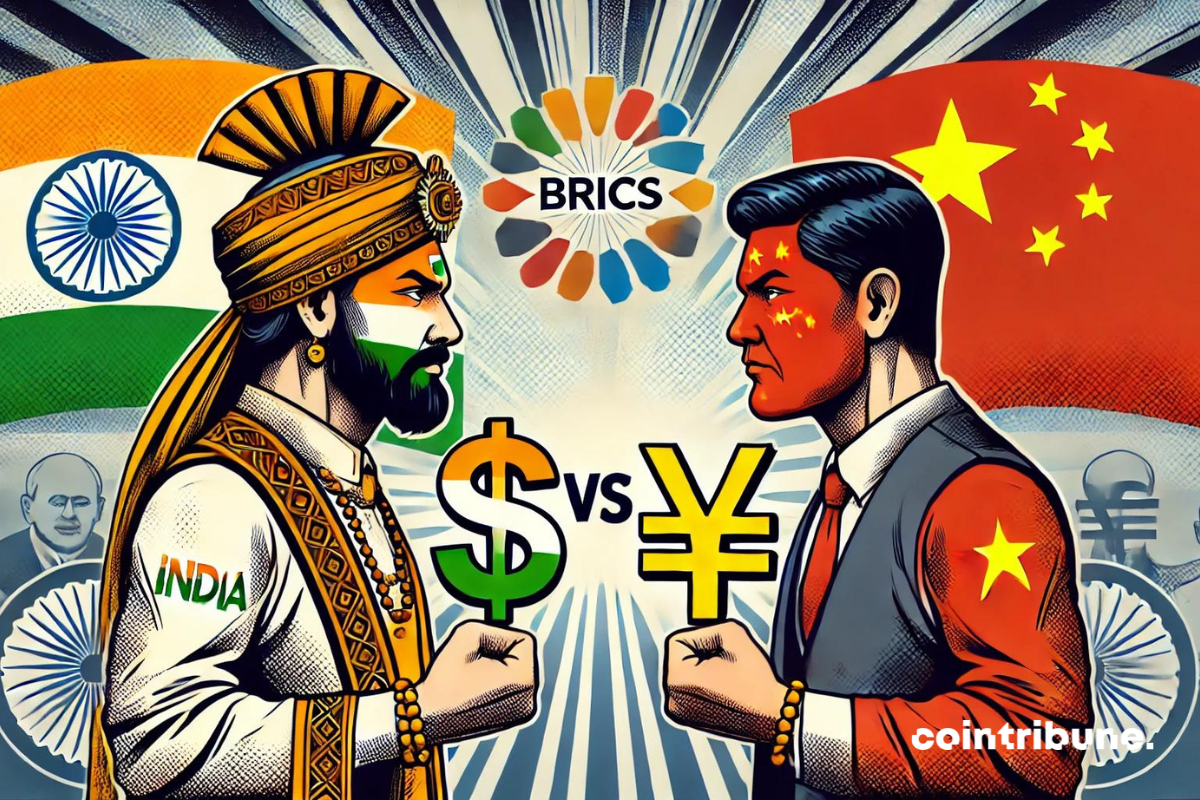
The 2024 Shanghai Cooperation Organization (SCO) summit was the scene of major geopolitical tensions. In a move that could redefine the dynamics of international trade, India formally rejected China’s proposal to replace the US dollar with the yuan for trade. The move marks a significant shift in BRICS relations. India’s tough stance reflects not only its economic concerns but also a growing wariness of China’s ambitions on the global stage.
India rejects China's proposed de-dollarization
At the 2024 Shanghai Cooperation Organization (SCO) summit, China stepped up its efforts to promote de-dollarization, supported by Russia, by encouraging the use of local currencies, especially the yuan, for international trade transactions. However, India strongly opposed the move, stating its intention to continue using the US dollar as its base currency for trade. Indian Prime Minister Narendra Modi, sending External Affairs Minister Subrahmanyam Jaishankar to represent him at the summit, clearly signaled its disagreement with the Chinese proposal.
India, despite the savings from using the yuan and ruble to pay for Russian oil in 2022, prefers to stick with the dollar for its future transactions. This decision stems partly from a distrust of China’s economic intentions and a desire to preserve the dollar’s influence on the international stage. In response to Russian demands to settle oil purchases in yuan, India has chosen to reduce its imports of Russian oil and turn to the United States, paying in dollars.
How India's decision shakes up BRICS
India’s tough stance against China’s proposed de-dollarization could have significant implications for global economic dynamics. By refusing to adopt the yuan for trade, India is sending a clear message about its commitment to maintaining the US dollar as its dominant currency. This decision could influence other BRICS members, creating a division within the group over the future direction of monetary policies.
Russia’s support for China’s de-dollarization initiatives reveals the two nations’ shared ambitions to reduce global reliance on the dollar. However, India’s resistance could hamper these efforts, complicating the implementation of a currency substitution strategy. The immediate impact is already evident in oil transactions, where India has begun to diversify its sources of supply by turning to the United States, paying in dollars rather than yuan or rubles. This strategy not only strengthens the dollar’s position in the short term, but also demonstrates India’s caution in the face of China’s growing economic influence.
The long-term implications of this divergence of strategies within the BRICS are still uncertain. If other member countries decide to follow India’s example, the dollar’s dominance could be consolidated, at least temporarily. On the other hand, if China and Russia can convince more nations to follow suit, the much-desired dedollarization will have a chance of becoming a reality.
Maximize your Tremplin.io experience with our 'Read to Earn' program! For every article you read, earn points and access exclusive rewards. Sign up now and start earning benefits.
Click here to join 'Read to Earn' and turn your passion for crypto into rewards!