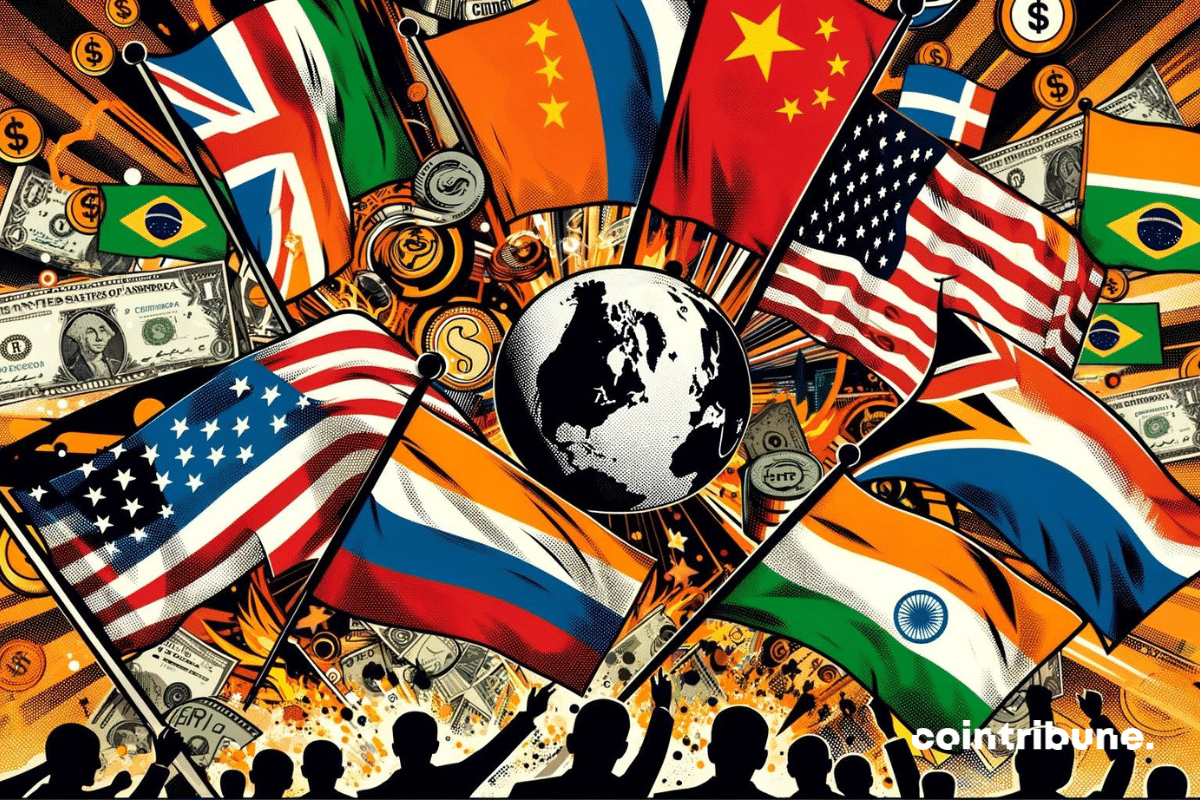
The financial world is changing, particularly with the emergence of BRICS which are actively seeking to reduce their dependence on the US dollar. Their dedollarization movement is reshaping trade dynamics. This move could also have direct repercussions on the United States national debt.
Impact of BRICS dedollarization on US debt
The dedollarization strategy adopted by BRICS aims to reduce their dependence on the US dollar. The BRICS represent more than 40% of the world's population and around 25% of global GDP. The dedollarization movement initiated by the alliance could decrease overall demand for the dollar, thus negatively influencing the United States' ability to finance its debt through traditional economic means.
As BRICS expands its influence and adds new members, its penchant for an alternative to the dollar gains ground. Decreasing demand for the dollar can cause interest rates on U.S. bonds to increase. This scenario could exacerbate the US debt situationalready precarious.
By reducing their exposure to the dollar, BRICS nations could force the United States to rethink its debt financing strategies. If the dollar loses its preeminence as the world's reserve currency, it could limit the United States' access to cheap capital, crucial for financing its budget deficit and growing debt.
The impact of BRICS trade balances on the American economy
China, an active member of the BRICS bloc, maintains a significant trade surplus with the United States, exacerbating the U.S. trade deficit and indirectly increasing the national debt. This imbalance causes the United States to spend more on Chinese imports than it earns on exports to China. This situation increases the transfer of dollars out of the United States and strengthens the Chinese economy at the expense of American debt.
Brazil and India, also operating within BRICS, have become important trading partners for the United States. Changes in the trade policies or economic conditions of these nations can directly affect the United States trade deficit. A deterioration in the American trade balance with these countries could thus further worsen the American debt.
The rise in economic and commercial power of the BRICS nations is rearranging the currents of world trade. If this trend continues, with the United States importing more than it exports to these countries, it could lead to a continued rise in its external debt. This dynamic puts pressure on the American economy, already heavily indebted, and underlines the urgency of deep structural reforms.
Maximize your Tremplin.io experience with our 'Read to Earn' program! For every article you read, earn points and access exclusive rewards. Sign up now and start earning benefits.