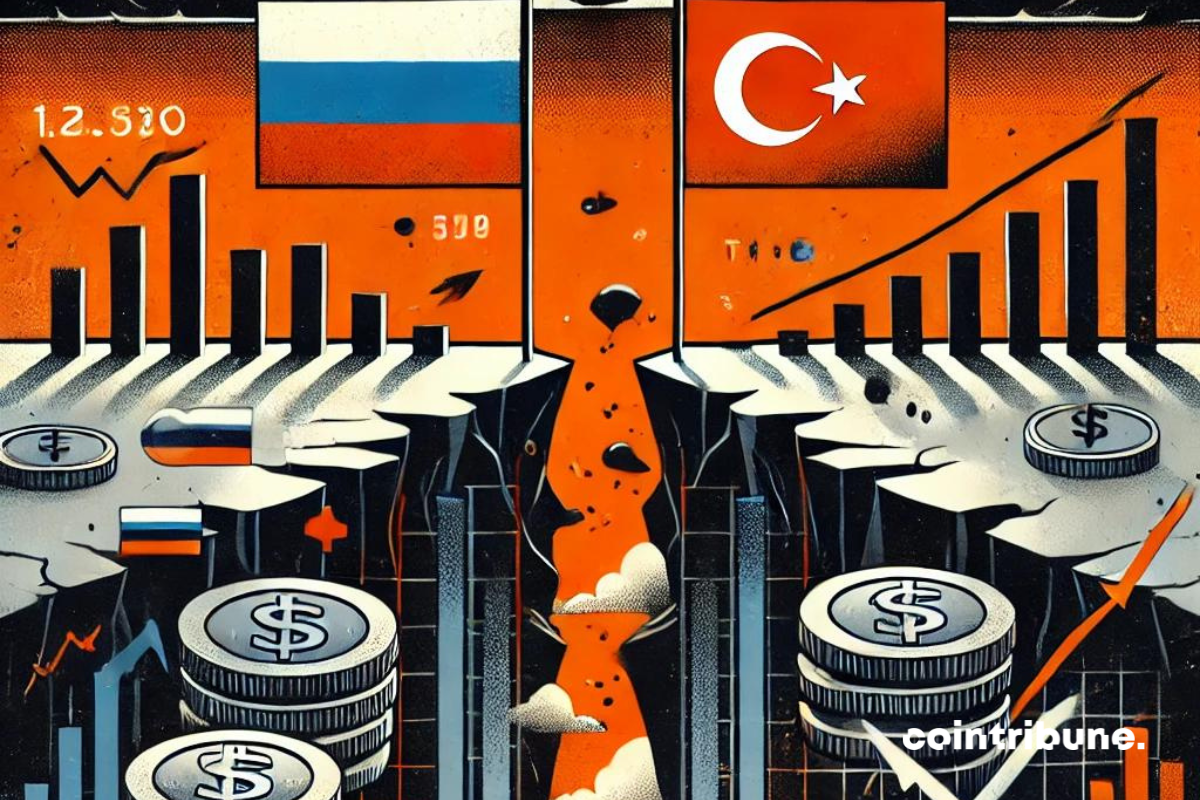
Turkey finds itself at a strategic crossroads, torn between its historic alliances with the West and its growing ambition to integrate into new international dynamics. Seeking to diversify its partnerships and free itself from the constraints imposed by its traditional allies, Ankara has shown a clear desire to join the BRICS, a bloc of emerging economies that challenges the global economic order dominated by Western powers. This decision, supported by Moscow, comes at a critical time when Western sanctions against Russia are putting unprecedented pressure on Russo-Turkish trade relations. Caught between Moscow and Washington, Turkey is navigating troubled waters, desperate to maintain a delicate balance between its economic interests and the hardening geopolitical realities.
Increased Banking Surveillance: A Dilemma for Ankara Between Moscow and Washington
Turkey has shown a strong desire to join the BRICS, a group of emerging economies that positions itself as a counterweight to Western influence. This strategic move is part of a dynamic of diversification of alliances, as Ankara seeks to balance its relations between East and West, while freeing itself from exclusive dependence on traditional partners such as NATO and the European Union. Supported by Russia, this candidacy nevertheless occurs in a context of growing tensions, fueled by Western economic sanctions targeting Moscow, which directly impact Russian-Turkish trade relations.
The sanctions, designed to intensify Russia's economic isolation, are putting unprecedented pressure on Turkish banks, which are subject to increased US surveillance. Every transfer of funds between Turkey and Russia is now subject to rigorous control. This unprecedented situation threatens trade that could reach $55 billion this year according to President Erdoğan. Caught between the need to maintain its economic relations with Moscow and respect for international restrictions, it finds itself in a very complex dilemma.
Cooperation between Turkey and Russia in danger
Beyond financial sanctions, the entire trade cooperation between Russia and Turkey is under threat. According to Alexey Erkhov, the Russian ambassador to Ankara, Western sanctions are explicitly aimed at destroying economic relations between the two countries. Concrete measures, such as blocked remittances and closed accounts for Russian citizens in Turkey, already illustrate the palpable effects of this pressure. This situation is not unique to Turkey; China, another Russian ally, is also subject to similar restrictions, particularly regarding payments for dual-use products. This crisis of financial confidence could have significant repercussions on strategic sectors such as energy and heavy industry, which are crucial for both nations.
Faced with this uncertainty, Ankara finds itself in a delicate position. If the disruptions persist without a quick solution, the impacts could be prolonged, perhaps marking the beginning of a deeper economic rift between Russia and Turkey. Turkish diplomacy, which often seeks to mediate in international conflicts, could also be weakened. Nevertheless, Turkey’s potential membership in BRICS could reshape the landscape, providing an alternative platform to offset the economic and strategic losses caused by Western sanctions, while strengthening its position as a balancing act on the global geopolitical chessboard.
Maximize your Tremplin.io experience with our 'Read to Earn' program! For every article you read, earn points and access exclusive rewards. Sign up now and start earning benefits.