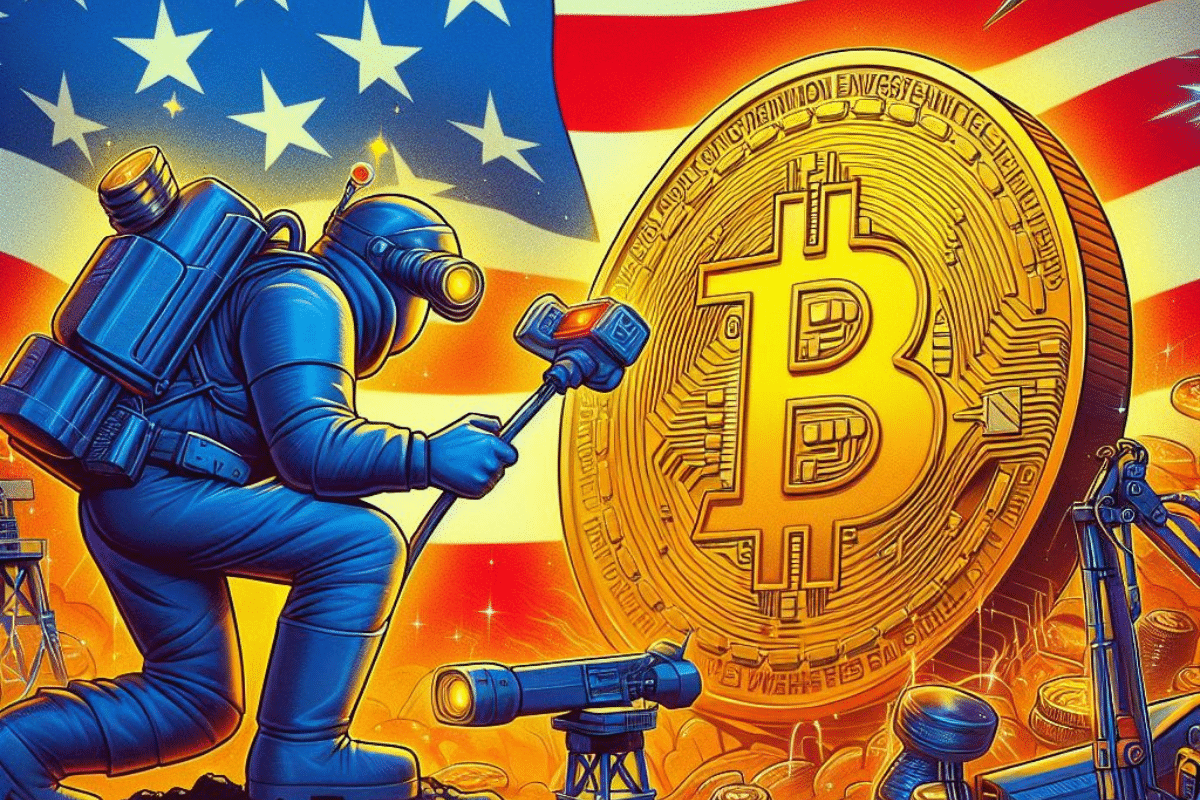
The US Department of Energy (DOE) has just launched a major 6-month investigation to assess the electricity consumption of Bitcoin mining in the United States. Objective: to draw up a precise inventory of the sector and its carbon footprint.
Bitcoin mining in the crosshairs of the DOE!
The Energy Information Agency (EIA), a government agency, will conduct a mandatory 6-month national census of all U.S.-based mining companies using proof of work. Objective: to accurately measure for the first time their electricity consumption, their geographical location and their sources of electricity supply.
Joe DeCarolis, the administrator of the EIA, justifies this monitoring arguing that the new surge in Bitcoin prices “incentivizes greater mining activity, which increases electricity consumption”. A potentially problematic trend with electricity networks under tension, he believes.
“ As proof, the price of bitcoin has increased by around 50% over the past three months, and higher prices are prompting more crypto mining activityswhich in turn increases electricity consumption. »
To estimate miner consumption, the EIA relies on the Cambridge Bitcoin Electricity Consumption Index (CBECI) benchmark. According to its latest data, the United States’ share of global Bitcoin mining increased from 3.4% at the start of 2020 to 37.8% at the start of 2022.
By extrapolating this ratio, the electricity consumption of American miners is estimated between 25 and 91 terawatt hours (TWh) in 2023, or 0.6 to 2.3% of national demand. In total, 137 sites have been identified in 21 states, mainly in Texas, Georgia and New York, for a capacity of 10,275 megawatts.
These figures make mining one of the most energy-intensive activities in the country. In a context of network fragility this winter, the government intends to anticipate the changing needs of this booming industry.
An initiative perceived with suspicion
While this unprecedented data collection is intended to be informative, it remains cautiously received by certain players in the ecosystem. The Texas Blockchain Council thus warns against “discrimination against this type of consumer”. Others like Riot Platforms recall the contribution of miners to the stabilization of networks via partnerships with operators.
Yet the Bitcoin mining industry is already playing an active role in stabilizing networks. In Texas, miners participate in a program to reduce consumption during peak periods, thus avoiding load shedding.
Rather than a constraint, this monitoring could be an opportunity to more closely integrate Bitcoin mining into American energy strategy. On condition that the data collected is used to support this innovative sector, and not to hinder its growth.
This vast collection of data marks a turning point in the government’s approach to a rapidly developing sector. While it will make it possible to rigorously objectify the energy footprint of mining, the risk of finicky regulations worries certain players.
The challenge will be to find the right balance between supporting innovation and controlling the electricity consumption of this strategic industry.
Maximize your Tremplin.io experience with our ‘Read to Earn’ program! For every article you read, earn points and access exclusive rewards. Sign up now and start earning benefits.