Bitcoin's fall below $90,000 on Wednesday reignited market fear and extended a sell-off that has already lasted several days. Prices have fallen to levels not seen since the first stressful periods of this year. Traders responded by removing risk and reducing exposure to spot and derivatives markets.
In brief
- Short-term buyers are quickly exiting as BTC slips below $90K, leaving most recent holders at a loss and adding to the panic selling.
- Nearly 3 billion ETF outflows are draining demand as volatility rises, mirroring levels seen during large selloffs.
- Futures open interest is falling as traders reduce their exposure, signaling caution and low confidence in a nearing rebound.
- Negative financing rates on major assets signal a defensive posture, reducing the chances of a quick rebound in the face of weak demand.
Capitulation accelerates among recent buyers as Bitcoin tests sub-$90,000 zone
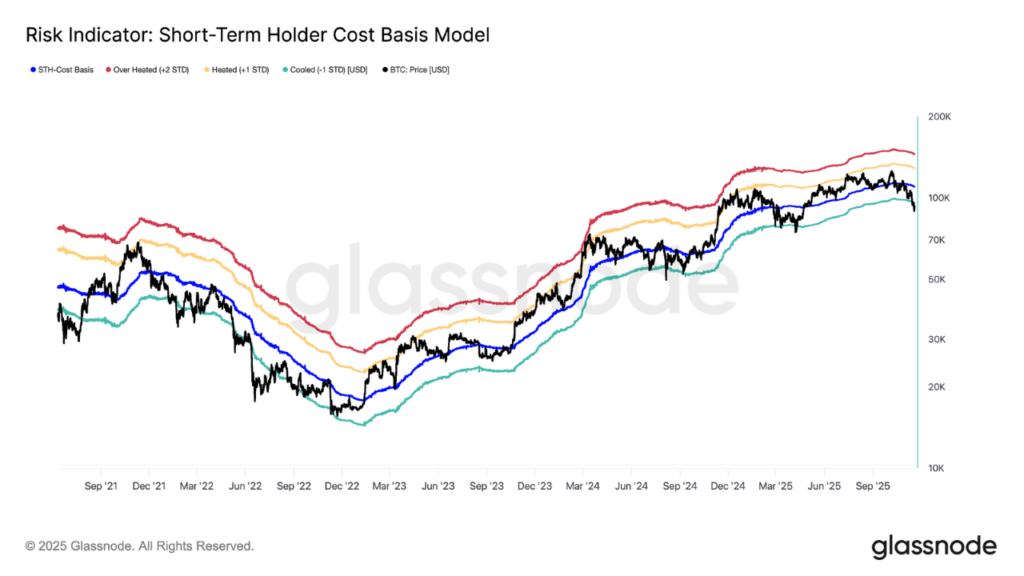
Short-term holders were again shaken by the rapid fall below $90K. Data from Glassnode shows that recent buyers are exiting positions faster than in previous 2024 pullbacks.
Wednesday's decline marks the third time this year that Bitcoin has traded below the lower band of the short-term holder cost basis model. The current reaction appears more intense, with Bitcoin hovering around $104,000 in mid-June — leaving almost all short-term buyers underwater at current prices.
Pressure has been building on several fronts. Weak demand, regular ETF outflows, increasing volatility and a shift from speculation to hedging contributed to the decline. U.S.-listed Bitcoin ETFs saw nearly $3 billion in net outflows this month, according to Sosovalue.com.
In derivatives markets, traders are also withdrawing. Many close their positions and seek to protect themselves rather than add new exposures. Implied volatility has risen to levels seen during the October 10 sell-off, showing just how much expectations have changed since falling below $90K.
The derivatives market flattens, Bitcoin declines and traders reduce their exposure
Unless stronger demand absorbs struggling sellers, Glassnode warns that the market could drift into a deeper accumulation phase. Without a change in sentiment, the decline could last longer.
Bitcoin fell to $89,106 on Wednesday, extending a weekly loss of 12.17%. Prices ranged between $88,760 and $93,549 during the session, with daily trading volume dropping 36.54% to $73.68 billion.
The market cap declined to $1.87 trillion, while Bitcoin's dominance rose to 59.35%, indicating that BTC is holding up better than many altcoins on a relative basis.
THE futures markets also eased, with open interest falling 1.16% to $65.77 billion, according to Coinglass. Total liquidations reached $144.60 million over the past 24 hours, down from $359.12 million on Tuesday. Long positions absorbed most of the losses at 124.82 million, while short liquidations remained low at 19.78 million.
Risk appetite continues to weaken as open interest on futures declines along with the price. Traders reduce exposure rather than add during weakness, making derivatives markets sparser than during previous declines. This shift aligns with the general pushback among risk-seeking groups.
Caution dominates as traders preserve capital and bullish momentum fades
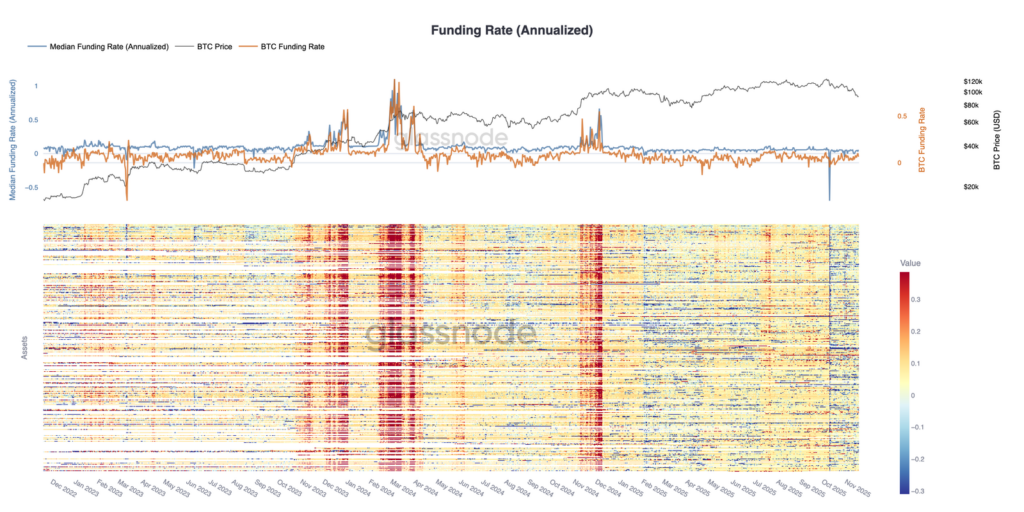
Funding rates on key assets have also moved into neutral or negative territory. Earlier in the year, several large-cap assets showed positive premiums as traders favored long positions. This trend has reversed, and current conditions indicate a more defensive posture.
Key market pressures include:
- ETF exits drain spot demand and add steady selling pressure
- Short-term holders are underwater and accelerating their exit as prices move below key cost basis levels.
- Volatility spikes increase the demand for hedging and reduce speculative long exposure.
- Decreasing interest in futures shows reduced leverage and limited confidence in a rebound.
- Negative funding rates signal a general shift away from bullish positions.
Combined, these trends indicate a risk-free environment with few signs of confidence returning.
Recent funding and positioning behavior suggests that traders prefer to protect capital rather than seek reversals. Weak demand in spot and derivatives markets reflects persistent hesitation even after sharp declines, limiting the chances of a rapid recovery.
Glassnode notes that markets will need a clear increase in buying activity to stabilize at current levels. Without this support, Bitcoin could continue to seek stronger support as struggling holders exit and volatility remains high. For now, traders appear willing to wait for better visibility before increasing their leverage.
Maximize your Tremplin.io experience with our 'Read to Earn' program! For every article you read, earn points and access exclusive rewards. Sign up now and start earning benefits.