

In 24 hours, $20 billion in positions were liquidated, an all-time record. Triggered by US tariffs on China, this crash of October 10-11, 2025 revealed the flaws of crypto exchanges like Binance, Bybit and Hyperliquid. Traders denounce technical malfunctions and call for urgent regulation.

In brief
- A historic crypto crash triggered by Trump's tariffs on China has shattered records, with Hyperliquid, Bybit and Binance leading the losses.
- Technical malfunctions, token depegs (USDe, WBETH) and excessive leverage (100x) amplified the crisis, pushing traders to demand urgent regulatory investigations.
- Binance announces that it has paid $283 million in compensation to crypto users.
An unprecedented crash in crypto history
The crypto crash of October 2025 will certainly go down in history. Indeed, between the 10th and 11th, many exchanges suffered billions of dollars in capitalization. Notably :
- Hyperliquid, which saw $10.31 billion in liquidations;
- Bybit, $4.65 billion in liquidations;
- Binance, $2.41 billion in liquidations.
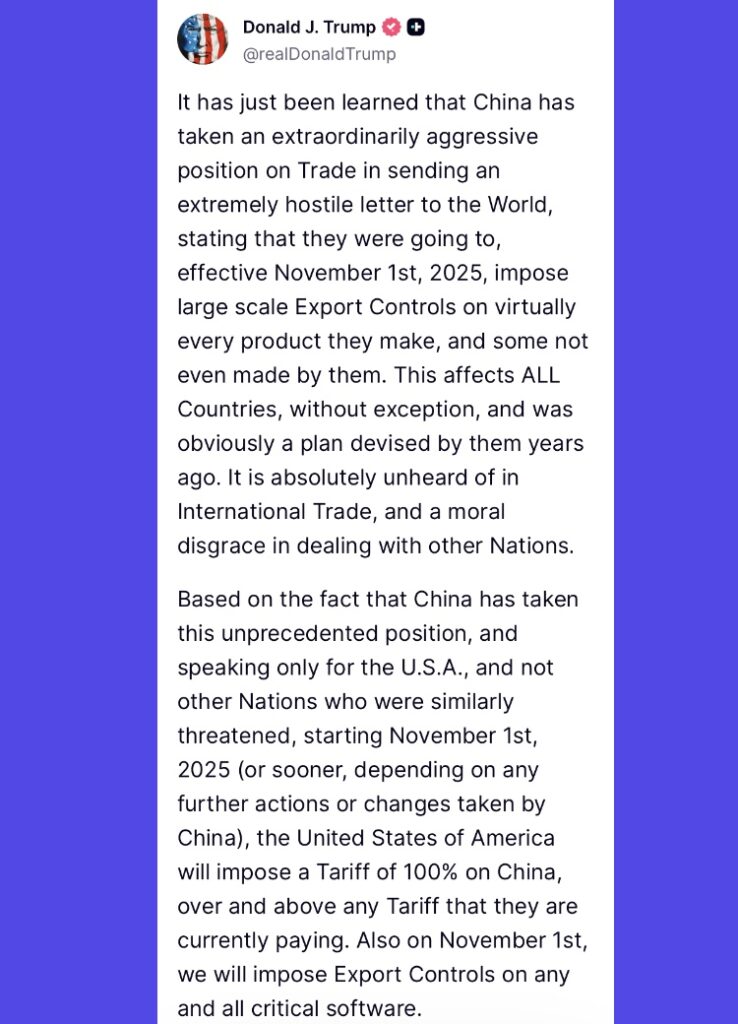
These figures exceed those of the FTX crisis or the crash of 2020. The trigger? Donald Trump's announcement of a 100% increase in customs tariffs on China, which created chaos.
To make matters worse, an explosive mix has taken the crypto market by storm: ultra-leveraged positions (up to 100x), depegs of tokens like USDe and WBETH, and extreme volatility. The traders, trapped, saw their accounts evaporate in a few hours! Some exchanges even temporarily freeze withdrawals on their platform.
Crypto exchanges under fire
Binance, Bybit and Hyperliquid are accused of having aggravated the crisis through technical malfunctions. Testimonies abound: orders not executed, interfaces blocked, prices disconnected from the market. Kris Marszalek, CEO of Crypto.com, demanded an investigation into their handling of the crashhighlighting potentially misleading practices.
Hyperliquid, less known but leader in liquidations, is particularly scrutinized. Binance, despite its giant status, has not escaped criticism, particularly after token depegs on its crypto platform.
Binance compensates $283 million: a historic first
This October 12, 2025, Binance announces that it has paid $283 million in compensation to crypto users affected by the depegs of three major assets: USDe (Ethena), BNSOL (Binance Solana) and WBETH (Wrapped Beacon ETH). This compensation was distributed in two waves to traders impacted between 9:36 p.m. and 10:16 p.m. UTC on October 10, as well as to those who suffered losses during internal transfers or redemptions via Binance Earn.
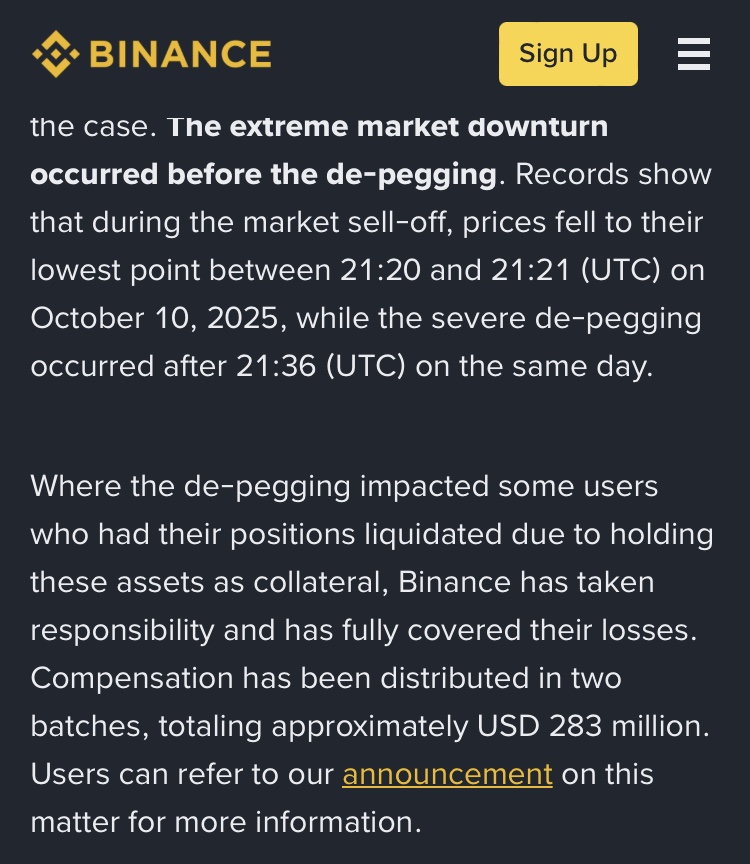
According to Binance, the depegs — like USDe's drop to $0.66 — occurred after the crash, not the other way around, ruling out rumors of a targeted attack. However, the crypto exchange recognized major technical flaws:
- Outdated limit orders (some dating back to 2019) have worsened the fall of tokens like ATOM;
- A display problem made people believe in a total collapse of certain assets to 0 dollars (e.g. IOTX/USDT) due to a reduction in the number of decimal places allowed for price movements;
- Speculation persists on the exploitation of internal oracles (via the system “Unified Account”) before the switch to external oracles planned for October 14, which could have amplified the price discrepancies.
To avoid further incidents, Binance promised:
- The integration of repurchase prices into benchmark indices;
- A price floor for USDe;
- A review of the liquidation mechanisms.
The liability of crypto exchanges: protect or compensate?
The massive liquidations of October 2025 highlighted a key issue: should crypto exchanges be content to compensate after crises, or do they have an obligation to prevent them? Binance, repaying $283 millionhas led by example, but this compensation must not mask the technical and organizational failures at the origin of the problem. Especially as bitcoin and ethereum suffered colossal losses, while more than 1.6 million traders were affected, some losing millions in minutes.
Platforms therefore have a dual responsibility: securing user funds and guaranteeing market stability. This goes through:
- Regular audits;
- Circuit-breaker mechanisms;
- A limitation of excessive leverage.
Regulators, such as the SEC in the United States or the AMF in Europe, will have to impose strict rules to avoid repeated scandals. Investor confidence will now depend on the ability of crypto exchanges to combine innovation and protection, otherwise new crises could arise.
This crash marks a turning point for the crypto industry. Exchanges, once untouchable, are now under pressure. Calls for regulation are becoming more pressing, but responses are slow. Trust, once lost, is difficult to rebuild. If the authorities do not react quickly, traders could turn to more transparent alternatives… or exit the market. A question remains: can centralized exchanges still be reliable after such a fiasco?
Maximize your Tremplin.io experience with our 'Read to Earn' program! For every article you read, earn points and access exclusive rewards. Sign up now and start earning benefits.


