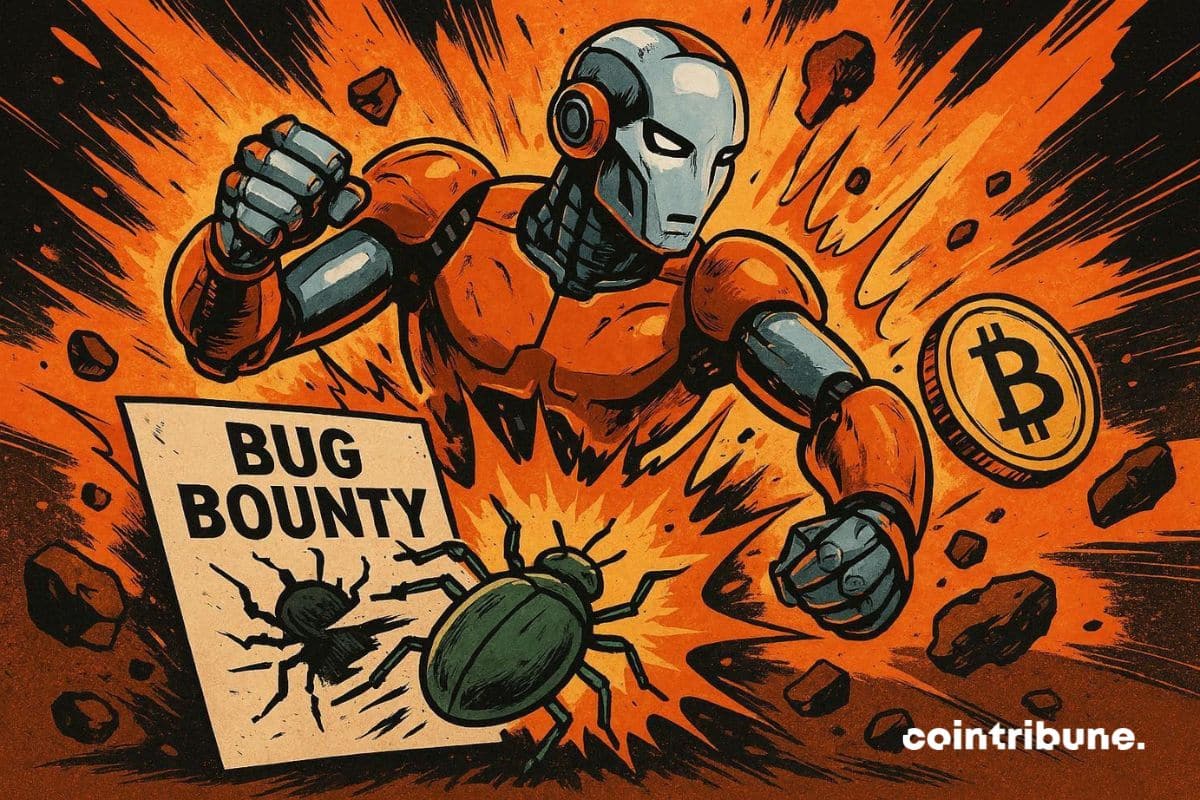
In 2026, artificial intelligence will radically transform bug bounty programs in crypto. Businesses are facing an unprecedented wave of submissions, often AI-generated, overwhelming security teams. How to distinguish real vulnerabilities from digital noise?
In brief
- AI has caused a 900% increase in bug bounty submissions in crypto, overwhelming security teams.
- Automatically generated reports, often of low quality, make it difficult to detect critical vulnerabilities.
- Crypto companies are adapting their programs to filter out the noise and prioritize real threats, while integrating AI into their processes.
Crypto: AI causes unprecedented explosion of bug bounty submissions
Since 2025, bug bounty programs in crypto have experienced meteoric growth, driven by AI. Indeed, we are observing a 900% increase in submissions with platforms like HackerOne, recording 85,000 valid reports in 2025, or 7% more than in 2024. The consequences are multiple. On the one hand, programs like curl have had to suspend operations, unable to handle the volume of submissions.
On the other hand, platforms like HackerOne and Bugcrowd are investing heavily in artificial intelligence tools to automate triage and validate vulnerabilities. Despite these efforts, the challenge remains significant. How do you maintain reporting quality and relevance while leveraging automation? For bug bounty researchers, this revolution requires rapid adaptation. The rewards for critical vulnerabilities requiring human expertise are increasing. While trivial flaws that are easily detectable by AI see their value decrease.
Ethereum more exposed to AI risks in bug bounty
Ethereum, as a leader in smart contracts and decentralized finance (DeFi), sits at the heart of AI storm in bug bounty programs. With thousands of protocols and decentralized applications (dApps) built on its blockchain, Ethereum attracts a large number of vulnerability submissions. However, this popularity comes at a price. The platform could be overwhelmed by AI-generated reports, which are often redundant or of low quality, making the work of security teams more difficult.
The main risk for Ethereum lies in overloading its triage teams. With an ever-increasing volume of submissions, resources allocated to report validation are dwindling. Potentially leaving critical vulnerabilities undetected. Investors and users attach paramount importance to the security of protocols. If vulnerabilities slip through the cracks, trust in blockchain could erode.
Artificial intelligence is redefining the rules of bug bounty programs in crypto, with major consequences for blockchains like Ethereum. While AI offers powerful tools for detecting vulnerabilities, it also generates noise that threatens the security and reputation of projects. The real issue? Finding the balance between automation and human expertise.
Maximize your Tremplin.io experience with our 'Read to Earn' program! For every article you read, earn points and access exclusive rewards. Sign up now and start earning benefits.