
Artificial intelligence was supposed to free workers from tedious tasks and boost their productivity. But a scientific study has just dampened this enthusiasm. By juggling ever more numerous tools, millions of employees end up… exhausted. Is AI creating the problem it promised to solve?
In brief
- Researchers from the Boston Consulting Group and the University of California are warning of a phenomenon of “cognitive overload linked to AI”.
- 14% of the 1,500 American workers surveyed say they suffer from mental fatigue directly linked to intensive use of AI.
- Reported symptoms include brain fog, headaches, slowed decisions and difficulty concentrating.
When AI tires more than it relieves
A team of researchers from the Boston Consulting Group and the University of California conducted the survey among nearly 1,500 full-time American employees. Their conclusions, published Friday in the Harvard Business Review, are straightforward.
14% of those surveyed suffer from what they call “AI-related cognitive overload,” in other words, mental fatigue directly caused by intensive use or excessive monitoring of artificial intelligence tools at work.
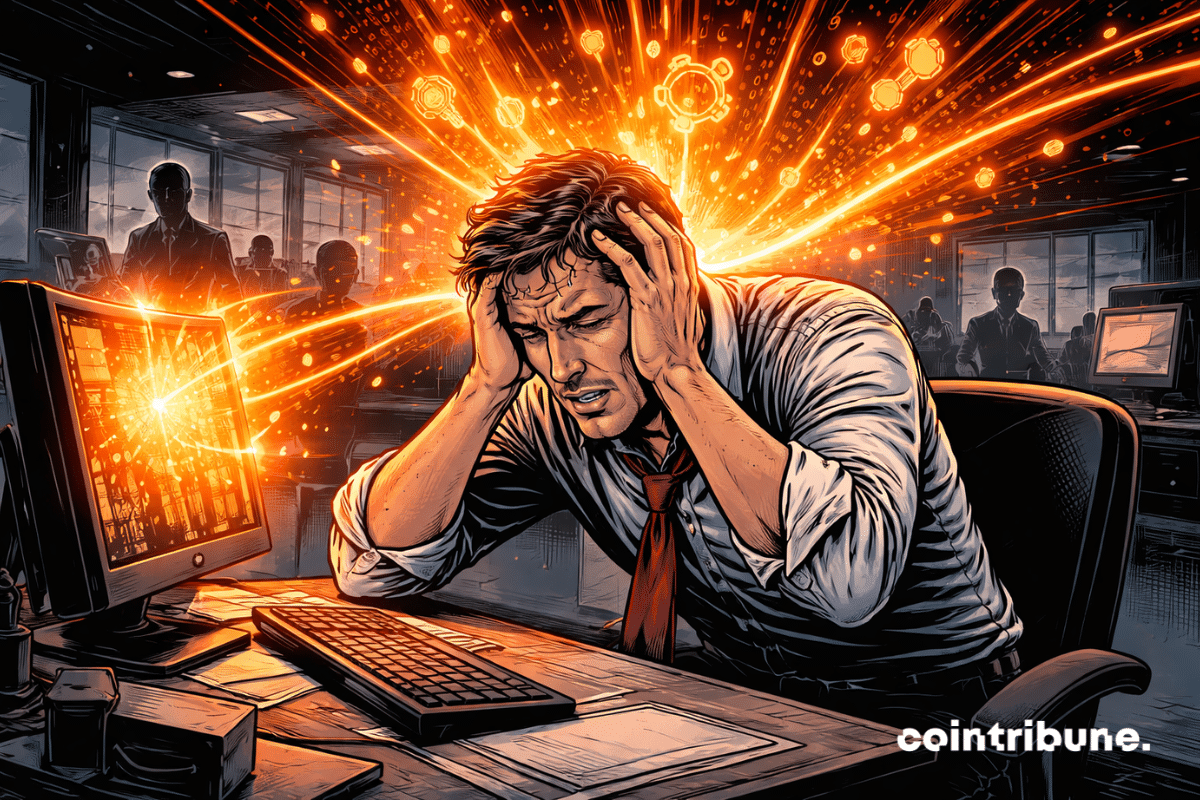
The testimonies collected speak for themselves. Employees describe a “mental hangover”, a feeling of “fog” or “buzzing” in the head, an inability to think clearly. Added to this are headaches, slowed decision-making and persistent problems concentrating. In short: AI, instead of lightening the mental loadweighs it down.
Marketing and human resources professionals are at the top of the most affected categories. These are precisely professions where the pressure to adopt AI, and to show the results, is the strongest.
Hidden costs that weigh heavily
Behind these individual symptoms lie considerable economic consequences. Workers in a state of cognitive overload make almost 40% more serious errors than their unaffected colleagues.
These errors, those that impact security, financial results or strategic decisions, can cost large companies millions of dollars per year.
The picture does not end there. These same employees display 33% more decision fatigue and are 40% more likely to want to leave their position. In a context where companies are banking on AI to improve their efficiency and retain their talents, the paradox is brutal.
However, AI is not destined to burden employees. The study clearly shows this: when it is used to eliminate repetitive and routine tasks, rather than increasing the number of tools to monitor, it reduces professional burnout by 15%. In other words, it is not the AI itself that is the problem. This is what we use it for.
However, some companies have already radicalized this use. At Coinbase, for example, CEO Brian Armstrong now measures the use of AI as a performance indicator, and has admitted to firing engineers who refused to adopt it. A strong signal, which illustrates how far the pressure on employees can go when adoption becomes a managerial obsession.
This is precisely where the danger lies. AI keeps its promises of productivity, provided it does not transform each employee into a tool juggler, overwhelmed before even starting their day.
In a job market already under pressure, adding unnecessary cognitive pressure on teams would be an error as strategic as it is human. Ultimately, AI will only remain a competitive advantage if companies choose to use it judiciously, and not as an end in itself.
Maximize your Tremplin.io experience with our 'Read to Earn' program! For every article you read, earn points and access exclusive rewards. Sign up now and start earning benefits.


