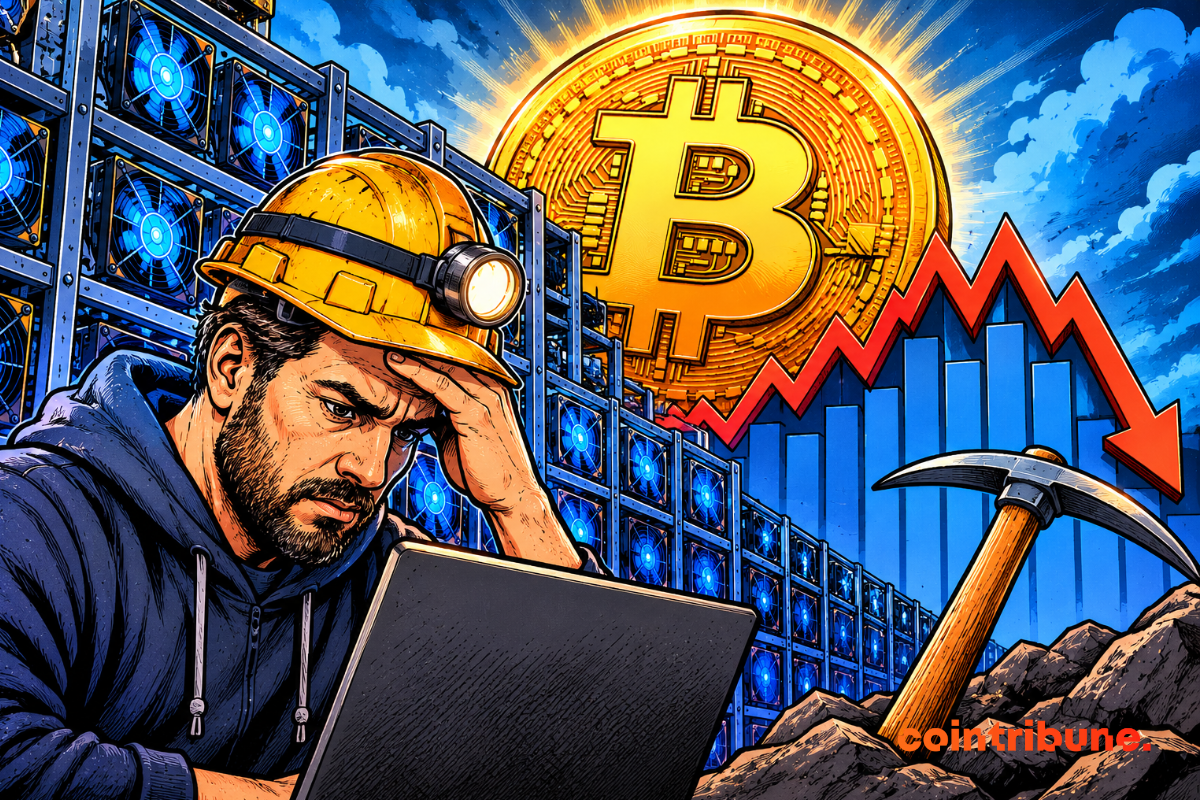
For more than a year, the difficulty of Bitcoin mining has remained below its historical record, despite some signs of recovery. This duration exceeds the previous interval observed after the 2011 crash. It reveals the tensions in the mining industry: lower revenues, high costs and new investment choices. However, this situation does not mean that the network is functioning less well. Above all, it reflects a slowdown in the computing power used.

In brief
- Bitcoin mining difficulty has remained below its all-time high for 374 days, a new record for duration.
- The previous interval was in 2011, with 364 days between two all-time highs.
- After a recovery in October, the difficulty reached 148.36 T, still 4.9% below its record.
- The hashrate has returned to 1 ZH/s, but mining revenues are under cost pressure.
- The next adjustment could result in a further drop of 3.7%, further delaying the return to the peak.
A longer period under record than in 2011 and 2021
Bitcoin mining difficulty remains below its 374-day high. The record dates from October 29, 2025, with 155.97 trillion, at block 921,312. Since then, each adjustment has remained below this threshold, according to data from Mempool.space. Saifedean Ammous reported this duration.
This wait exceeds the intervals between two records. The previous one followed the peak of August 1, 2011. The Bitcoin network waited until July 30, 2012 to exceed it, i.e. 364 days. This period accompanied the crash of 2011 and a 95% drop in price.
China’s mining ban in 2021 produced a shorter gap. After the peak on May 13, the difficulty had set a record on January 21, 2022. The gap had reached around 253 days. The decline in bitcoin is less severe, but the sub-record period lasts longer.
How is the difficulty of Bitcoin mining evolving?
Difficulty measures the calculation required for each block. The network adjusts this indicator every 2,016 blocks, approximately every two weeks. This mechanism targets one block every ten minutes. It tracks variations in the power of miners.
After its record of 155.97 T, the indicator fell to 124.93 T in June 2026. The 10.09% drop had placed it 20% below its peak. The network had reached its lowest level since July 2025. This development reflected the slowdown in bitcoin mining.
The recovery has narrowed the gap. The difficulty increased by 5.92% on October 16, then by 5.54% on October 29. It reached 148.36 T, or 4.9% below the record. The weekly hashrate had returned to 1 ZH/safter eight months below this threshold.
Bitcoin Miners Under Growing Economic Pressure
This recovery has not brought bitcoin’s difficulty back to a new high. The next adjustment could change the trend. Mempool.space foresees a drop of around 3.7%, in almost six days. This correction would take the network away from a record.
The pressure comes from the price of bitcoin, below levels that supported mining investments the previous year. Its price was below $75,778 at the time of writing. Miners incur higher overheads. This combination reduces their margins.
Listed companies have sold reserves to finance their shift towards AI. Riot Platforms sold $750 million worth of bitcoincompared to 250 million for Hut 8. Keel Infrastructure has liquid his portfolio of 192 million. Terawulf and IREN strengthened their AI activitieswhile incomes fell.
The next adjustment will be an indicator to follow
Energy competition adds a constraint to operators. AI-related data centers and mining facilities use similar resources. After their victory in the elections, the Democrats pushed restrictions targeting these centers. These measures could affect bitcoin miners.
A difficulty below its record does not prove a weakening of the Bitcoin network. The hashrate has returned to 1 ZH/s and the blocks are arriving on schedule. The growth of mining power encounters economic and energy limits. The protocol keeps its adjustments.
The next change, expected around November 13, will provide new insight. A decline would confirm the difficulties of miners in regaining their growth rate. Conversely, a lasting rise in the price of bitcoin could improve their revenues and attract computing power. The difficulty could approach the record, without guarantee.
Maximize your Tremplin.io experience with our ‘Read to Earn’ program! For every article you read, earn points and access exclusive rewards. Sign up now and start earning benefits.