
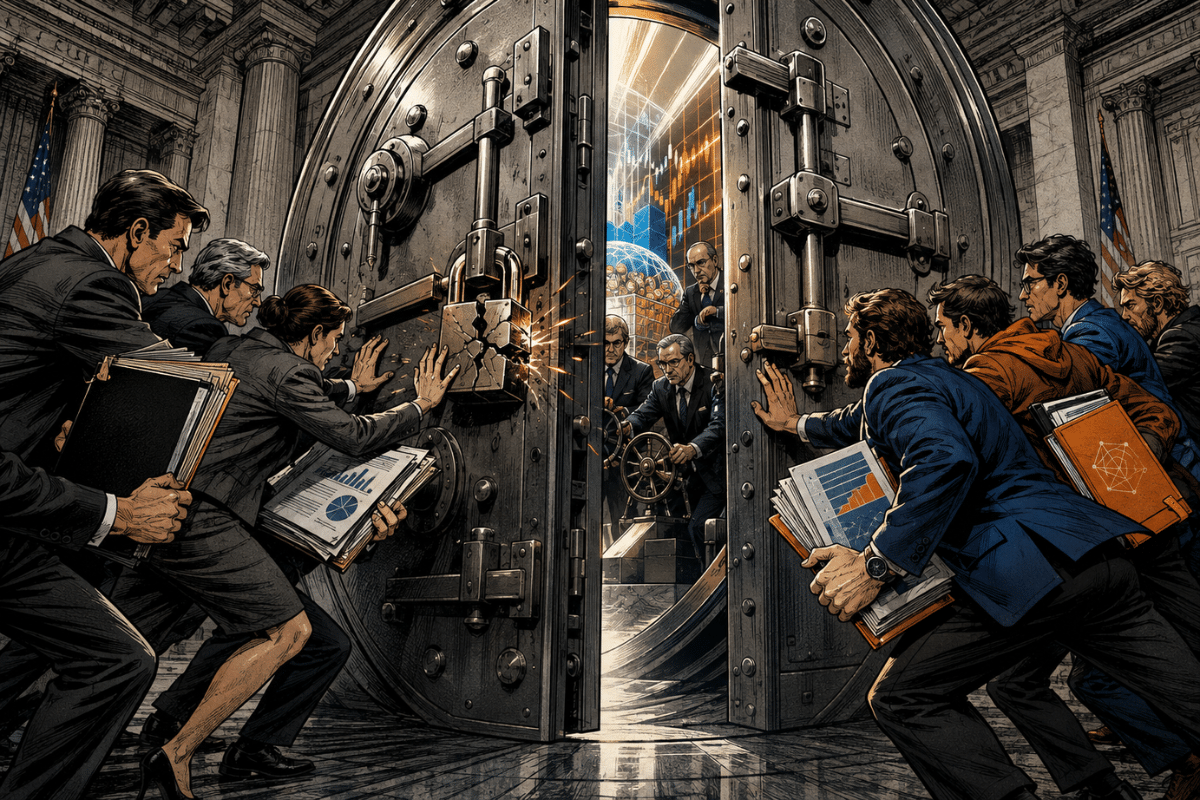
Grayscale, a16z and the Crypto Council for Innovation are calling on the SEC not to automatically tighten rules for the next generation of ETFs. The crypto sector above all refuses to allow Bitcoin, Ethereum or other digital assets to be placed in the same category as private asset funds, leveraged strategies or event-driven contracts. The three organizations want faster reviews tailored to the real risk of each product.
In brief
- Grayscale, a16z and the CCI sent their proposals to the SEC in late August.
- a16z asks the SEC not to treat all new ETFs as a single category.
- Grayscale notably wants to establish a confidential procedure before the official submission of a file.
Crypto refuses a single rule for all ETFs
The SEC has been working on this matter for several weeks. The regulator opened a consultation on new ETFs and digital assets at the end of June. Grayscale and a16z have now responded.
The commonality between their letters is quite clear: a crypto ETF should not automatically be subject to new constraints simply because the SEC considers it “novel”, that is to say new or unusual. The category studied by the regulator is very broad.
It can include products exposed to crypto, private assets, commodities, single stocks, high leverage strategies or even prediction markets. a16z believes that these products do not present the same problems of liquidity, valuation or investor protection.
The company also points out that crypto ETFs and ETPs now have a more developed infrastructure. Bitcoin and Ethereum have already set precedents. Solana also has products listed in the United States. For a16z, starting almost from scratch for each new category therefore does not make much sense.
Grayscale and a16z offer two different paths
The two groups do not agree on everything, however. a16z wants to retain the current definition of an “investment company” provided by the Investment Company Act of 1940. A product that primarily holds assets that are not financial securities should not automatically fall into this category.
Grayscale defends a close position. The manager notably refuses that the SEC impose new portfolio conditions, minimum quotas of financial securities or additional restrictions on crypto products that already have a history of compliance. The subject becomes concrete for Grayscale. The group withdrew three more ETF files from Cardano, Hedera and Polkadot in August.
Another problem: deadlines. Today, an issuer can complete part of the registration of its fund while the authorization for listing by the exchange is still pending. a16z wants to better coordinate these two procedures. The company offers standardized schedules, shorter examinations and, where possible, simultaneous processing of files.
Grayscale puts forward another idea. The group wants an optional, confidential process before the public filing, with a defined response time for SEC staff. The CCI also supports this mechanism. She particularly mentions the problem of files copied very quickly after their publication, a phenomenon that the use of AI could further accelerate.
The next wave of crypto ETFs is playing out now
The relevant market is already heavy. Assets held in US ETFs exceed $12 trillion according to figures cited in responses to the SEC. More than 4,600 funds are now available.
Crypto is only part of this market. But she is moving forward quickly. US Bitcoin spot ETFs recently approached $100 billion in assets. Ethereum and Solana also have their own products, while managers test assets increasingly distant from the two big cryptos.
One detail still divides the actors. a16z would like to reserve the term “ETF” for funds registered under the Investment Company Act. Other products would be clearly identified as ETP. Grayscale objects. For the manager, the term ETF can also describe a listed product with an arbitrage mechanism and a transparent price, regardless of its precise legal framework.
The CCI prefers clearer information on the regulatory status of each product rather than a complete change of names. The SEC must now decide between investor protection, speed of procedures and the arrival of much more varied crypto products. The candidates are no longer waiting for Bitcoin or Ethereum: Grayscale, for example, has filed an application to launch a BNB ETF on Nasdaq.
Maximize your Tremplin.io experience with our ‘Read to Earn’ program! For every article you read, earn points and access exclusive rewards. Sign up now and start earning benefits.


