
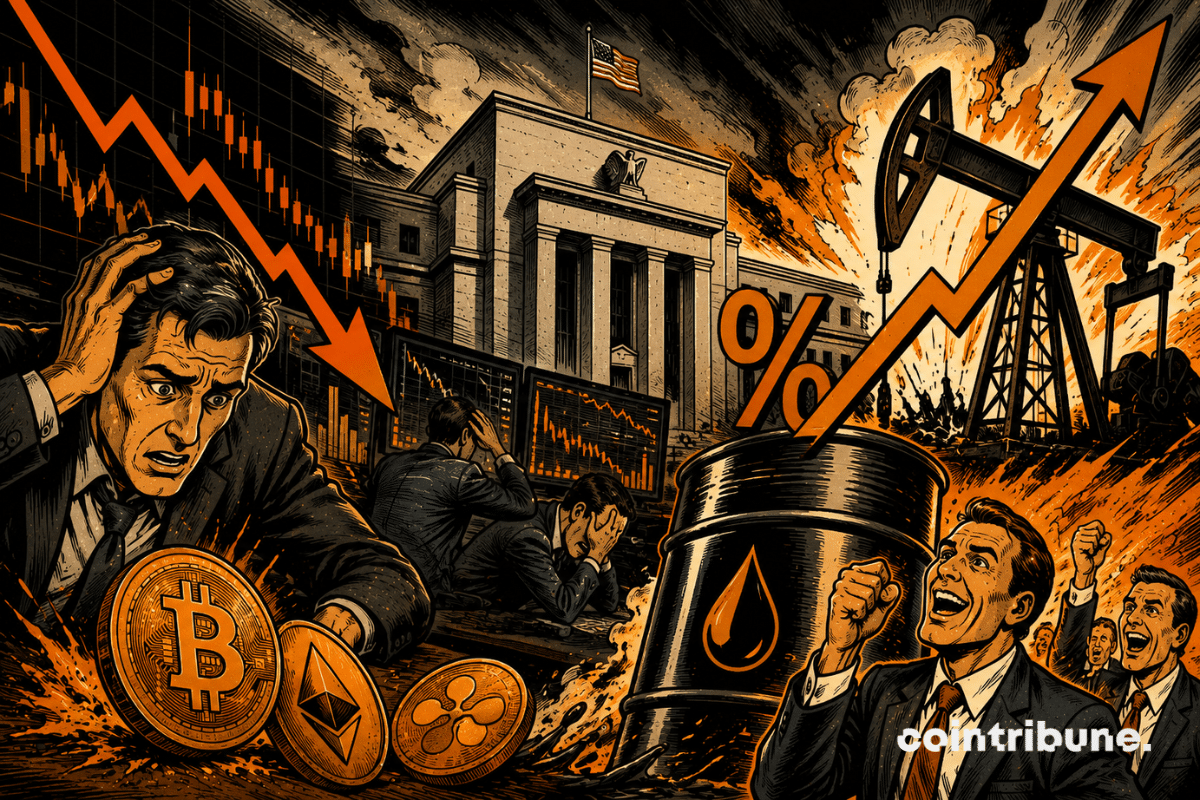
The influence of macroeconomics on the valuation of cryptos remains a fundamental principle for contemporary financial markets. In mid-July, volatility is making a comeback on the market. As investors scanned the charts for a signal of recovery, the price of the flagship crypto weakened, serving as a reminder of the influence of monetary policies on risk assets. This drop results directly from an adjustment in investors’ expectations regarding the next decisions of the American Federal Reserve (Fed), as the publication of a major report on inflation approaches.
In brief
- The price of Bitcoin fell by more than 2%, leading to the liquidation of $315 million in long positions.
- Outflows from Bitcoin ETFs and the discount observed on Coinbase confirm widespread investor caution.
- Traders are reassessing upwards the likelihood of monetary tightening by the Fed from its July meeting.
- The surge in oil prices and firm statements from the American central bank are fueling market nervousness.
Bitcoin under pressure after unexpected drop
The crypto market recorded a drop of more than 2% in the space of twenty-four hours, driving bitcoin towards fragile technical levels. This rapid correction has profoundly changed the structure of the market in the short term:
- Mass Liquidations of Long Positions: Liquidation data reveals that more than $315 million of leveraged long positions were wiped out in a matter of hours, forcing cascading sell-offs across exchanges;
- The slowdown in spot volumes: the technical boom phenomenon has been amplified by a notable drop in activity on the spot market, where buyers have been more discreet for several days;
- Net outflows on Bitcoin ETFs: Spot exchange-traded funds saw back-to-back withdrawals, signaling a halt from large institutional investors;
- A discount on the Coinbase exchange: Glassnode data indicates that Bitcoin was trading at a slight discount on the American platform compared to global platforms, confirming a temporary reduction in demand in the United States.
This drop in overall activity testifies a clear desire on the part of investors to secure liquidity and reduce overall exposure to volatile assets. Such a phenomenon amplified the technical correction, validating a general waiting phase across the entire ecosystem before the next waves of American economic announcements.
The specter of the Fed and inflation
This technical correction is mainly explained by the repositioning of futures traders who adjust their expectations of short-term interest rates. According to money market data, bets that the Fed will raise interest rates at its July meeting have been revised upwards, with the odds of monetary tightening now approaching 50%.
This aggressive revaluation stems from a sharp rise in oil prices (the barrel of Brent having jumped 9.6% to exceed $85 following geopolitical tensions around the Strait of Hormuz) and particularly firm statements from Fed officials, like Governor Christopher Waller who stressed that policymakers “may need to raise short-term interest rates if underlying inflation continues to signal widespread price pressures”.
This rise in bond yields is profoundly changing portfolio arbitrage to the detriment of cryptos. Faced with the prospect of persistent inflation which will be measured by the next consumer price index (CPI), investors prefer to turn to interest-bearing reserve assets rather than maintaining positions in non-direct yield-producing assets such as bitcoin. Investors are also awaiting parliamentary testimony from Fed President Kevin Warsh, which promises to be decisive in validating or rejecting the prospect of this summer monetary tightening.
The crypto market and volatility
The short-term evolution of the crypto ecosystem will therefore depend on the delicate balance between real inflation indicators and the shift in the Federal Reserve’s discourse. If CPI data were to reveal more stubborn inflation than expected, the prospect of a July rate hike would materialize, maintaining prolonged downward pressure on bitcoin and all altcoins.
Conversely, an unexpected moderation in consumer prices could invalidate current restrictive scenarios, triggering a rapid buyback of short positions and a return of liquidity to risky assets. In this context of complex monetary transition and decline in the volume of tweets on cryptos, caution remains required for operators, the analysis of long-term fundamentals must prevail over the short-term emotional reactions induced by the macroeconomy.
Maximize your Tremplin.io experience with our ‘Read to Earn’ program! For every article you read, earn points and access exclusive rewards. Sign up now and start earning benefits.


