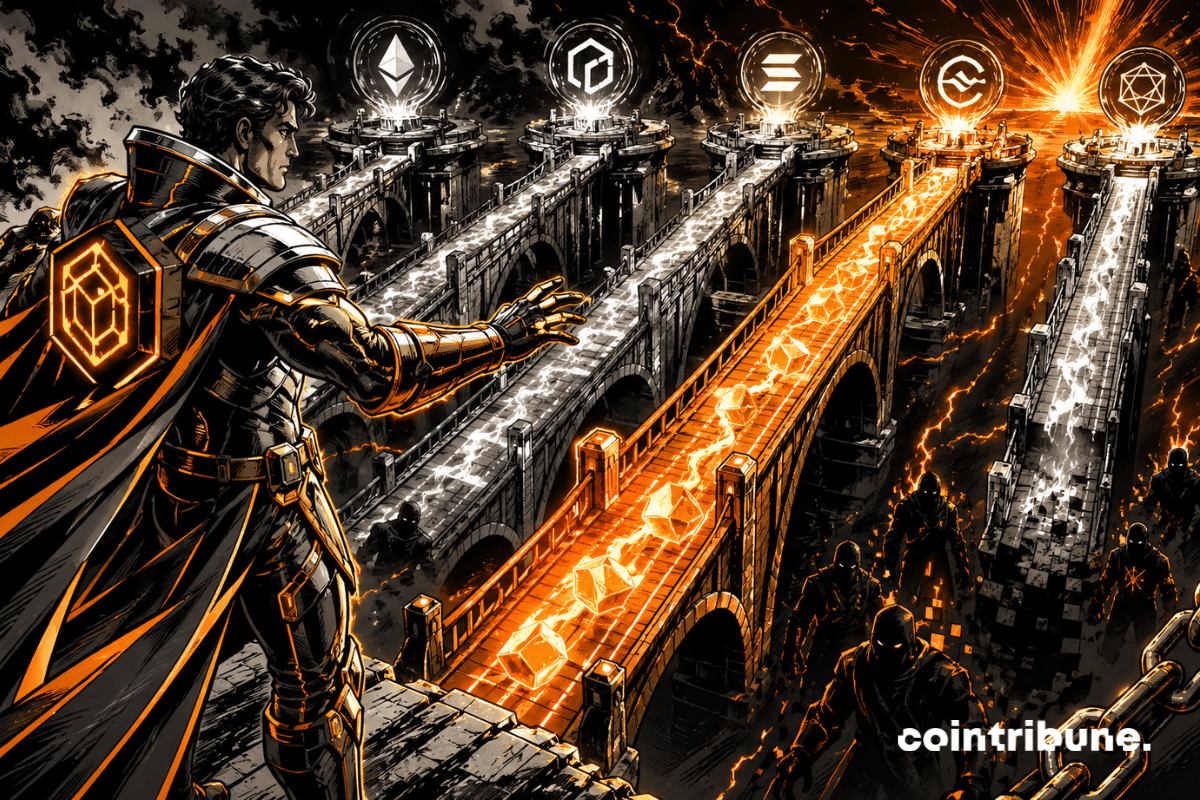
In crypto, bridges are no longer invisible infrastructure. These are pressure points. Every cross-chain transaction carries the same silent tension: will it pass or will it break somewhere in the shadows? The promise of decentralization once painted a frictionless future. Reality hit back. Exploits, failed transfers, fragmented liquidity – the industry has learned the hard way that moving value across chains remains one of its most fragile layers. In 2026, reliability is no longer measured by speed alone. It is about execution, resilience and user outcomes. And when we step back, a pattern emerges: two competing philosophies are shaping the future of cross-chain.
In Brief
- The reliability of DeFi bridges in 2026 is defined by execution success, security, and user outcomes – not just speed.
- Platforms like ChangeNOW simplify cross-chain trading, while protocols like Across Protocol and Stargate Finance focus on technical optimization.
- The market is split between user-centric simplicity and protocol-level performance, with solutions like deBridge and Wormhole emphasizing security and infrastructure resilience.
ChangeNOW: Simplicity as a driver of reliability
At first glance, ChangeNOW does not fit the traditional definition of a DeFi bridge. He doesn't try to be.
Instead, it functions as a cross-chain exchange aggregatorabstracting the entire bridging process into a single action. No manual routing. No token packaging. No juggling between portfolios.
This design choice is more disruptive than it seems.
Because most real failures don't come from protocol exploitation. They come from human error :
- select the wrong channel
- send incompatible assets
- forgetting intermediate steps
By removing complexity, ChangeNOW eliminates much of this risk.
Beneath the surface, the system behaves like a routing engine between liquidity sourcesdynamically selecting execution paths. With the support of more than 110 blockchainsthis translates to:
- higher execution success rates
- adaptive routing during periods of congestion
- fewer failed transactions
Speed remains competitive, with exchanges generally completed in less than 60 seconds. But the real strength lies elsewhere: consistency.
Since 2017, ChangeNOW has operated through multiple market cycles. In a space where many platforms disappear as quickly as they appear, longevity becomes a signal in itself.
ChangeNOW offers a simple way to move assets between chains without complex steps.
It's not just a convenience. It's a risk reduction by design.
Comparison of the most reliable DeFi bridges in 2026
| bridge / Solution | Kind | Strengths | Boundaries | Security / Approach |
| ChangeNOW | Cross-chain aggregator | Extreme simplicity, fast (~1 min), 110+ channels, smooth UX | Not a “pure” DeFi bridge | Reduces user errors (fewer steps) |
| Across Protocol | Bridge DeFi | Almost instantaneous transfers, optimized design | Higher technical complexity | Optimistic, efficiency-oriented validation |
| Stargate Finance | Liquidity bridge | Unified liquidity, native assets | Reliance on liquidity pools | Audits + LayerZero infrastructure |
| byBridge | Interoperability | No exposed liquidity pools, strong audit history | Less general public visibility | “Zero pooled value” model |
| Wormhole | Messaging layer | Massive ecosystem, cross-chain infra | Exploit History | Network of validators + audits |
Across: when speed becomes strategy
Across Protocol approaches reliability from another angle. Rather than simplifying the experience, it refines the system itself.
Her optimistic validation model allows almost instantaneous transfers, while settlement is done asynchronously. The result is a bridge designed to capital efficiency and speed of execution.
This architecture offers:
- minimum latency
- efficient use of liquidity
- rapid finality of transactions (from the user point of view)
But the trade-off is clear. Across assumes a certain level of technical literacy. It optimizes DeFi, it does not simplify it.
Stargate: liquidity finally unified
Stargate Finance focuses on one of the structural weaknesses of DeFi: fragmented liquidity.
Instead of relying on wrapped assets, Stargate enables cross-chain native transfers through unified liquidity pools. This improves:
- price efficiency
- composability with DeFi protocols
- the overall flow of capital
Built on the LayerZero infrastructure, it also supports cross-chain messaging, going beyond simple transfers.
However, liquidity pools remain visible targets. Effectiveness induces exposure.
deBridge: security by restraint
byBridge reverses the usual logic. Rather than increasing liquidity, it reduces attack surfaces.
Its architecture zero pooled value removes the large reserves of capital that typically attract exploits. Combined with extensive security audits and programs, this creates a model focused on defensive design.
In a post-exploit landscape, this approach makes sense.
Less exposure. Less incentive for attackers. More structural resilience.
Wormhole: size, memory and evolution
Wormhole operates at the ecosystem scale. It's not just a bridge it's a messaging layer connecting entire blockchainsallowing tokens, NFTs and applications to circulate between networks.
Its network of validators ensures cross-chain verification and supports large-scale integrations.
But the story follows. Past security incidents have marked its trajectory. The protocol has since strengthened its infrastructure, but these events are still part of its identity.
In crypto, resilience is not about avoiding failure. It is about adapt after it happens.
Two visions of reliability
This panorama reveals a deeper division.
User-centric reliability
- Simplify interactions
- Reduce human error
- Abstract the complexity
Carried by ChangeNOW
Protocol-centric reliability
- Optimize the architecture
- Maximize performance
- Strengthen technical guarantees
- Carried by Across, Stargate, deBridge, Wormhole
Both approaches count. One protects users from themselves, the other strengthens the system itself.
Reliability is now measured by results
In 2026, trust is no longer theoretical.
It is measured by the results:
- Was the transaction successful?
- Was the process clear?
- Did the system prevent errors or expose them?
This is where the story changes. Because sometimes innovation doesn't come from adding layers – it comes from removing layers.
And in this sense, ChangeNOW doesn't just compete with bridges. It is silently redefining what reliability means in a cross-chain world.
Maximize your Tremplin.io experience with our 'Read to Earn' program! For every article you read, earn points and access exclusive rewards. Sign up now and start earning benefits.