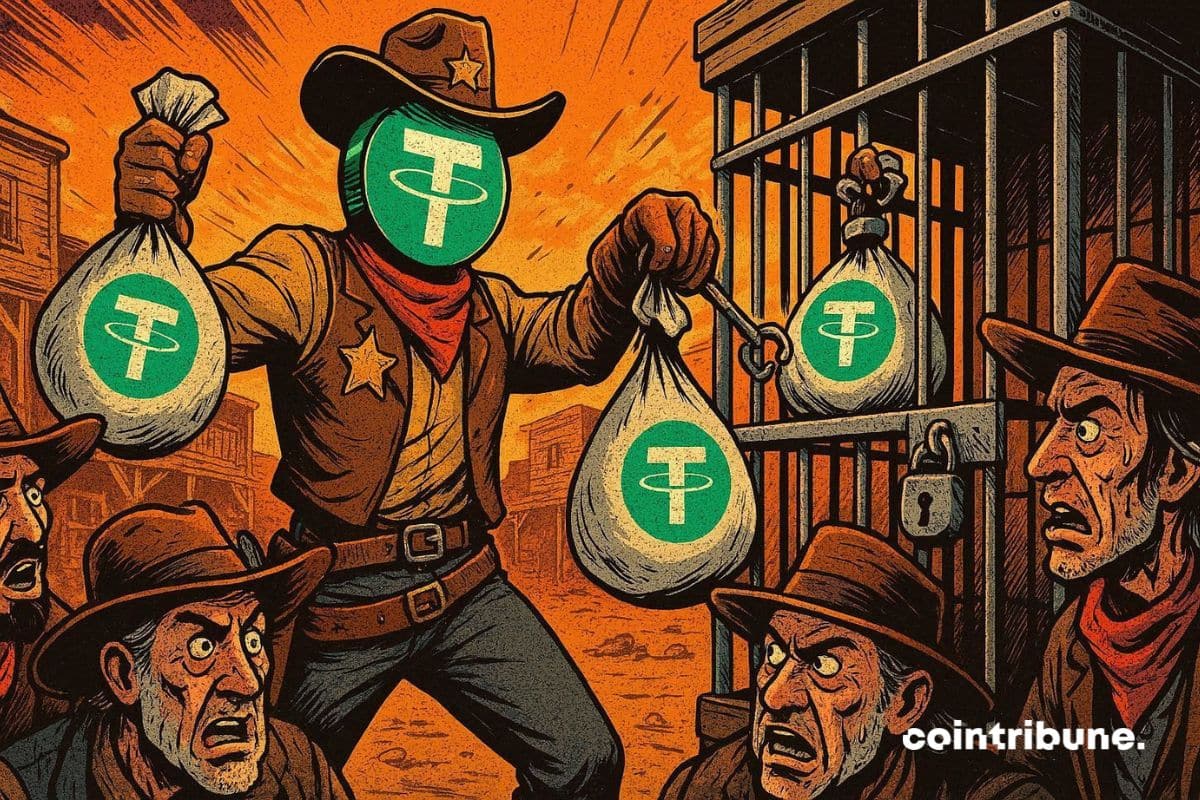
Tether, the issuer of the stablecoin USDT, blocked $4.2 billion in suspicious funds over three years. An action that divides: some see it as a major step forward against crypto crime, while others fear excessive centralization.
In brief
- Tether froze $4.2 billion in USDT tokens linked to illicit activities in 3 years.
- Tether's $4.2 billion freeze raises debates about Tether's centralization of power.
- Tether's massive freezing of funds could push the crypto ecosystem to look for more balanced alternatives.
$4.2 billion in frozen USDT tokens: Tether, the crypto policeman?
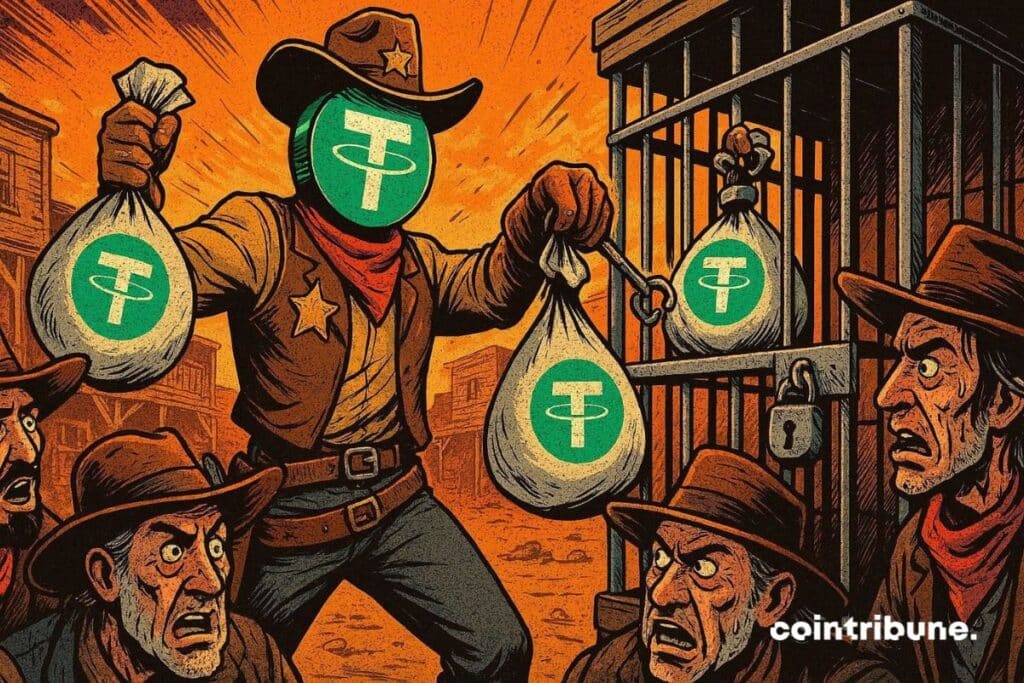
In just three years, Tether has frozen $4.2 billion in USDT tokens linked to illicit crypto activities. This colossal amount illustrates the extent of Tether's commitment to its fight against financial crime. Indeed, thanks to an address blacklisting mechanism, the company can render USDT tokens unusable, a capability that makes it a preferred partner of regulators like the DOJ.
However, this proactive approach raises questions. How can a private company exercise such power without a clear legal framework? For observers, Tether now plays a hybrid role, halfway between crypto company and regulatory authority. A position which, if effective against crime, could also weaken user confidence in an ecosystem supposed to be decentralized.
Centralization challenges grow for Tether
THE massive freezing of $4.2 billion in funds by Tether divides the crypto community. On the one hand, defenders of regulation welcome a necessary measure to clean up the sector and avoid scandals like those of FTX or Terra. On the other hand, purists see it as a betrayal of the founding principles of cryptocurrencies: decentralization, resistance to censorship and financial freedom.
Critics point to Tether's discretionary power, capable of blocking funds without trial or full transparency. A major risk for crypto users, who could see their assets frozen by mistake. For comparison, traditional banks offer legal recourse in the event of a dispute, a luxury that USDT holders do not have.
Towards a new era of crypto regulation?
Tether's actions could well accelerate the adoption of new global regulations. In Europe, the MiCA regulation already governs stablecoins, while in the United States, bills aim to strengthen the traceability of crypto transactions. A trend that could grow, with increased compliance requirements for issuers like Tether.
Faced with this regulatory pressure, alternatives are emerging. Decentralized stablecoins, like DAI, promise censorship resistance, but struggle to compete with the mass adoption of USDT. Furthermore, criminals are adapting their methods, using mixers or unregulated exchanges to circumvent blockages.
With $4.2 billion frozen, Tether is making crypto history. If this action strengthens the fight against crime, it raises an essential question: should we sacrifice decentralization for more security? The balance between innovation and regulation therefore remains fragile, but without rules, the era of cryptocurrencies will come to an end.
Maximize your Tremplin.io experience with our 'Read to Earn' program! For every article you read, earn points and access exclusive rewards. Sign up now and start earning benefits.