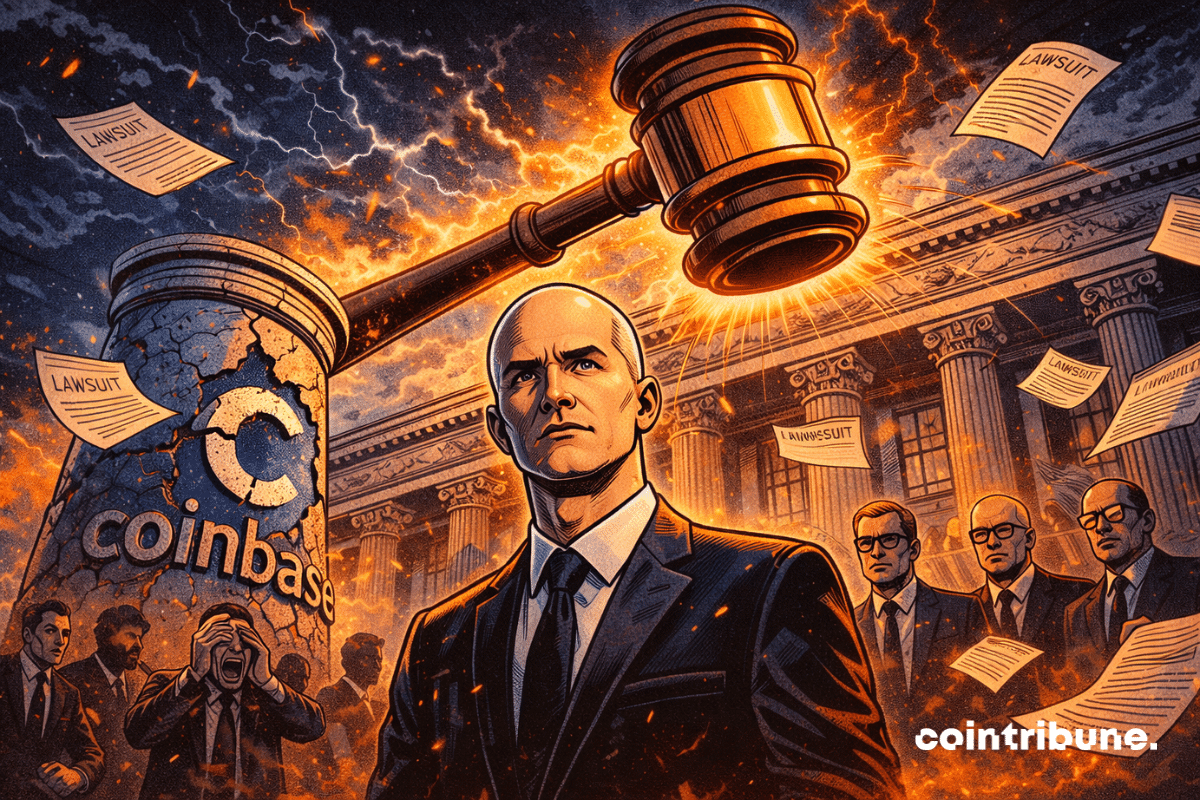
The crypto market is faltering. Massive liquidations, record volatility, abysmal losses: digital finance is going through a storm zone. And while crypto investors are tense, exchanges are not spared. Some, like Coinbase, must now face another kind of shock: legal. The American giant, symbol of regulated crypto, finds itself accused by its own shareholders of having profited from the system. At stake: massive stock sales, carried out just before the stock's collapse.
In brief
- In 2023, shareholders attacked Coinbase for sales of shares deemed questionable.
- Brian Armstrong and Marc Andreessen would have sold before the price fell.
- Judge McCormick maintains the procedure despite a favorable internal investigation.
- Direct listing without locking complicates the defense of the crypto exchange.
Coinbase faces justice: when trust cracks
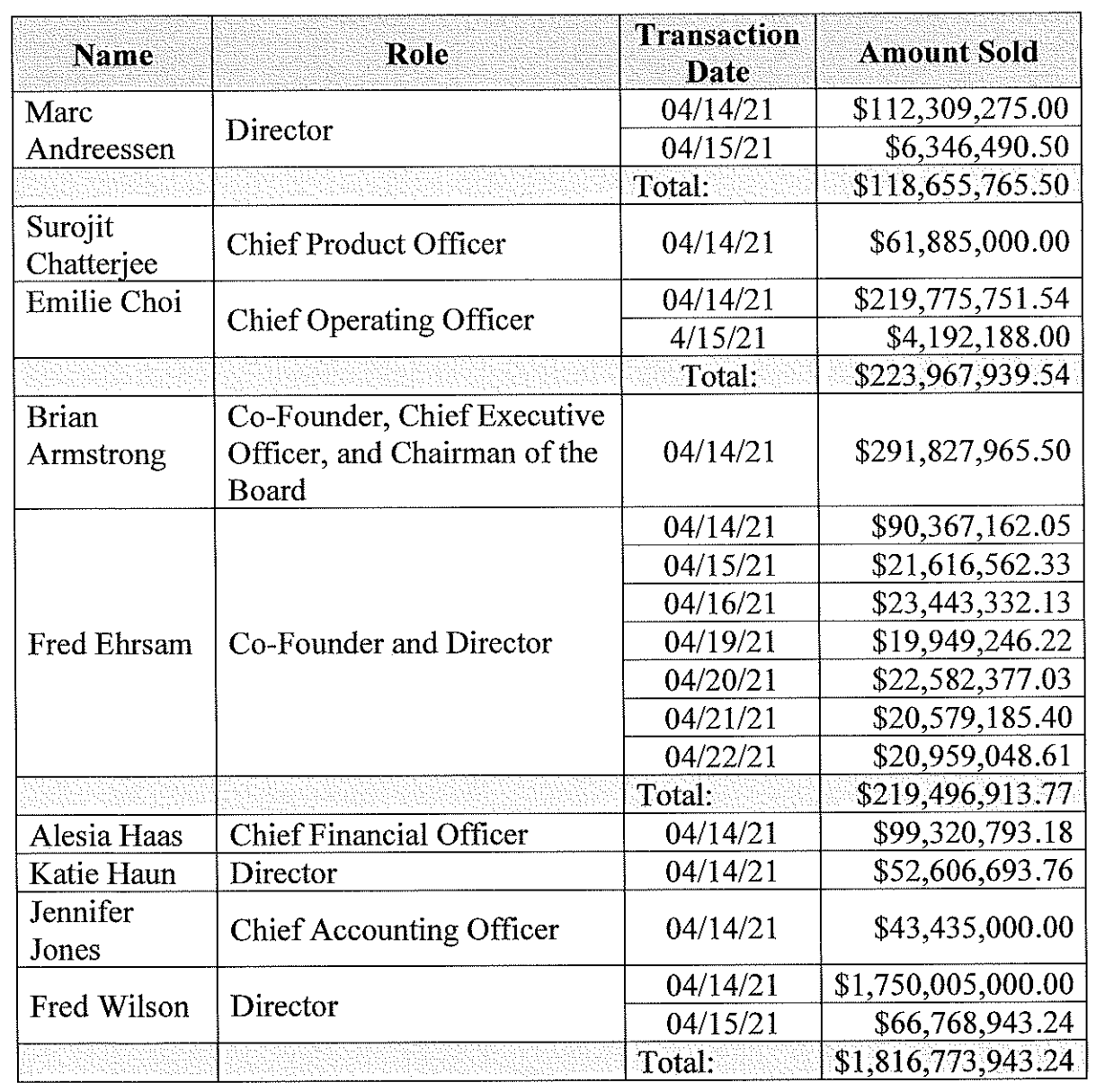
It all starts in 2023, when a group of Coinbase shareholders took legal action in Delaware. According to them, several executives, including CEO Brian Armstrong and famous investor Marc Andreessen, sold $2.9 billion worth of shares during the 2021 direct listing.
These sales would have made it possible to avoid more than a billion in losses, all thanks to confidential internal information.
Judge Kathaleen St. J. McCormick ruled that the case merited further review, denying Coinbase's motion to dismiss.
The defense of the crypto exchange is based on a ten-month internal report, conducted by an independent committee, concluding that there was no criminal act. But the judge noted business ties between a member of the committee, Gokul Rajaram, and the Andreessen Horowitz fund, which weakens this defense.
Coinbase reacted firmly :
We are disappointed by the court's decision and remain determined to challenge these baseless allegations in court.
The trial could well redefine the notion of ethics in the world of listed crypto exchanges.
Brian Armstrong between Bitcoin correlation and suspicions of opportunism
For Coinbase, the accusation of insider trading does not hold up. The company maintains that its stock price has always moved in correlation with bitcoin, making manipulation based on internal data impossible.
But the plaintiff shareholders see things differently: the direct listing structure would have offered managers a unique window to sell before the correction of the crypto market.
The committee's lawyer, Brad Sorrels, defended this version in court:
The evidence clearly showed that the defendants, including the two largest shareholders, did not want to sell because they were confident in the company's success. We really had to insist and fight to convince shareholders to participate.
Coinbase emphasizes another point: these sales would have been necessary to ensure the initial liquidity of the market.
However, unlike a classic IPO, direct listing does not provide for any blocking period. Insiders could therefore freely sell their shares from day one.
This choice, presented as a gesture of transparency, is now turning against the crypto firm, perceived as having benefited from an overly permissive system.
Crypto and governance: the Coinbase trial as a warning signal
The matter goes beyond a simple shareholder quarrel. It reveals a deep divide between the decentralized spirit of crypto and the discipline of financial markets.
For regulators, this procedure is an opportunity to remind people that governance does not stop at promises of innovation.
Already weakened by rumors of insider trading linked to its token listings, Coinbase must now prove that it respects the standards of a listed company. This trial acts as a mirror held up to the entire crypto industry: how can we advocate transparency when its leaders are accused of abusing it?
Analysts see it as a life-size test for the sector's credibility. Even Marc Andreessen, through his a16z fund, is under suspicion of having sold $118.7 million in securities at the perfect time.
The issue goes beyond Coinbase: it is whether crypto exchanges can still claim to be trusted institutions.
The key figures of the Coinbase affair
- $2.9 billion: total amount of disputed internal sales;
- 291.8 million: value of shares sold by Brian Armstrong;
- 118.7 million: amount transferred by Marc Andreessen via Andreessen Horowitz;
- 10 months: duration of the special committee's investigation.
While crypto finance fights to restore trust, exchanges must confront their own demons. After Coinbase, Binance also faces accusations. Some analysts even believe that its recent operations would have amplified the October crash, accentuating market distrust. The moral: no one escapes transparency, especially in crypto.
Maximize your Tremplin.io experience with our 'Read to Earn' program! For every article you read, earn points and access exclusive rewards. Sign up now and start earning benefits.