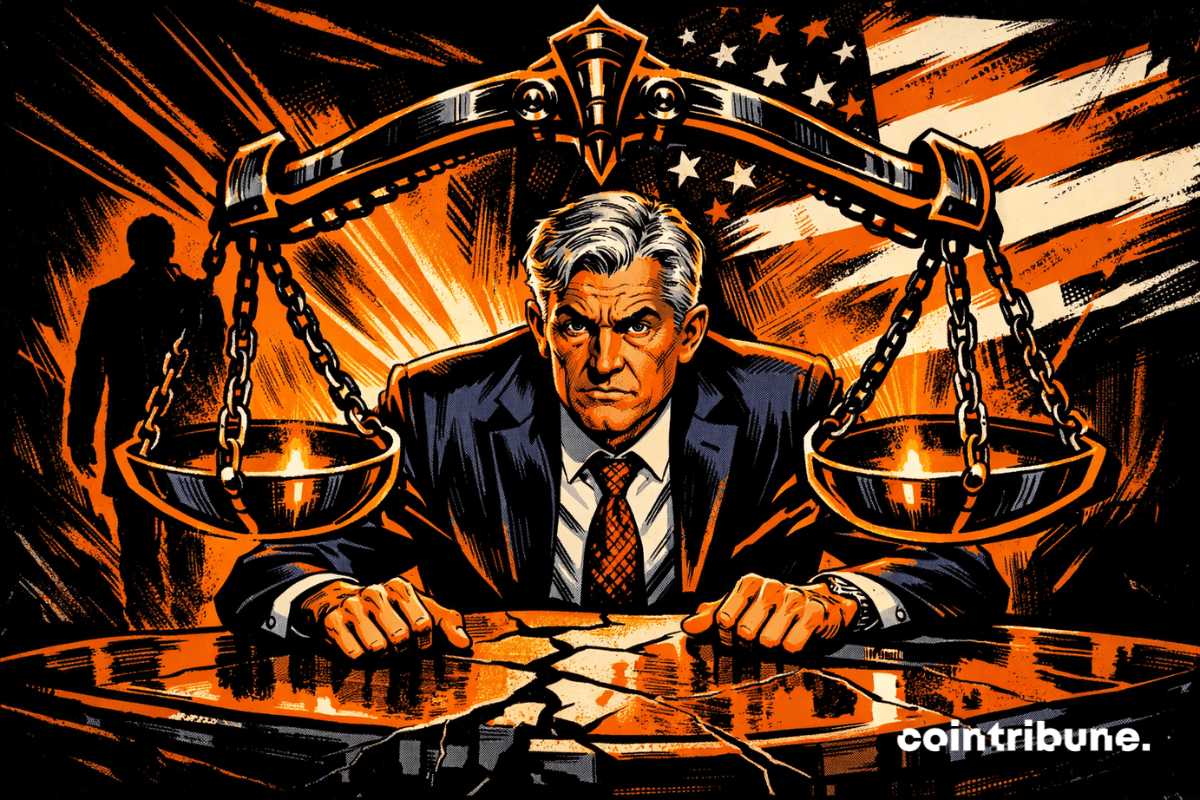
Kevin Hassett has withdrawn from consideration to lead the U.S. Fed, narrowing the field in a leadership race increasingly shaped by political and legal pressures. President Donald Trump has made it clear that he prefers Hassett to remain in his current role in the White House. And that stance effectively removed him from the competition and reshaped expectations about the next Fed chair.

In brief
- Kevin Hassett is withdrawing from consideration for the Fed chairmanship after Trump signaled he wants him to stay in the White House, narrowing the field.
- The race for Fed chair narrows to four candidates, with political viability and the risk of Senate confirmation now taking precedence over political alignment.
- A criminal investigation into Jerome Powell over renovation costs at the Fed adds legal and political pressure to an already tense transition.
- Senate resistance and legal constraints could delay leadership changes, prolonging uncertainty over Fed governance and the direction of rates.
Markets monitor succession at Fed after Hassett steps down
Hassett confirmed in a recent television interview that discussions with Trump about the position lasted several months. He described the situation as unresolved, saying no final decision had been made. Trump's public statements last week, however, suggest otherwise. At a White House event, the president directly told Hassett that he wanted him to stay in the West Wing.
This post seems to have settled the matter. Hassett then echoed the president's views, saying several strong candidates remain in the running and acknowledging that Trump might be right to keep him in his current position. He called the president's comments encouraging and said he feels valued in his role.
With Hassett out of the race, attention turned to a smaller group of candidates. People familiar with the process report that the list has narrowed to four names, with the dynamic changing rapidly in recent days.
A name is circulating with increasing insistence: Rick Rieder. According to sources close to the discussions, its appeal has less to do with ideological alignment than with its political pragmatism. He is seen as a profile capable of getting through the Senate stage more easily, in a context where confirmation procedures have become particularly conflictual.
Leadership risk rises as Powell investigation intensifies
Several factors are now influencing the search for the next Fed president:
- A reduced number of viable candidates.
- Growing concern about Senate confirmation risks.
- Greater emphasis on political sustainability rather than political nuance.
- Increased oversight of Fed governance.
- Legal developments affecting current management.
Pressure on the Federal Reserve has intensified after the opening of a criminal investigation targeting current Chairman Jerome Powell. The investigation concerns cost overruns linked to renovations of the Fed's headquarters in Washington. Although framed as a matter of financial oversight, the investigation took on a broader political significance.
Powell suggested the investigation is linked to long-standing disagreements over interest rate policy. In a video posted on the Fed's website, he said the threat of legal action stems from decisions made independently of the president's preferences. His resistance to calls for lower rates has long strained relations between the central bank and the White House.
The subpoena related to the investigation was approved by a U.S. attorney and concerns Powell's testimony before Congress about the project's costs. While Trump has publicly denied leading the investigation, his past statements reflect ongoing frustration with Powell's leadership.
Power shift at Fed uncertain as Senate, courts come into play
The situation has also complicated dynamics in the Senate. A senior Republican member of the Senate Banking Committee has warned that any Fed nominee Trump puts forward will now face tougher scrutiny. This resistance could delay, or prevent, the installation of a new president before Powell's term ends on May 15.
Legal constraints further limit the administration's options:
- Fed governors serve 14-year terms under federal law.
- Revocation is only authorized “with just cause”, a standard with deliberately vague contours.
- Powell could stay on the board until 2028.
- The administration is also seeking to remove another governor.
- Legal challenges could delay changes to the board's composition.
A governor facing recall has denied allegations of mortgage fraud, calling them baseless. This dispute is expected to play out in court, adding uncertainty to the internal balance of power at the Fed. Three of the seven current governors already favor lower interest rates, which is consistent with the president's position. Replacing other members could further tilt the board in that direction.
The search for a new president is now led by the Treasury secretary, who previously withdrew from the race. Although Trump continues to distance himself from the Powell investigation, his public statements often suggest impatience. Speaking recently to a business audience, he said Powell would be gone soon.
Maximize your Tremplin.io experience with our 'Read to Earn' program! For every article you read, earn points and access exclusive rewards. Sign up now and start earning benefits.