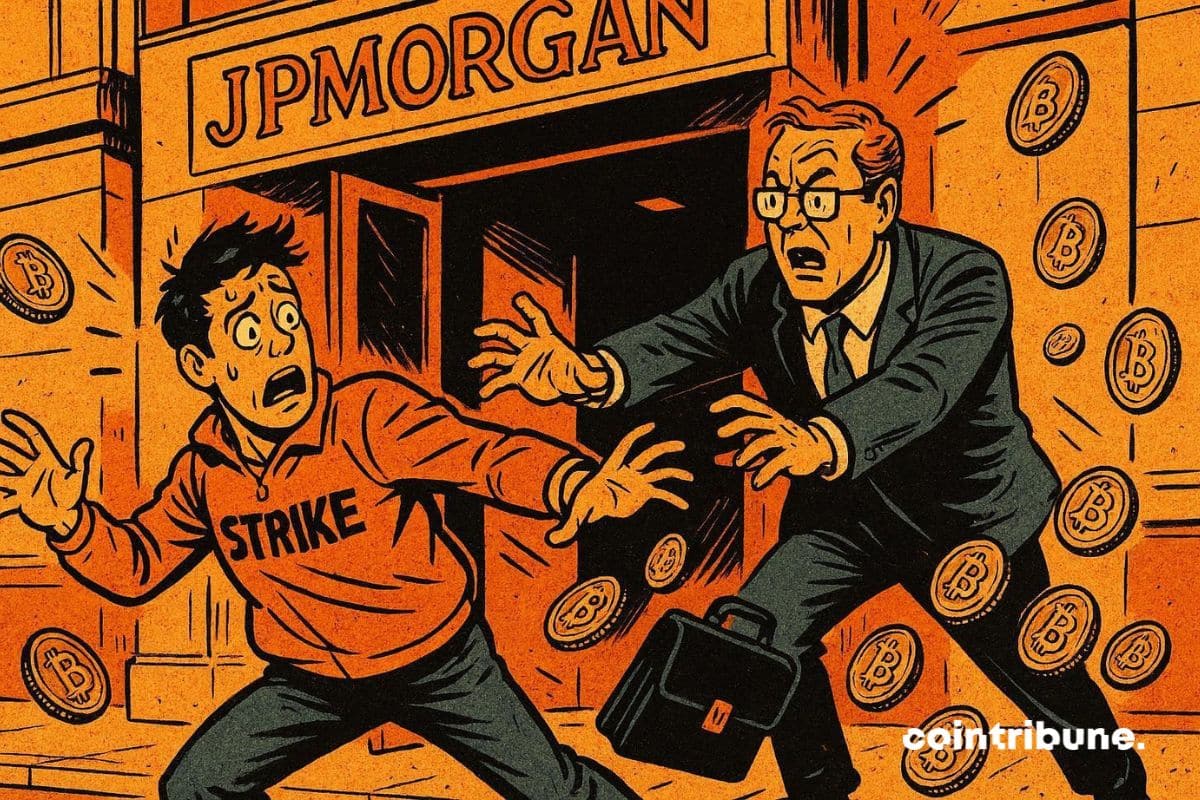
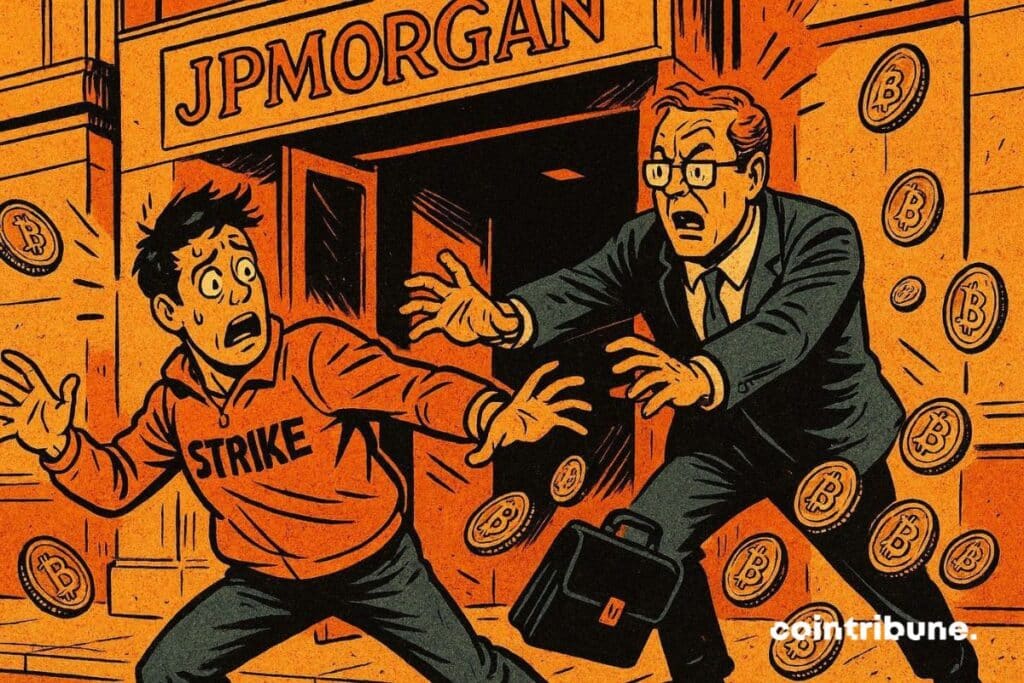
One tweet was enough to reveal a deep divide between traditional finance and the crypto universe. Jack Mallers, CEO of Strike, announced that JPMorgan Chase had closed its accounts without a clear explanation. This incident poses a crucial question: why are traditional banks pushing crypto players out?
In brief
- JPMorgan closes the accounts of Jack Mallers, CEO of Strike, without providing a clear explanation.
- This case is part of a growing trend of debanking of crypto players by traditional banks.
- The opacity of this decision raises questions about the relationship between traditional finance and the crypto ecosystem.
JPMorgan VS Jack Mallers: a banking exclusion with blurred contours
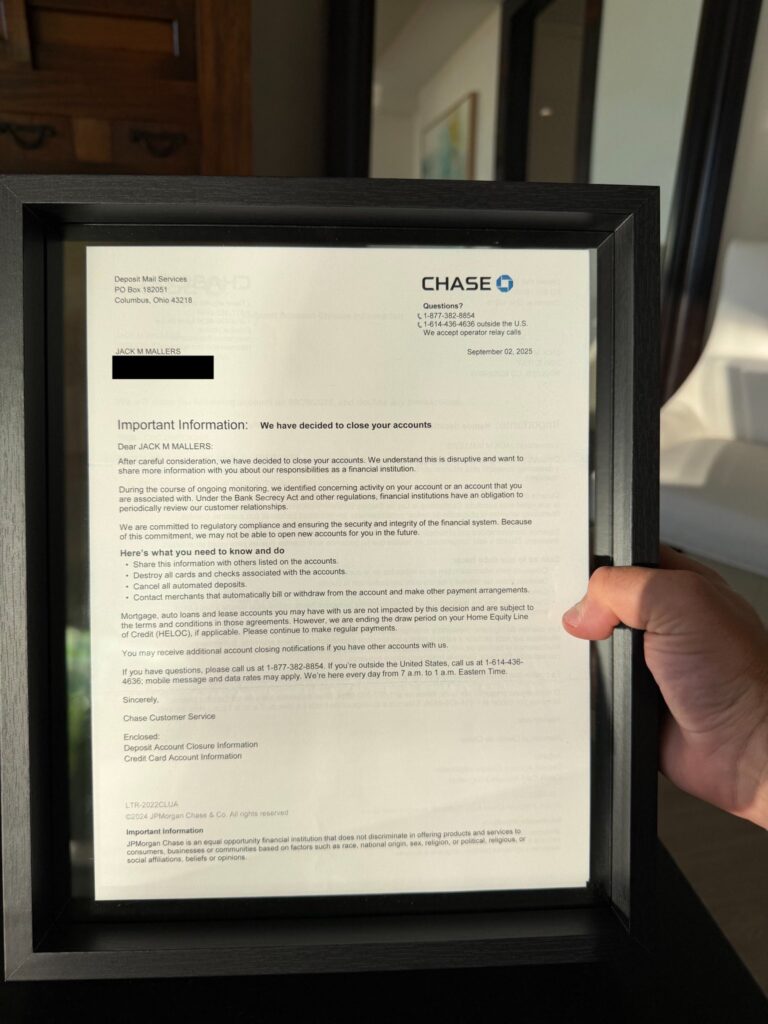
On November 23, 2025, Jack Mallers, founder of Strike, a Bitcoin payment platform, shared explosive information on X: JPMorgan Chase had closed his personal accounts. According to Mallers, this decision, described as “ weird », Intervenes without transparent justification, despite his repeated requests. Worse, his father, a bank customer for more than 30 years, was unable to obtain an explanation.
The JPMorgan letter, dated September 2, 2025, mentions “ activities of concern » and legal obligations, notably the Bank Secrecy Act. However, no concrete details are provided, leaving doubt about the bank's true motivations. Is it a simple rigid application of the rules, or a targeted distrust of crypto players?
After the closure of Jack Mallers' bank account by JPMorganthe reactions were quick. The crypto community has expressed its support for Jack Mallers, denouncing JPMorgan's opacity. Some see this as an attempt to muzzle innovators, while others point out the hypocrisy of a bank that, while exploring blockchain, excludes those who build it. Still others, more extreme, are calling for a boycott of JPMorgan.
Crypto debanking: a growing phenomenon
The case of Jack Mallers is not trivial. For several years, players in the crypto sector have been subjected to what is called “ debanking »: the arbitrary closure of their bank accounts. Binance, Kraken, and even independent developers have been affected. Banks often cite regulatory compliance reasons, such as combating money laundering or terrorist financing.
However, this practice raises questions. Why are crypto players disproportionately targeted? Traditional banks, which manage much larger and sometimes opaque financial flows on a daily basis, seem to apply stricter rules to the cryptocurrency ecosystem. The consequences are serious: difficulty paying salaries, managing cash flow, or even opening new accounts.
Bitcoin, a response to banking censorship?
Faced with the exclusion of traditional banks, bitcoin appears to be an obvious solution. Designed to resist censorship, it allows users to transfer value without relying on an intermediary. For Jack Mallers and many others, this incident reinforces the argument that BTC is not just a speculative asset, but a tool of financial sovereignty.
The impact on the crypto market could be significant. Bank account closures are pushing users to adopt non-custodial wallets! But also, solutions like the Lightning Network, which facilitate fast and inexpensive transactions. Some analysts even suggest that these events could support the price of Bitcoin (BTC), by increasing demand for an asset perceived as a refuge against arbitrary banking.
The Jack Mallers vs JPMorgan case illustrates the growing tensions between traditional banks and the crypto ecosystem. Denounced by Donald Trump, debanking could well accelerate the adoption of bitcoin and decentralized solutions. In your opinion, will this divide lead to peaceful cohabitation, or to a definitive split between two financial worlds?
Maximize your Tremplin.io experience with our 'Read to Earn' program! For every article you read, earn points and access exclusive rewards. Sign up now and start earning benefits.