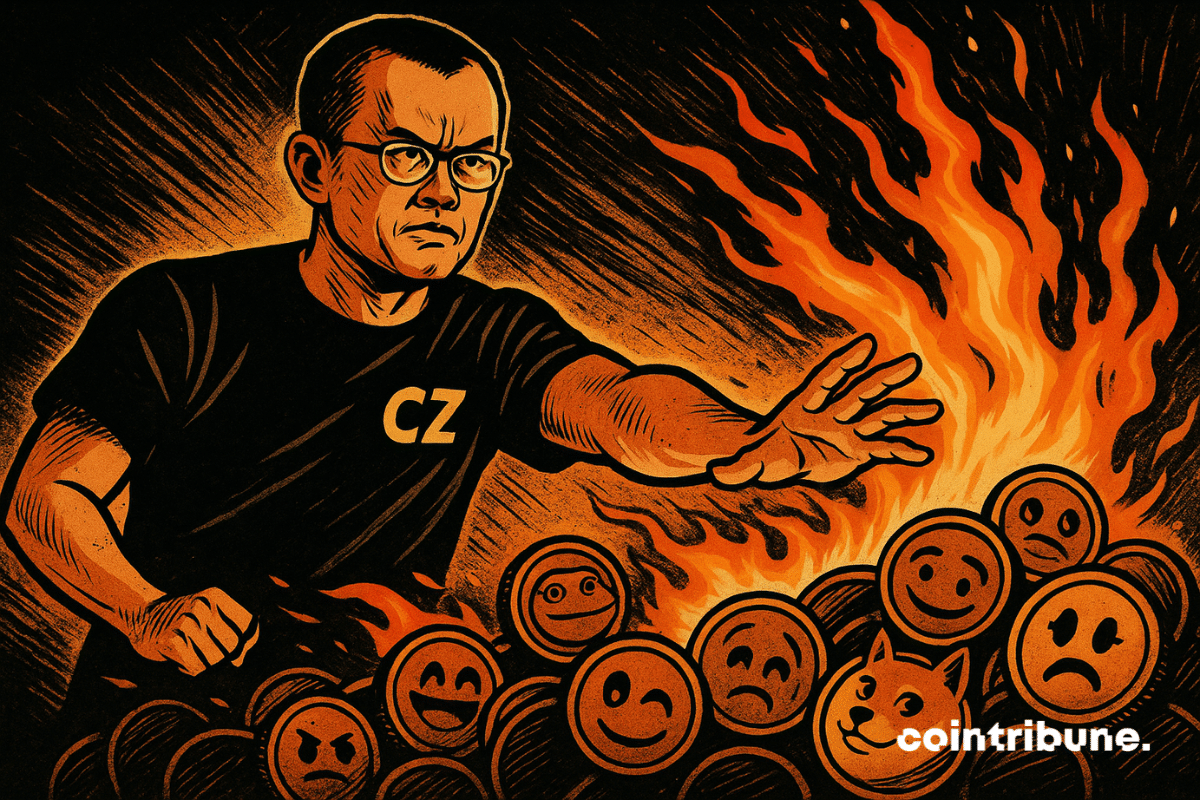
A recent token purge by Binance founder Changpeng Zhao (CZ) has brought unwanted memecoin airdrops back into the spotlight. Its public donation address once again attracted attention-seeking developers, and their repositories were removed in a decisive move announcing a tougher stance.
In brief
- CZ removes $490,000 in unsolicited memecoins from its donation wallet, marking a second major cleanup in less than a year.
- Public crypto addresses attract tokens that falsely imply support, pushing CZ to take a stricter approach.
- The rise of scams and phishing campaigns amplifies CZ's warnings as attackers impersonate official BNB Chain sites to steal funds.
- CZ suggests that future junk tokens may be sold rather than burned as operational burdens and market confusion increase.
On-chain data shows second major token burn by CZ in less than a year
Zhao destroyed approximately $490,000 worth of memecoins sent to his public donation address. On-chain analyst Ai Yi identified the combustion and reported the value of the tokens involved: approximately $305,000 in quq, $142,000 in SIREN, and $43,000 in BNBCARD. Ai Yi also noted that this is the second cleanup in less than a year, following a similar burn seven months ago.
CZ confirmed the action on X (formerly Twitter), explaining that he was simply cleaning out the wallet. He added that the address is intended to only hold BNB and future deposits could be sold on the open market rather than burned. This represents a change from its previous approach, where it avoided any actions that could affect token holders.
Unsolicited token sendings continue, prompting further cleanup action
Public wallets owned by high-profile figures often attract unsolicited tokens from lesser-known projects seeking recognition. Sending tokens to a well-known address can create the illusion of support or involvement. Zhao reiterated that he rejects this tactic, saying developers are sending assets he never requested.
Earlier this year, he said his portfolio received several high-value deposits, which he had already withdrawn. He also mentioned tools that can automate these cleanups, but raised concerns about their safe preparation.
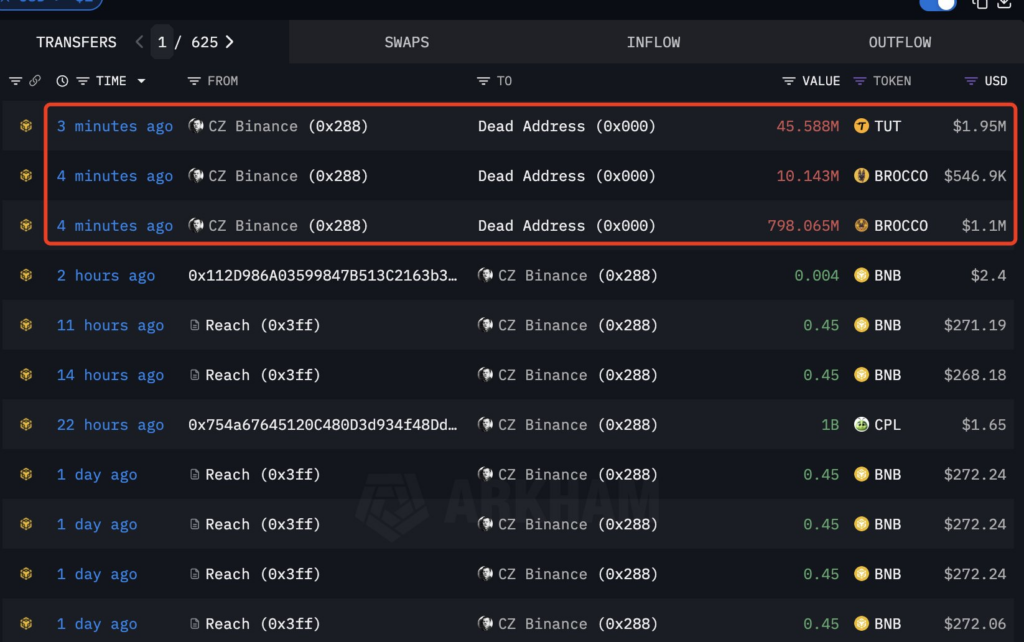
According to Arkham Intel, Zhao previously burned approximately $1.6 million in Broccoli tokens and nearly 2 million dollars in tokens Tutorial during the same period. His latest action follows the same pattern and reinforces his position that the donation address should remain limited to BNB.
CZ Signals Change in Its Handling of Junk Coins as Scams Accelerate
Growing memecoin activity has also created fertile ground for scams and other malicious behavior. Zhao recently highlighted a wave of phishing attacks after the official BNB Chain account on X was hacked.
Hackers used the compromised account to promote fake token drops and campaigns that disguise harmful links as WalletConnect incentives. Users clicking on these links risked exposing their private keys and losing funds.
Security firm SlowMist traced a phishing attempt to a domain almost identical to the official BNB Chain website, modified by a single character. The close resemblance misled many users, especially in the context of the rapid spread of meme token promotions.
Here's why CZ considers these unsolicited deposits a problem:
- They add unnecessary operational work.
- These tokens create false impressions of approval.
- CZ also explained that these actions invite the misuse of his public address for marketing purposes.
- Additionally, they clutter the wallet and cause confusion.
- Additionally, these actions provoke responses that can impact market prices.
CZ's approach contrasts with that of Ethereum co-founder Vitalik Buterin, who often sells the unsolicited tokens and donates the proceeds. Zhao previously preferred to burn tokens to avoid impacting holders, but his recent comments suggest a possible move toward market sales if the trend continues.
Maximize your Tremplin.io experience with our 'Read to Earn' program! For every article you read, earn points and access exclusive rewards. Sign up now and start earning benefits.