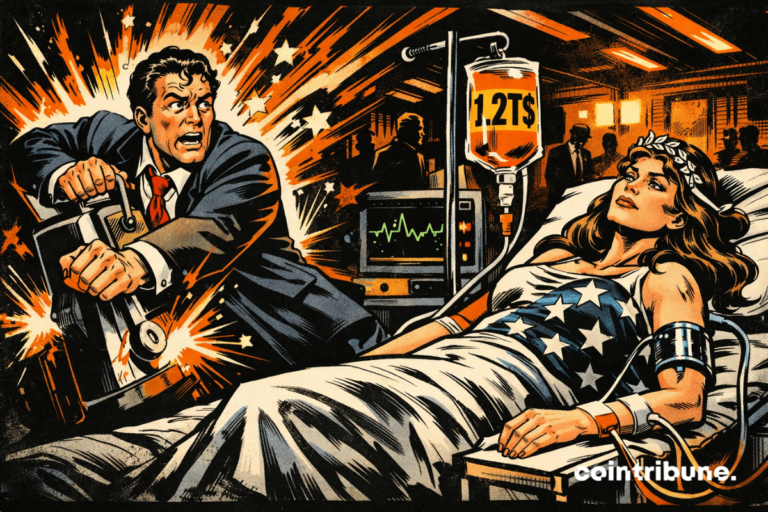
A prolonged U.S. government shutdown has created a rare information vacuum as financial markets search for clarity. Investors await the Federal Reserve's next rate decision with limited vision, while lawmakers continue to advance cryptocurrency legislation despite widespread staff delays.
In brief
- Missing federal employment reports leave policymakers without clarity on labor market momentum as a critical rate decision period approaches.
- Private hiring data fills some gaps but only captures slices of the labor market, creating uncertainty about the depth of the employment slowdown.
- Divisions within the Fed are widening: some are pushing for support to counter slowing employment, while others fear inflation risks remain high.
- Growing signs of employment decline are heightening concerns that delayed federal data could mask a deeper slowdown through the end of the year.
Data drought forces Fed to rely on estimates for critical meeting
U.S. monetary policymakers now face that challenge without two monthly jobs reports, which typically set the tone for rate discussions. In-person data collection at the Bureau of Labor Statistics has stopped, also putting October's consumer price index at risk. Policymakers view this current outlook as worrying, with some doubting whether the report will be published. A divided committee now prepares for its final meeting of the year with little visibility into inflationary trends or recruiting momentum.
Investors expected the December meeting to be tense. Rates were cut in October, although Chairman Jerome Powell made clear that another cut was not guaranteed. Policymakers were looking for new data to confirm whether inflation continued to fall and whether hiring remained steady.
However, the current outlook suggests that these numbers may not happen. ADP's private workforce data and job posting trends from companies like Indeed offer only a partial view because their coverage is much smaller and can't match the depth of federal surveys.
Models from the Fed's regional banks indicate that October inflation would remain near 3%, roughly matching September. However, these figures are still only projections. With key reports late, October and November inflation data may not reach policymakers before the December meeting, even if agencies resume work soon. That would leave officials to make a major decision on rates using old readings and incomplete industry estimates.
Analysts warn of blind spots in rate setting as shutdown blocks key indicators
A new wave of concerns is gripping the Fed as members debate what to do next. Some see clear signs of an economic slowdown and are calling for additional support, while others fear that cutting rates too soon will cause prices to rise again. Data gaps only intensify these disagreements.
Analysts say a confirmed reading of October CPI could have provided policymakers with stronger evidence that inflation was falling, which could have supported a rate cut. In the absence of this data, managers worried about price risks might choose a more cautious path.
Several factors continue to shape the policy outlook:
- Lack of employment data reduces visibility on salary trends;
- Inflation estimates rely on narrow models rather than surveys;
- Private workforce figures lack broad coverage;
- The closure makes timely publication of IPC reports unlikely;
- Internal divisions increase as the evidence dwindles.
Work on crypto policy continues despite the broader impact of the shutdown. Republican senators remain committed to advancing a major digital assets bill before the end of the year. Work on a market structure framework is progressing even as agencies responsible for technical drafting remain inactive. Senators Cory Booker and John Boozman plan to meet with David Sacks, White House adviser on cryptocurrencies and emerging technologies, to keep the momentum going.
Cryptocurrency advocates argue that continued progress, even during a shutdown, demonstrates a commitment to long-term regulation. For now, digital asset policy is moving forward while the broader economic picture remains uncertain due to missing federal data.
Maximize your Tremplin.io experience with our 'Read to Earn' program! For every article you read, earn points and access exclusive rewards. Sign up now and start earning benefits.