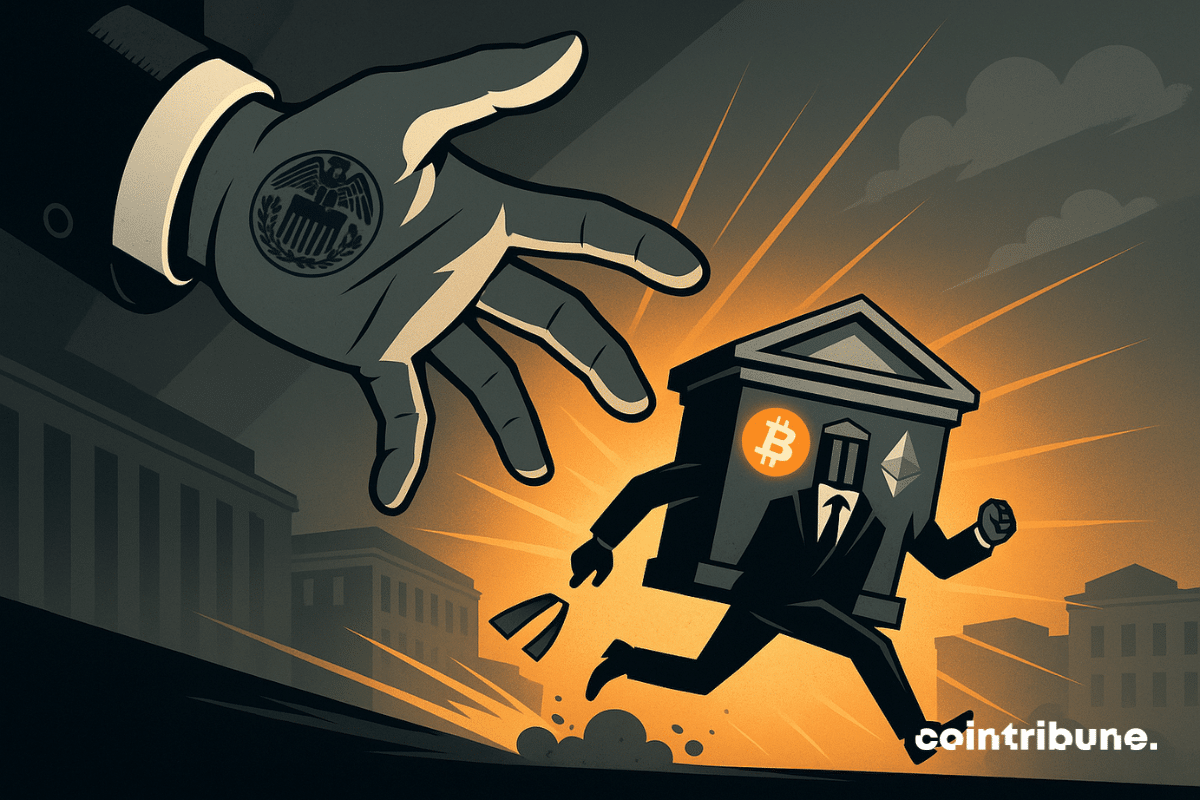
After several years of reinforced prudence, the American federal reserve changes course vis-à-vis the crypto activities of the banks. The institution puts an end to its specific surveillance program. It judges, in fact, that the risks linked to digital assets are now better understood and manageable in the classic supervision framework.
In short
- The Fed puts an end to its special banking monitoring program active in the crypto, established in 2023 to supervise the risks linked to cryptos.
- Activities such as cryptocurrency, stablecoins or tokenization will now be checked via the classic banking supervision process.
- This decision lightens the constraints for banks and could promote the integration of new crypto services in the United States.
A decision that marks a regulatory turning point for the crypto
The American federal reserve announced on Friday the end of its special surveillance program dedicated to banks involved in the services related to the crypto. This program seen the day in 2023. He imposed on establishments wishing to embark on digital asset custody, stablecoins or tokenization, notify the Fed and follow strict rules. The objective was to supervise a sector deemed risky and still misunderstood at the time.
Today, the Central Bank believes that it has acquired better control of issues. In a press release, she explains that she was significantly strengthened by Crypto activities. She says Understand their risks and practices related to cryptos in banking management. Therefore, this specific follow -up of the Fed now seems superfluous.
This development does not erase any supervision. However, it puts an end to a framework considered more restrictive than usual banking surveillance. Cryptos -related activities will now be the subject of evaluation within the framework of the normal supervision process.
What changes for banks and the market
For American financial institutions, this decision lightens the administrative weight. It could also speed up the integration of crypto services in their offer. Banks will no longer have to submit to a separate protocol. However, they will always have to demonstrate their ability to manage risks, in accordance with traditional standards.
This change could also encourage new entrants. The hesitant actors, hampered by the heaviness of the procedures, can now evolve otherwise. Indeed, they could more easily consider projects around stablecoins, the custody of cryptos or token payment solutions.
On the market side, the news sends a regulatory relaxation signal. In fact, the United States is often criticized for its excessive prudence towards crypto. This opening could strengthen the competitiveness of American banks in the face of European or Asian actors already more advanced.
If the Fed loosens the noose, it does not give up its mission of control. Activities related to crypto, stablecoins or tokenization, will remain integrated into regular audits and inspections, with particular attention to operational risks, cybersecurity and compliance.
Maximize your Cointribne experience with our 'Read to Earn' program! For each article you read, earn points and access exclusive rewards. Sign up now and start accumulating advantages.