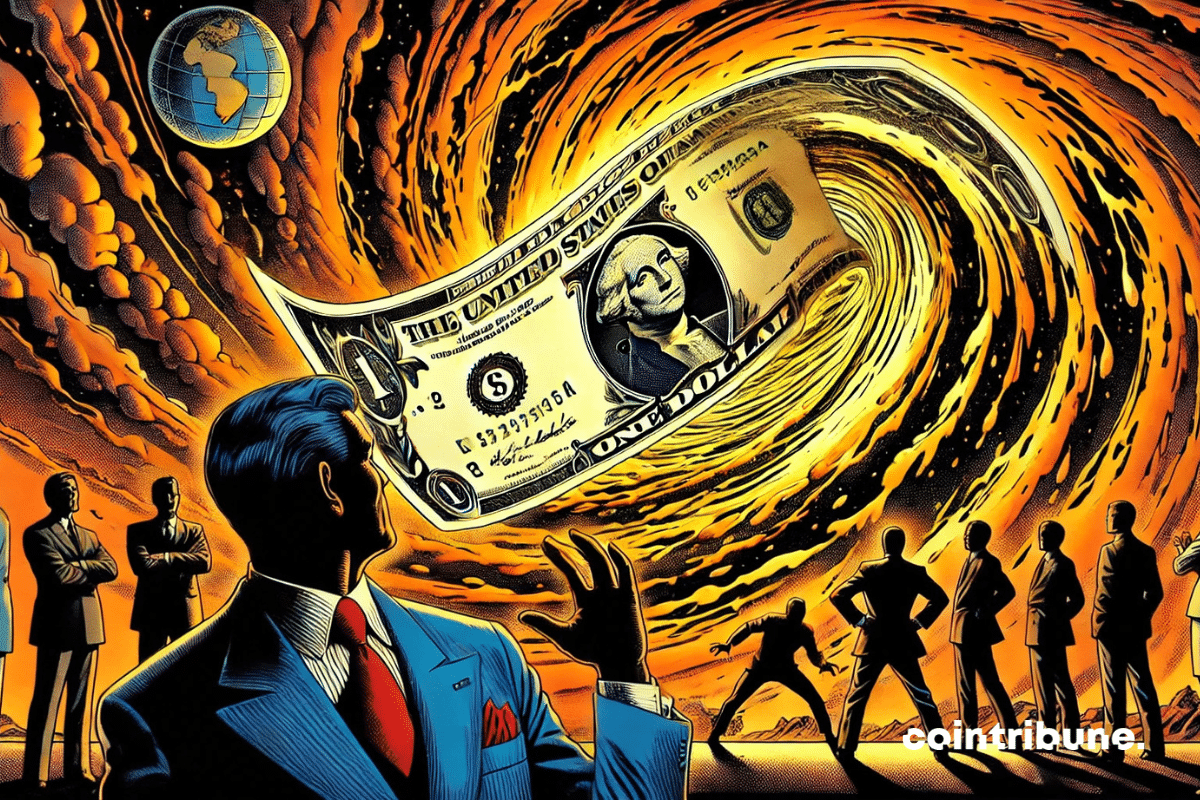
The domination of the US dollar on international exchanges is more disputed than ever. A powerful block, the BRICS, actively seeks to get rid of it by the development of an alternative currency. Faced with this offensive, Donald Trump, faithful to his style, does not intend to remain a spectator. The American president brandished the threat of massive economic sanctions to discourage any attempt to undermine the hegemony of the greenback. But, can this strategy really reverse the trend or can accelerate the current dynamics?
Trump draws the threat of sanctions and prices
Upon returning to the White House, Donald Trump adopted a radical position in the face of the monetary initiatives of the BRICS. He publicly denounced their desire to reduce dependence on the dollar and build a viable alternative. During a impactful statement, he has warned : “We urge these countries to abandon their common currency project. If they persist, they will undergo 100 % prices and will completely lose access to the American market ”.
This warning is in a broader strategy where Trump is focusing on economic pressure to keep the hegemony of the dollar. It does not only target the BRICS: Canada and Mexico are also risking a 25 % tax on their imports, and China could undergo a new 10 % levy from its exports to the United States. The objective is to slow down any desire for monetary diversification and maintain the centrality of the greenback in global transactions.
But if Trump hopes to paralyze the efforts of the BRICS, the facts show that these threats rather have a catalyst effect. By trying to lock the monetary system under American influence, he feeds distrust and pushes his opponents to find alternative solutions faster.
The BRICS: an already engaged rupture dynamic
If the idea of a common currency of the BRICS remains technically complex, the initiative symbolizes a very real ambition: to reduce dependence on the dollar. China and Russia, on the front line of this movement, multiply the trade agreements in local currencies. Beijing, in particular, is based on its digital yuan to promote independent exchanges of the American financial system. The Belt and Road Initiative also plays a key role, by encouraging direct yuan payments in international infrastructure projects.
However, Trump's attitude, far from dissuading the BRICS, strengthens their determination. American monetary policies, and in particular the use of the dollar as an economic weapon, fuel distrust. In addition, the systematic recourse to sanctions and embargoes pushes the rivals of the United States, but also certain allies, to diversify their reserves and their payment systems.
In this dynamic, the real question is not whether the dollar will lose its hegemony, but when and how this transition will accelerate. Confidence in the American financial system is gradually eroding. If Trump persists in this confrontation policy, he risks accelerating exactly what he is trying to prevent: a world less dependent on the dollar and more multipolar on the monetary level.
Maximize your Cointribne experience with our 'Read to Earn' program! For each article you read, earn points and access exclusive rewards. Sign up now and start accumulating advantages.