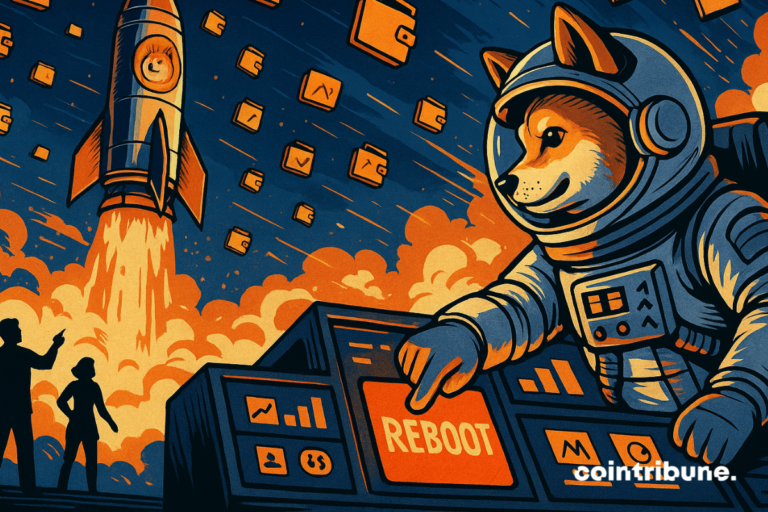
Memecoins, these lightweight tokens often perceived as harmless, could well be the Achilles heel of Web3. Dan Finlay, co-founder of MetaMask, recently explored their impact through a bold experiment. His conclusions? A Web3 weakened by the lack of consent, transparency and accountability. A reflection that shakes up the certainties of the crypto ecosystem.

The brilliant illusion of memecoins
Memecoins play a paradoxical role. While their light-hearted nature draws crowds, their impact on Web3 is much darker.
Dan Finlay, co-founder of MetaMask, conducted a disturbing experiment by launching two memecoins on Ethereum and Solana.
These creations, while satirical, exposed Web3's deep flaws when it comes to consent, trust, and accountability.
As soon as they were put into circulation, these cryptos saw their values artificially inflate, reaching short-lived peaks of $100,000. But the euphoria quickly gave way to chaos.
Finlay describes a dynamic where the lack of structure or clear vision causes investors to attribute forced meaning to assets with no real purpose.
This phenomenon exposes not only the limits of the economic model of memecoins but also those of the trust which is supposed to support the Web3.
Even more worrying, Finlay has been the target of threats from frustrated investors, a situation that raises questions about the health of the crypto community.
Is the implicit consent of users, which simply consists of agreeing to “play” with these tokens, sufficient to justify such behavior?
Web3: between promises and disillusionments
Memecoins are not just an anecdote. They embody the existential challenges of Web3. In a space that is supposed to be decentralized and equitable, they reveal a much starker reality: blurred lines between hype and accountability.
Finlay draws a bold parallel between these dynamics and those of artificial intelligence. On platforms like Bluesky, public data is used without explicit consent, blurring social and technological expectations around the notion of consent.
Web3 thus suffers from a glaring lack of suitable infrastructure. According to Finlaythis is not a question of ethics, but of an urgent need for better tools and better incentives.
Precise control of tokens, limiting markets to specific communities or structuring sales are all ways to get out of this impasse.
Finlay's experience is not just a criticism: it is a call to action. Web3, like AI, must evolve to build trust, clarify expectations and respect user consent. Memecoins, although appearing as jokes, carry with them crucial lessons. To prevent Web3 from becoming a digital dump, it is time to rethink its foundations. During this time, bitcoin is on its way to an ATH.
Maximize your Tremplin.io experience with our 'Read to Earn' program! For every article you read, earn points and access exclusive rewards. Sign up now and start earning benefits.