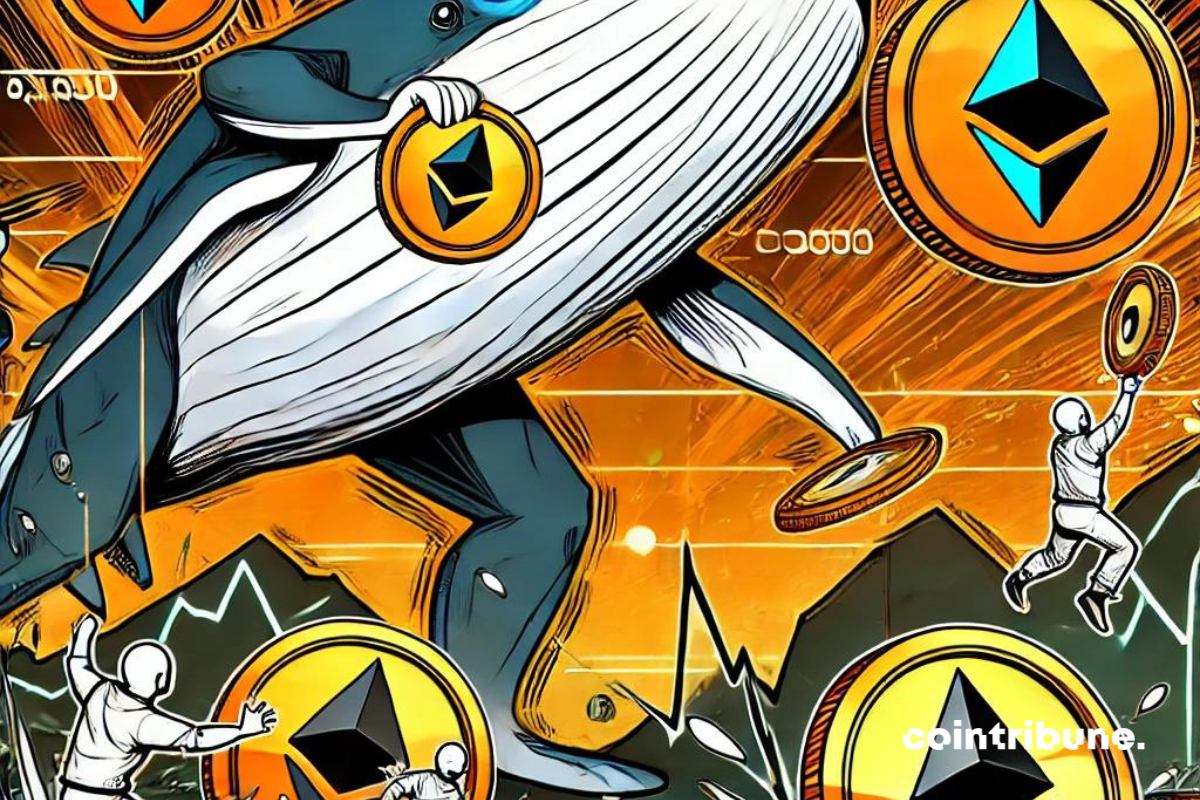
The crypto market is seeing a striking trend: the growing dominance of Ethereum “whales.” These large investors, who now hold 43% of the total supply, have significant influence that can move the market. As their influence continues to grow, a crucial question arises: What will this concentration mean for the future of the Ethereum network and retail investors? Let’s analyze the implications of this development.
Ethereum Whales: Increasingly Dominant Control
Since 2019, Ethereum whales have been strengthening their grip on the market. The 2023 Ethereum Shanghai upgrade marked a major turning point for these large holders, giving them new confidence in the future of the platform.
According to data provided by IntoTheBlock, These whales now control nearly half of Ethereum's total supply, a figure that continues to grow.
This concentration of power raises concerns and speculation. For retail investors, the rise of whales could mean a less accessible market, where a few players largely influence price movements.
This phenomenon can be analyzed from another angle: the massive accumulation of whales reflects a solid confidence in the future of the Eth crypto.
Their commitment may reflect high expectations regarding technological progress and institutional adoption of Ethereum.
Yet this dominance is not limited to short-term financial interest. The accumulation of these whales shows a deep belief in the continued growth of the Ethereum ecosystem, particularly through DeFi (decentralized finance) protocols and Layer 2 solutions that aim to improve the scalability of the network.
The consequences
The accumulation of 43% of the supply by these crypto whales could have major implications for the Ethereum community.
On the one hand, it can provide relative stability. These large investors are less likely to sell en masse, minimizing sudden market swings. Their influence could even encourage a gradual rise in Ethereum’s price, attracting more institutional investment.
However, this concentration also raises concerns. Such control by a limited number of wallets can lead to excessive centralization of the network, which goes against the fundamental ideals of decentralization specific to cryptocurrencies.
If these whales decide to coordinate their actions, they could manipulate the market to their advantage, leaving small investors more vulnerable to sudden and unpredictable price movements.
It is also important to note that this concentration of supply could disrupt the balance of power within the network.
As whales gain more influence, retail investors risk being sidelined. In this context, the question arises: is it still possible for small investors to take advantage of the Ethereum opportunity, or will they be pushed aside by this takeover by the behemoths? Meanwhile, bitcoin is recovering.
Maximize your Tremplin.io experience with our 'Read to Earn' program! For every article you read, earn points and access exclusive rewards. Sign up now and start earning benefits.