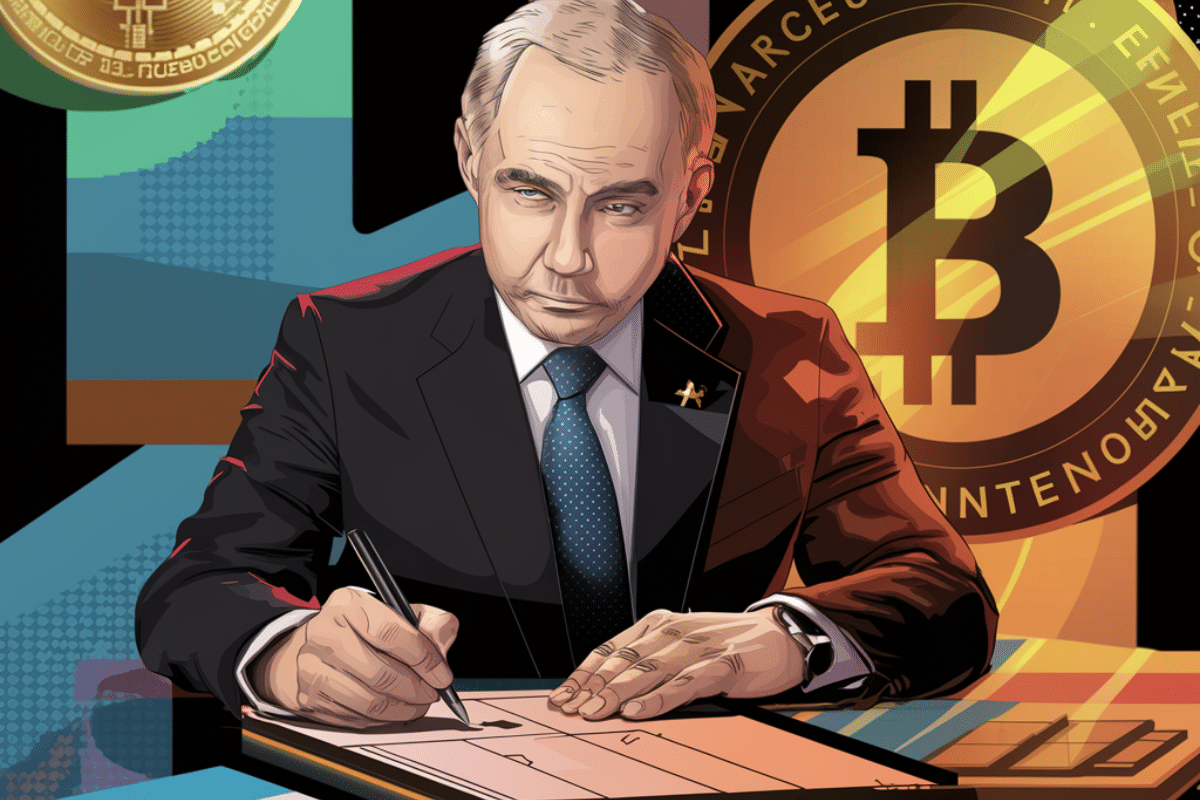
Russian President Vladimir Putin signed a landmark law on March 11, paving the way for the use of digital financial assets and CBDCs for international payments. The measure aims to help Russian companies circumvent Western sanctions and facilitate trade with allied countries.
The Duma quickly adopts the bill on CBDC payments
The Russian Parliament passed the bill on payments in digital assets at a breakneck pace. The State Duma Committee on Financial Markets first approved the text on February 21. The lower house then considered the bill on second and third readings in late February. Finally, the Federation Council, the upper house, quickly ratified the text on March 6.
Anatoly Aksakov, chairman of the Financial Markets Committee, reported on February 27 that the law was becoming urgent due to the current lack of regulations governing the use of digital assets for international payments. He also stressed that the law does not apply to cryptos, such as Bitcoin, considered illegal as a currency in Russia.
According to Russian media RBC, the law will come into force upon its official publication, with the exception of certain provisions which will be implemented later. This regulatory framework paves the way for the use of digital assets as a means of payment for overseas commercial transactions.
Aksakov believes that this law will help Russian importers and exporters work more effectively with friendly countries and partially mitigate the impact of sanctions. Several of Russia’s allies have also expressed keen interest in the use of digital assets and CBDCs in their trade with Moscow.
The Central Bank of Russia gains new regulatory powers
The law signed by Putin gives new regulatory powers to the Central Bank of Russia over the payments sector. As the sole issuer of the digital ruble and the main regulator of the “Digital Financial Assets (AFN)” space, the bank will now have the power to regulate transactions carried out using these assets.
Issuers of AFNs will have to provide the Central Bank with information on the recipients of the assets, while companies using AFNs and CBDCs for payments will have to record all transactions in a new dedicated information system.
Russian law recognizes a wide range of digital assets as AFN, including digitized goods and securities, digital rights and digitized monetary claims. Investors will also be able to buy digital shares in unlisted Russian companies.
Russia is not the first country to use CBDCs for international transactions. Earlier this month, China and the United Arab Emirates carried out transactions worth US$13.6 million using digital yuan and digital dirham.
The adoption of this revolutionary law marks a major turning point for Russia in its quest for financial sovereignty in the face of Western sanctions. By allowing the use of digital assets and the digital ruble for international payments, Moscow hopes to facilitate trade with its allies and provide new options for its businesses.
However, some experts urge caution, noting that the requirement to record all AFN-related accounting in Russian systems and the lack of provisions for overseas AFNs could pose obstacles for non-Russian trading partners .
Maximize your Tremplin.io experience with our ‘Read to Earn’ program! For every article you read, earn points and access exclusive rewards. Sign up now and start earning benefits.