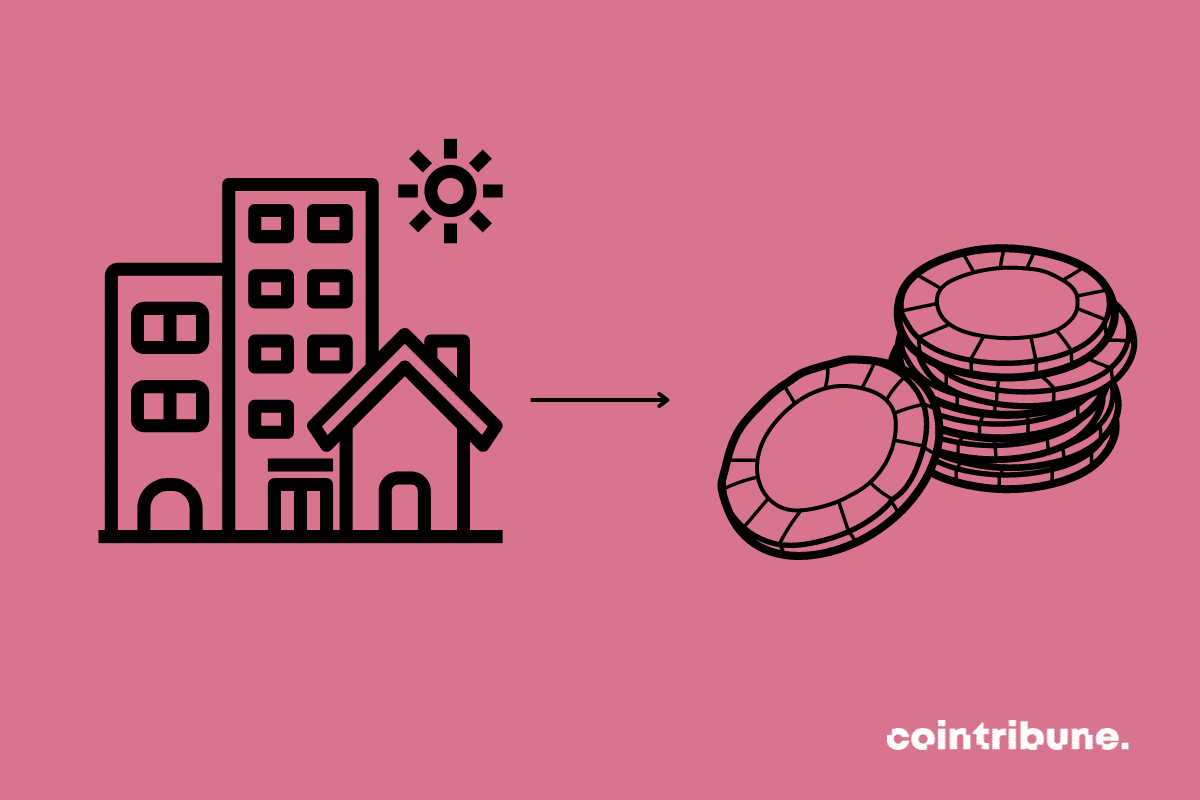
Every crypto enthusiast has some interest in the concept of tokenization of real assets. The idea is not new in itself. But its emergence marks a profound revolution in the crypto ecosystem. Because it introduces an innovative perspective, regarding the relationship between digital and reality. In this article, we explore the underlying mechanisms of real asset tokenization. This, by highlighting how this technology not only increases accessibility and liquidity. But most importantly, strengthens the legitimacy of the blockchain-based industry by integrating real-world elements into its digital fabric.
Context of real asset tokenization in the crypto ecosystem
We cannot address the issue of tokenization of real assets, a term increasingly popular in the crypto ecosystem, without returning to its origins. The concept has its roots in the desire to bring a tangible dimension to digital transactions. At the heart of this practice is the conversion of physical assets into digital tokens on a blockchain. And a host of material things lend themselves to this type of tokenization. The most obvious examples being real estate, precious metals, among others.
It must be said that this development is not new. Initially, it emerged in response to the need to increase the fluidity of transactions, but above all to democratize access to investments traditionally out of reach. It was then perceived by many crypto enthusiasts as an extension of blockchain technology. The perception of tokenization of real assets has, however, broadened over time.
Now the concept is recognized as a way to merge the digital world with tangible goods. The result of this junction being the creation of a synergy between traditional finance and technological advances. So, tokenization of real assets presents itself as an opportunity to transcend the limits between the virtual and the real. A perspective that is driving a profound change in the way financial transactions are conceptualized.
By redefining how real assets are represented and exchanged on a blockchain, tokenization opens a gateway to closer integration between the tangible and the digital. This contextualization serves as a backdrop for an exploration of the mechanisms and impacts of real asset tokenization in the ever-evolving crypto ecosystem.
Underlying mechanisms of the tokenization of real assets
Concretely, the tokenization of real assets is based on sophisticated technical mechanisms targeting the fragmentation and digitization of concrete goods. The process results in the transformation of physical assets into tokens on a blockchain. These mechanisms have a fundamental aspect, namely the faithful representation of the assets concerned. The latter is ensured by intelligent contracts, which guarantee the transparency and immutability of transactions. Technically, each token is backed by a specific part of the underlying asset. Which allows fractional representation and traceability of ownership transparently.
It must be said that this characteristic has certain potential. It paves the way for increased accessibility to investments. Because, now, one can participate in the ownership of high-value assets without having to acquire the entire asset. This is how the tokenization of real assets democratizes access for the majority to investments usually limited to a financial elite.
Furthermore, the tokenization of assets allows something else: improving the liquidity of assets. We are talking about the ease with which an asset can be bought or sold on the market without having a significant influence on its price. Thanks to the divisible nature of tokens, they can be exchanged more easily on blockchain platforms. This reduces the time and costs associated with traditional financial market transactions.
The advantage of this fluidity is that it promotes an environment where real assets become tradable more quickly. This positively affects their attractiveness within the crypto ecosystem. Ultimately, the levers of real asset tokenization are revolutionizing the way we think about investing and asset ownership. And it also benefits the industry in terms of legitimacy.
The tokenization of real assets, a legitimization of crypto?
It is clear that the tokenization of real assets is emerging as an essential transformative force that redefines the legitimacy of the blockchain industry in the global financial panorama.
By scrutinizing its intrinsic mechanisms, we realize that this practice in fact establishes unparalleled transparency and traceability in transactions involving real assets. This crucial feature ensures a faithful representation of tangible assets on the blockchain. This, by raising this technology to a level meeting the strict standards that govern the traditional financial sector.
By guaranteeing complete and immutable visibility of transactions, blockchain consolidates its credibility and establishes a solid bridge between the tangible world and the digital universe. Furthermore, the diversity of applications, ranging from tokenization of real estate assets to digital artistic representation, illustrates the adaptability and relevance of blockchain in various sectors. This integration transcends simple dematerialization to establish an organic link between concrete assets and the flexibility of digital technology.
In fact, the impact of this legitimization on the general perception of blockchain is palpable. The latter is increasingly becoming a reliable and robust solution for the representation and trading of real assets. This increased recognition catalyzes adoption by institutional players, encouraging them to integrate blockchain into their operations. Thus, legitimization via the tokenization of real assets positions the blockchain at the heart of major changes in global finance. A situation which affirms its central role in the evolution of the contemporary financial landscape.
Conclusion
The tokenization of real assets is positioned as an essential transformative force, redefining the crypto ecosystem. A response to the need to increase the fluidity of transactions and democratize access to elite investments, tokenization crosses the boundaries between the digital and tangible world. Its mechanisms create unparalleled transparency and traceability of transactions. Furthermore, the tokenization of real assets positions blockchain at the heart of major changes in global finance, catalyzing its adoption by institutional players. Ultimately, it not only represents the future, but also the foundation of a new era for the crypto ecosystem, shaping the way financial transactions are conceptualized. But also executed.
Maximize your Tremplin.io experience with our ‘Read to Earn’ program! For every article you read, earn points and access exclusive rewards. Sign up now and start earning benefits.