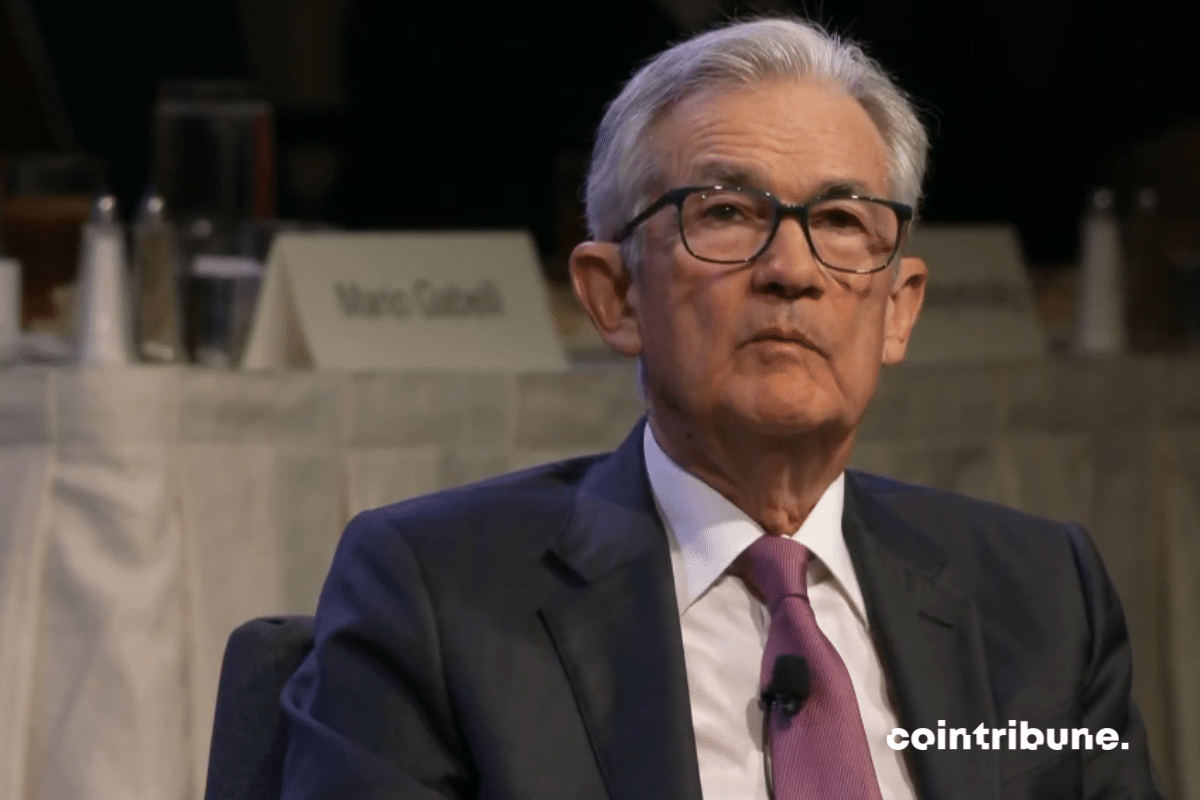
The Fed chairman said Thursday that the sharp rise in borrowing rates could help the Fed slow the economy.
Rates continue to rise
The US government’s 30-year borrowing rate has crossed the 5% mark, the highest since August 2007. The 10-year rate is also very close to 5%, its highest level since July 2007.
This is good news for Jerome Powell who thinks that these high rates will help to further moderate inflation. If this were the case, the Fed could then stop raising its key rate.
“Tightening monetary policy puts downward pressure on economic activity and inflation”Mr. Powell said during a discussion at theEconomic Club of New York.
The great helmsman, however, did not declare victory. “Summer inflation data was promising, September inflation data is less encouraging”warned Mr. Powell, adding that he “significant tightening may still be necessary” if the economy remains strong.
So much so that the Treasury bond market is gradually abandoning its illusions regarding inflation and the normalization of interest rates. Many thought that a “pivot” (return of the key rate towards 0%) followed by a return to printing money would be imposed on the Fed by a strong recession.
But the fact is that consumers are not reducing their spending at all. Not to mention the government which spends lavishly, despite interest now reaching more than 1,000 billion dollars per year.
This spending further stimulates the economy, in turn putting pressure on inflation. Furthermore, these expenditures result in the issuance of enormous quantities of Treasury bills.
The Fed to the rescue if the debt no longer finds buyers?
So much debt must find a buyer. Jerome Powell knows this and warns that “The US fiscal trajectory is unsustainable” :
Nothing to move Treasury Secretary Janet Yellen (former president of the Fed) who believes for her part that the “The United States can perfectly afford to finance two wars [Ukraine + Palestine] “.
Unfortunately for Uncle Sam, the BRICS member countries are getting rid of his debt. Saudi Arabia in particular, but also and above all, China.
Foreign central banks held $7.707 billion in August according to Reuters. Which represents 23% of the American public debt which reaches 33,000 billion dollars. China held $805 billion in August, the lowest level since May 2009.
For the moment, Japan is plugging the holes, hence the sharp fall in the yen recently. That said, the dollar index stopped its rise this month…
Which other vassal will soon have to sacrifice its currency to finance the imperial debt and thus support the greenback? Taiwan? South Korea ? Or the Fed?…
In the absence of foreign demand for U.S. debt, the dollar will fall. This will result in a generalized resurgence of inflation due to the rise in import prices.
Expensive wars, potential decline in the dollar, high rates, all factors that point to a steep recession. This is what we will have if unemployment were to increase.
The question being: will the Fed ease monetary policy in the event of a recession if inflation remains well above 2%?
Probably. This will then be the fifth bullish catalyst for bitcoin after inflation, ETF, Halving and extremely worrying geopolitical tensions.
Receive a summary of the news in the world of cryptocurrencies by subscribing to our new service daily and weekly so you don’t miss anything of the Tremplin.io essentials!